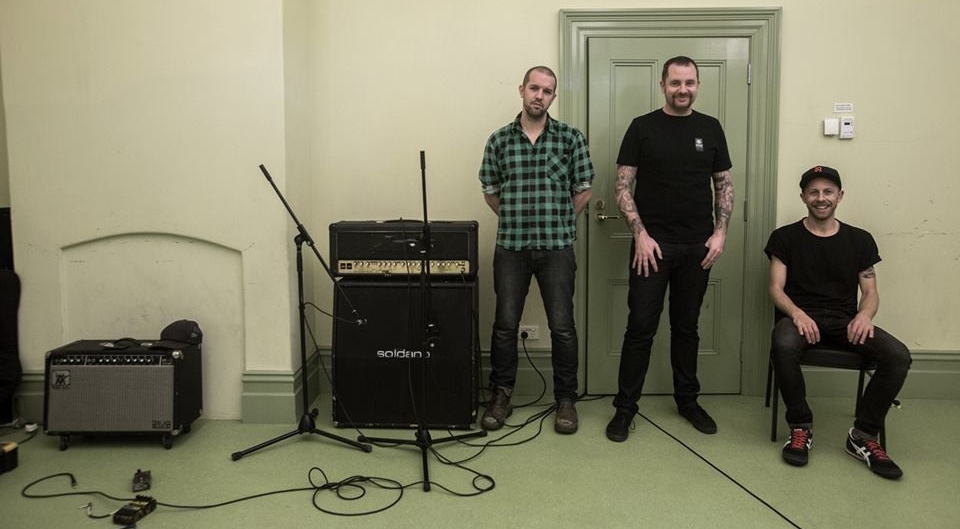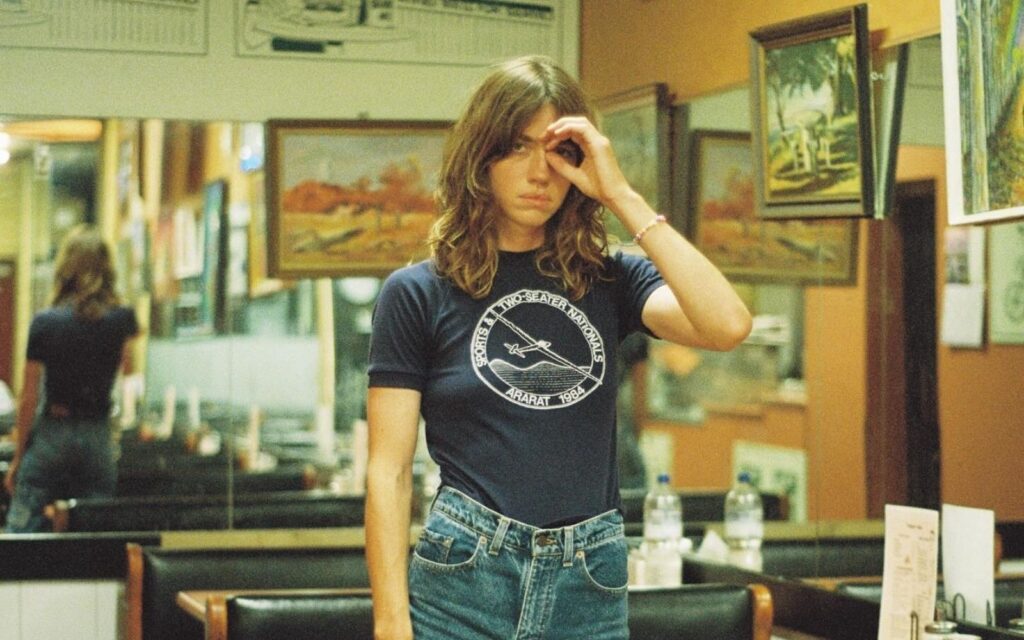
“Cerulean Saltand Ivy Tripp, I worked with the same two people, which is Kyle Gilbride, who engineered it, and Keith Spencer, who produced it and he’s also my guitar player,” she explains. “This record was super collaborative. I wrote all the songs, all the melodies and lyrics and things like that, but as far as all the instrumentation goes, that was all done as a group. So definitely, it felt more like a band and it’s a record I never could’ve made on my own.”
Perhaps by virtue of the collaborative gestation, Ivy Tripp journeys from noisy power pop to computerised-emo, and fuzzy beach-pop to intimate minimalism. In accordance with the stylistic breadth, the instrumentation and production is more diverse than Waxahatchee’s previous releases.
“I wanted to challenge myself,” says Crutchfield. “Also, Kyle has been recording so much and he has developed a style. Things have changed since when he recorded Cerulean Salt. It’s the same with Keith and I; we had more gear, we had more ideas. I felt it was important that we do something else and challenge ourselves. It felt natural to make something that was grander.”
Crucially, while carrying out a variety of stylistic excursions, Ivy Tripp attains a sense of cohesion from Crutchfield’s unvarnished vocal performances and empathetically engaging lyrics. The 26-year-old songwriter’s willingness to vulnerably present herself is a core part of Waxahatchee’s blossoming appeal. In spite of this, when making Ivy Tripp, she blocked out thoughts of what would please her listenership.
“I took a lot of time from when I was touring Cerulean Salt to when I started writing,” she says. “I wanted to take enough space of not playing shows, just to go back to the solitude of it all and focus on the kind of emotions I wanted to evoke in myself and just really listen to how I was feeling. I honestly think that’s the secret for me to be able to write songs that mean something to people.”
Indeed; not every song on Ivy Tripp is sad or miserable, but the whole record has an emotively stimulating subtext. Interestingly, althoughCrutchfield did her utmost to prevent expectations from interfering with her compositional process, she was very aware of what she was working towards.
“I always try to write songs in terms of an album,” she says. “I feel like that’s kind of the way that I see things. That’s why I never really make EPs or short releases. So it’s in the back of my mind always. Even if the songs on paper are nothing alike, I try to string them together and keep them cohesive.”
Crutchfield’s album-oriented songwriting approach perhaps explains why the three Waxahatchee records have arrived in relatively quick succession. In spite of this, she feels no pressure to uphold her prolific reputation.
“That’s a position I would never want to be in,” she says, “where I am rushing to finish an album. I have some moments that last for months, where I am not writing or nothing is coming to me or I don’t have time. I just try to work through it and there will always be moments where I have a lot of ideas. I really do try not to beat myself up if I can’t think of things, because people go years and years without writing songs and then make a great record. It’s just part of it.”
BY AUGUSTUS WELBY