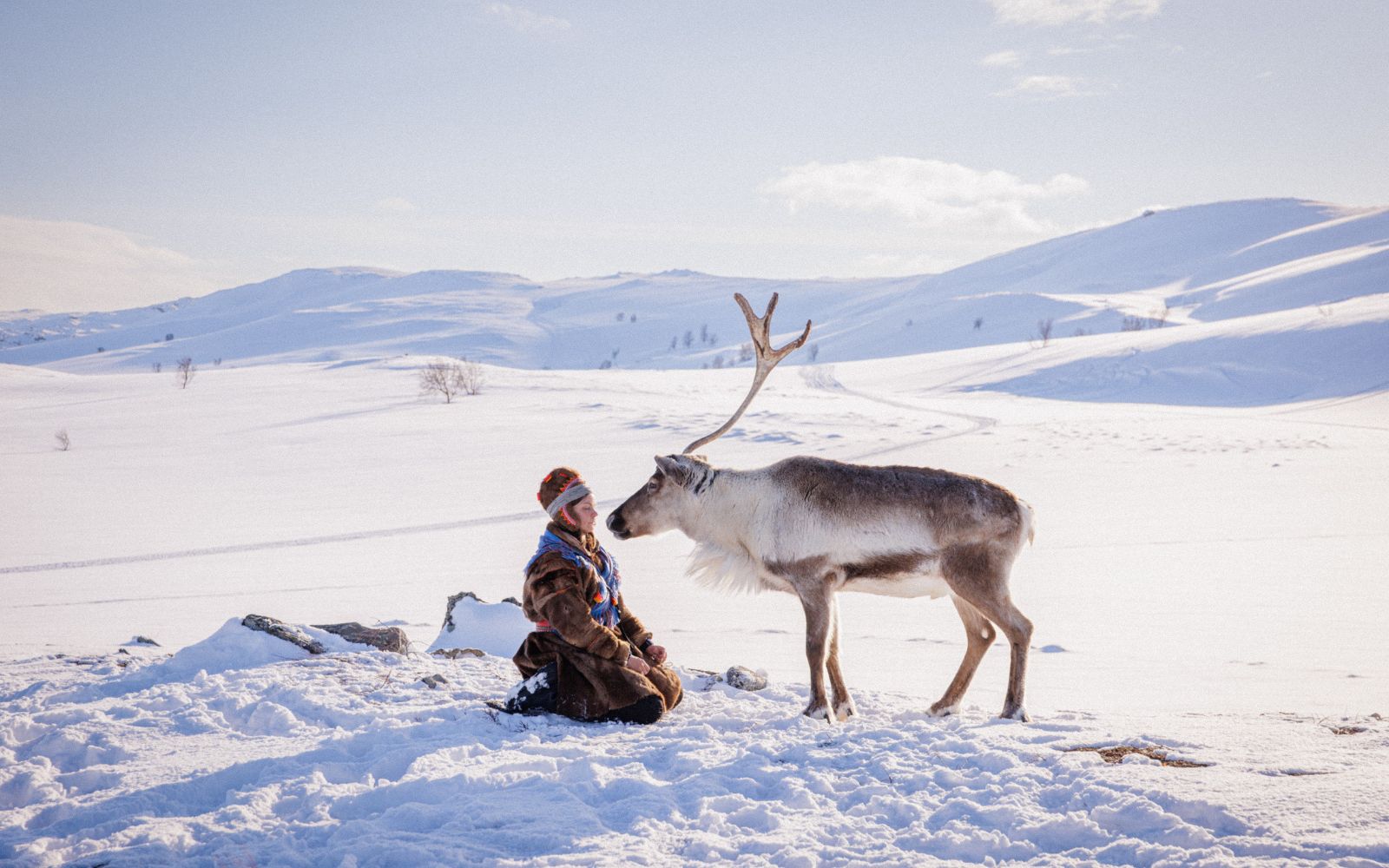
Árru is the first ‘joiking’ musical - traditional throat-singing of the indigenous Sámi people of northern Scandinavia.
This directorial debut for Sámi choreographer Elle Sofe Sara, co-written with Johan Fasting, also tells a story faced by many Sámi reindeer herders: the encroachment of industry on grazing lands.
2026 Hurtigruten Nordic Film Festival
- Melbourne: 10 July – 2 August, Palace Balwyn, Palace Brighton Bay, Palace Church St, Palace Cinema Como, Palace Westgarth, Palace Penny Lane, The Kino, Pentridge Cinema and The Astor Theatre
- Ballarat: 10 July – 2 August, Palace Regent Cinema
Check out our gig guide, our festival guide, our live music venue guide and our nightclub guide. Follow us on Instagram here.
View this post on Instagram
Maia (Sara Marielle Gaup Beaska) keeps the family herd with daughter Áilin (Ayla Nutti) and brother Dánel (Simon Issát Marainen). With grazing under threat from mining, Maia has reluctantly contacted her uncle, Lemme (Mikkel Gaup), a lawyer who returns as saviour.
Through tense encounters, we discover he abused Dánel as a youth, and the family (apart from Áilin) knew.
Woven with domestic drama, Árru is driven by tensions between voice and silence, duties and ethics, past and future, centred on Maia.
There’s also juxtaposition between the stoic or brutal and gentle caregiving. Árru opens on Maia tending to a bloodied reindeer who has miscarried, burying the lost calf. Later, hunting with Áilin, the disarticulation and gutting is undertaken with intimacy and maternal calm.
It’s truly belonging to land with love that’s deep, but unsentimental.
Árru shares Sámi joys and the cosmic power of joiking. It slips between diegetic and non-diegetic song, including a surprising musical-theatre-style number by young activists celebrating links to the earth.
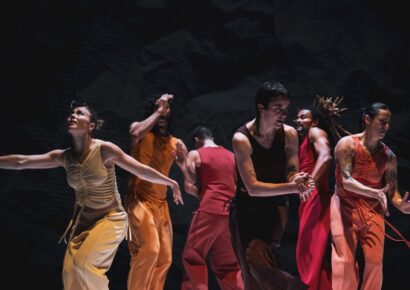
It can take on surreal qualities, as when Maia’s song becomes a gripping movement sequence with mysterious naked strangers on a rocky hillside. Both tied to the world, and transcendent.
Áilin emerges as the moral voice in intergenerational confusion. Chosen to lead, she rebels against the injustice of Dánel’s treatment.
For Áilin, the continuation of culture is not just carrying the past, but in the better choices of leaders carrying it forward.
At once sorrowful and hopeful, Árru beautifully negotiates its difficulties.
The Love That Remains (Iceland, 2026)
View this post on Instagram
Icelandic comedy isn’t for everyone. Slow cinema also isn’t for everyone. Not bound by narrative action or tight pacing, it moves in a lifelike way.
Icelandic writer and director Hlynur Pálmason prefers quirky, ponderous storytelling. The Love That Remains follows a year of a family undergoing a separation. Pálmason put real life into his portrayal of real life.
The child actors are his own children, and family dog Panda is played by Pálmason’s Icelandic Sheepdog (winner of the Palm Dog for the performance).
The opening scene uses footage of Pálmason’s own studio being demolished, to symbolic effect: a roof ripped off an empty building hangs in poignant limbo.
Saga Garðarsdóttir as Anna and Sverrir Guðnason as Magnús (Maggi) are the likeable ex-couple. The film deliberately misses the conflict: when Maggi first arrives to join family dinner, he is already living separately.
Lack of friction or villains could be boring, but Pálmason has engineered a naturalistic charm. It dips in and out of events (and non-events) in vignettes, some drawn-out, some flashes.
The children cuddle fluffy chicks, discussing chicken promiscuity. Maggi trudges through days among bored trawler fishermen. Anna’s art moves slowly, exposing metal shapes to the elements at her outdoor studio to create pigment on fabric.
Hiking. Foraging. Dead whale. Archery injury.
Punctuated with magic realism, a mysterious ‘knight’ is one cumulative narrative thread. Slowly, Pygmalion-like, a knight is constructed by the children and used for target practice. It comes alive and wanders, bloodied, to the house by night.
Realising the knight is female, Maggi kisses her… and it’s a dream. He’s floating at sea awaiting transport, abandoned between ship and shore.
The Love That Remains has no closure because such relationships do not have a perfect conclusion.
We must endure life’s slowness. And weirdness.
For more information, head here.