It was a showcase of Seattle’s musical history, yet Mark doesn’t feel any innate geographical allegiance. “I’ve never been one to have any hometown pride. I’m not a nationalistic person, not like, ‘Go USA!’ or ‘Go Washington State! Go Seattle!’ Where you’re born or where you grow up isn’t anything you have to do with, it’s sheer happenstance. It’s always baffled me that people have hometown pride.”
Though Mudhoney enjoy a status of revered veterans, Mark rejects the notion of nostalgia that overwhelms many of his contemporaries. “For me it’s always moving forward. I don’t dwell on past glories, I’m not even sure if there were any,” he laughs. “Sure, I have fond memories, but there are shitty memories too. There’s a balance to be struck there.”
Mudhoney are a rare breed, being one of the few acts that have never slipped into hiatus, avoiding the inevitable cries for a reunion. Though Mudhoney have avoided that trapping, Mark doesn’t feel disdain for those who have made the journey to the comeback trail.
“I don’t look down upon anyone. If I was Pavement or The Replacements and someone offered me several million dollars to get back together, I would do it in a heartbeat,” he explains. “I actually admire a band like Melvins or Pearl Jam a lot more, they just continue playing and doing what they do because they love what they do.”
This year saw the release of Vanishing Point, the band’s ninth full-length studio LP. It came five years after the release of The Lucky Ones, marking the longest time between Mudhoney albums. “There were a couple of things. Steve [Turner, guitar] moved down to Portland when we recorded The Lucky Ones, which was our last album. So our practices became a little bit fewer and further between, because Portland is a three-hour drive away. Any time we practiced it was a six hour round trip for him. Then in 2010, one of my good friends at Sub Pop died in a car accident. So that took me a long time to think about not missing him.”
Recent setlists for US shows provided a varied selection of new and old material. “For these Pearl Jam shows, we came up with two different setlists. One where I didn’t play guitar, the old songs with just one guitar, like Who You Driving Now? and Suck You Dry, then a couple songs off The Lucky Ones and a couple songs from the new album. When we played with Pearl Jam here in Seattle we tried to come up with more of a psychedelic setlist for our own amusement, songs with a lot of guitar solos, where the other one was more punk. Who knows what we’ll be doing on the Big Day Out, we’re not sure what our set times are.
The divergent styles of punk and psychedelic, and everything in between, stems from a democratic songwriting process. “When we write, we collaborate. We end up writing stuff that falls into stuff that everyone in the band likes. Steve tends to be a huge folky as well, he likes more folk than I do. Then I like a lot more jazz than he does, not that I can really play jazz. When the four of us get together, it mutates into something else. When we try to play jazz, by virtuosity, it becomes a Mudhoney thing.”
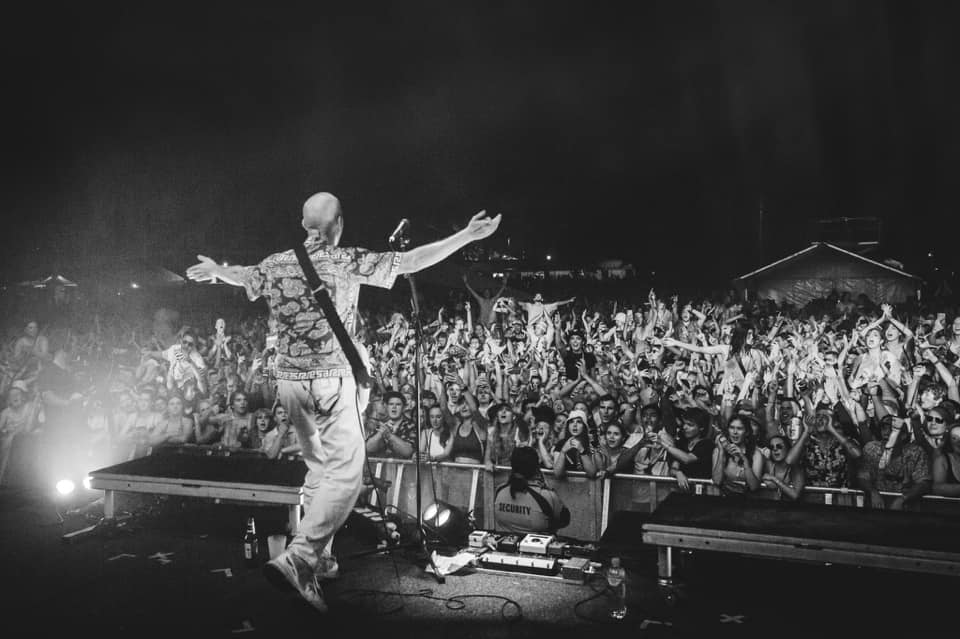
As for longevity, it seems Mudhoney will be around as long as the band’s collective carcasses allow. “I don’t know if it takes a lot of mental sharpness, because I’ve been really, really drunk up there and it’s seemed to have gone fine as well. I actually do wonder how long we can do this, physically. The hopping around, acting like a fool onstage part of it, for sure.”
Like ducking and weaving between between Pearl Jam’s legs?
“Yeah, if my back went out, I wouldn’t be able to do that.”
BY LACHLAN KANONIUK