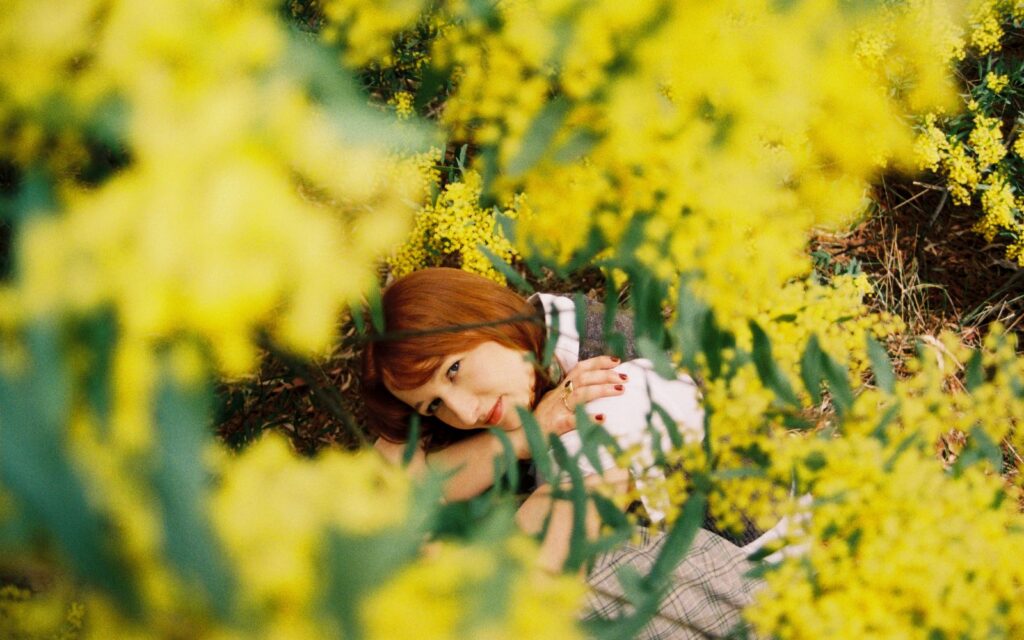
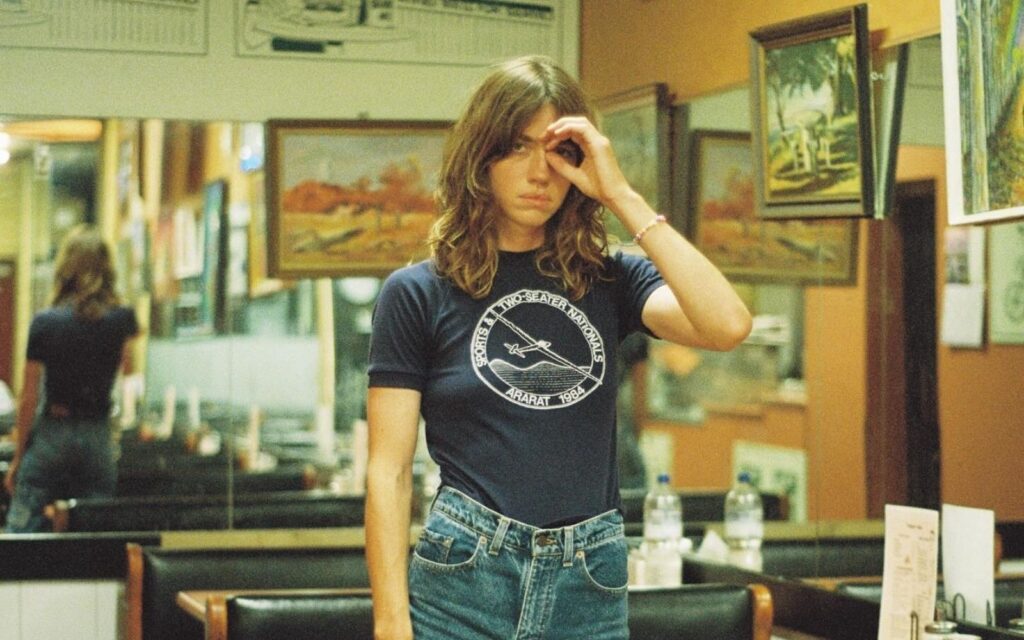
A mix of zooming synths and contemporary R&B vocals, along with earnest lyricism inspired by country and folk music, Do I Make You Nervous? offers a refreshingly innovative take on pop music. It’s superbly modern in its production, yet rooted in classic songwriting traditions.
It’s an approach, Brown explains, that came about through a mixture of necessity and circumstance. “When I was playing music before Banoffee, I was starting to tire from it because I didn’t know how to feel connected to what I was doing,” she says. “The way I do things now and the way I’m honest, I definitely know that by being on stage and just being myself and being honest about how I’m feeling, I think that has an effect on the listeners. And I would hope that it would, because I never want people to come to a show and feel like I’m disconnected from them and not aware of the relationship that we are having in that moment.”
As a result of her honesty, Brown has earned a reputation as an incredibly emotional and intimate musician. However, that wasn’t the original intention for the Banoffee project.
“I actually started Banoffee to be something completely different to that. I was like, ‘I’m going to start a pop project and it’s going to be all for fun and not hard to deal with. There’s going to be nothing too intense in there.’ But I think probably more than my experience in music, it was life experience around the time that pushed that honesty through earlier than it might come for some people. I think dealing with some life crap around the same time that Banoffee started, I just didn’t have the energy to put on a façade and I wasn’t particularly interested in doing that, because it wasn’t going to work to make me any stronger in that moment in time. Then it just stuck.”
With no façade, fans have formed an instant connection with Brown’s raw and delicate lyricism. That connection translates to a commanding live show, which will be on display when she headlines the Former Royal Women’s Hospital alongside the likes of I’lls, Kllo, Lucianblomkamp and Planète early next week. She’ll utilise a range of vintage synthesisers and midi samplers to bring the new EP alive on stage. To create the EP’s diverse sonic landscapes, Brown worked with some of the country’s best producers, including Oscar Key Sung – an outstanding solo artist in his own right and a resident of Brown’s back garden. No, seriously.
“He’s in Europe at the moment. He’s been there for the last three and a half months on tour, but yes he does live in my backyard. My mother misses him terribly,” she laughs.
Key Sung’s magic is evident on the EP’s lead single With Her, while his former musical partner Martin King (of The Harpoons) helped out on I’m Not Sorry.
“I knew his style,” says Brown. “I wanted it to be rough and gritty and I know that Martin’s not afraid to go there and he’s not afraid to really hack into something. So I was like, ‘Yeah, I want to try this with someone that’s willing to get kind of dirty with it’.”
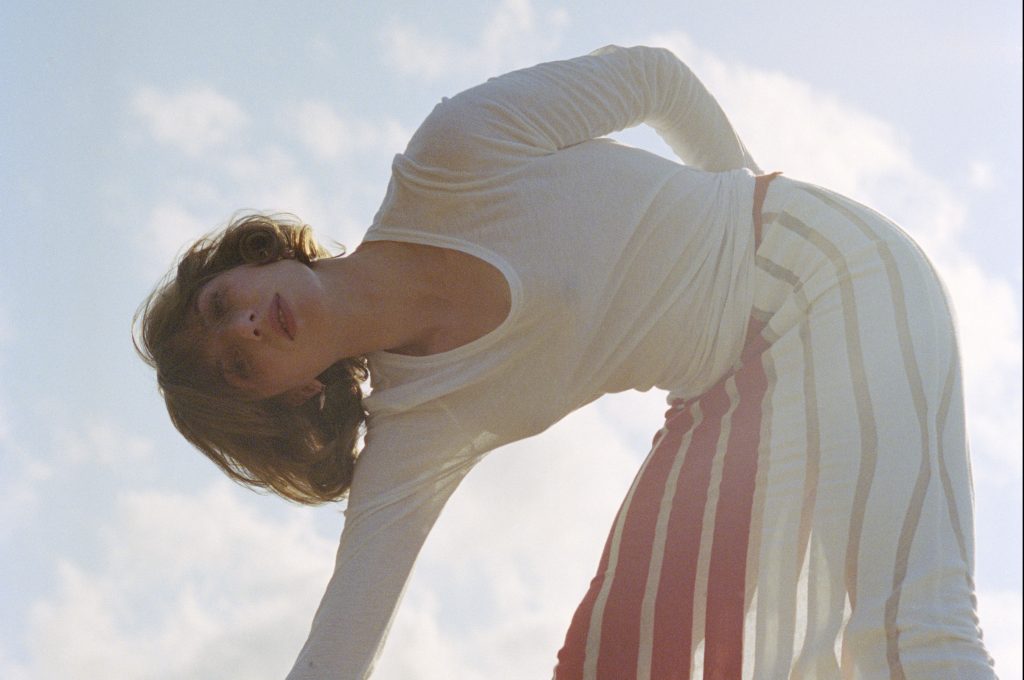
Brown doesn’t just get jagged with her music, but also her appearance. In recent years she’s cultivated a name for herself as a designer with an innovative eye. “When I work fashion into Banoffee, I do it in a way that I want fashion to be separate to the music. I don’t want what I wear to improve or take down what I’m doing musically. I do it because it’s a sign of my personality, and I also do it because I want Banoffee to have a visual side. I always want there to be clips, I want there to be fun fashion, I want there to be art involved. So those things are a little bit different for me than maybe other female artists who just put on an outfit that they want to wear on stage that they feel good in. I think they’re very different, and I make a conscious choice to do fashion shoots and to release clothing and things that make people pay more attention to fashion with me.”
While this choice has made her one of the more visually striking artists in the local music scene, Brown’s aware that the music industry still has a lot of conflicting attitudes towards appearance, particularly when it comes to female artists. She detailed her experiences with these attitudes in an article published on the new wave feminist blog Good Good Girl titled I Am A Girl But That’s Not What I Do.
“I did receive quite a lot of response from that article which I’m really happy about,” she says.
“I do think that it has made a bit of a blueprint and I like that I have put it in words because it’s almost like setting yourself up. Like, I’ve given myself a safety net in terms of I now have to live by those words.”
To illustrate the ongoing issues with artists being judged in terms of gender and appearance, think back to a recent incident where Bethany Cosentino of Best Coast received a horrible live review from a male journalist, whose only compliment was given to her outfit. Cosentino bit back, deeming the review horribly sexist, and Brown couldn’t agree more.
“Women on stage, if they give a bad performance and are then complimented on their outfit, it’s like someone saying, ‘I didn’t really like the show but you’re a nice person.’ You know? But with a billion stabs to the back, because it’s not commenting on any personal quality. It’s commenting on something material and exterior to her and making it seem like she should value that as a personal quality and I don’t think that that’s right. I find that very frustrating.
“To tell you the truth, I’ve had that happen to me and the only thing that comes from that is that you feel bullied and that is the worst feeling. To feel bullied by someone who’s writing something public is something that we’ve really got to stop in the arts.”
Brown’s strong views make her a refreshing figure in an industry where so many people sheepishly play by the rules. The same sort of bluntness and honesty fills her lyrics, but she warns against taking her words at face value.
“I know sometimes my lyrics are a bit of a trick. Some people think they know what they’re about and then someone else has some other interpretation, and I quite like that about it. I think my lyrics aren’t as straight forward as they first appear.”
Nevertheless, they certainly resonate with listeners, invoking the figurative characteristics of folk and country music – styles that Brown has been listening to her entire life.
“I think there’s a lot of storytelling in those genres and I’ve always loved that. My dad taught me that a lot growing up. He has very strong opinions on songwriting and will often say to me, ‘This song sticks with me because of that imagery or that imagery’.”
So does she think the combination of imagery and honesty is the key to Banoffee’s success?
“I’ve considered that, because I do get asked about this a lot. I think there’s probably some truth in that. I mean I always feel closer to someone once they’ve revealed something about themselves that I didn’t already know.”
BY NATHAN WOODS