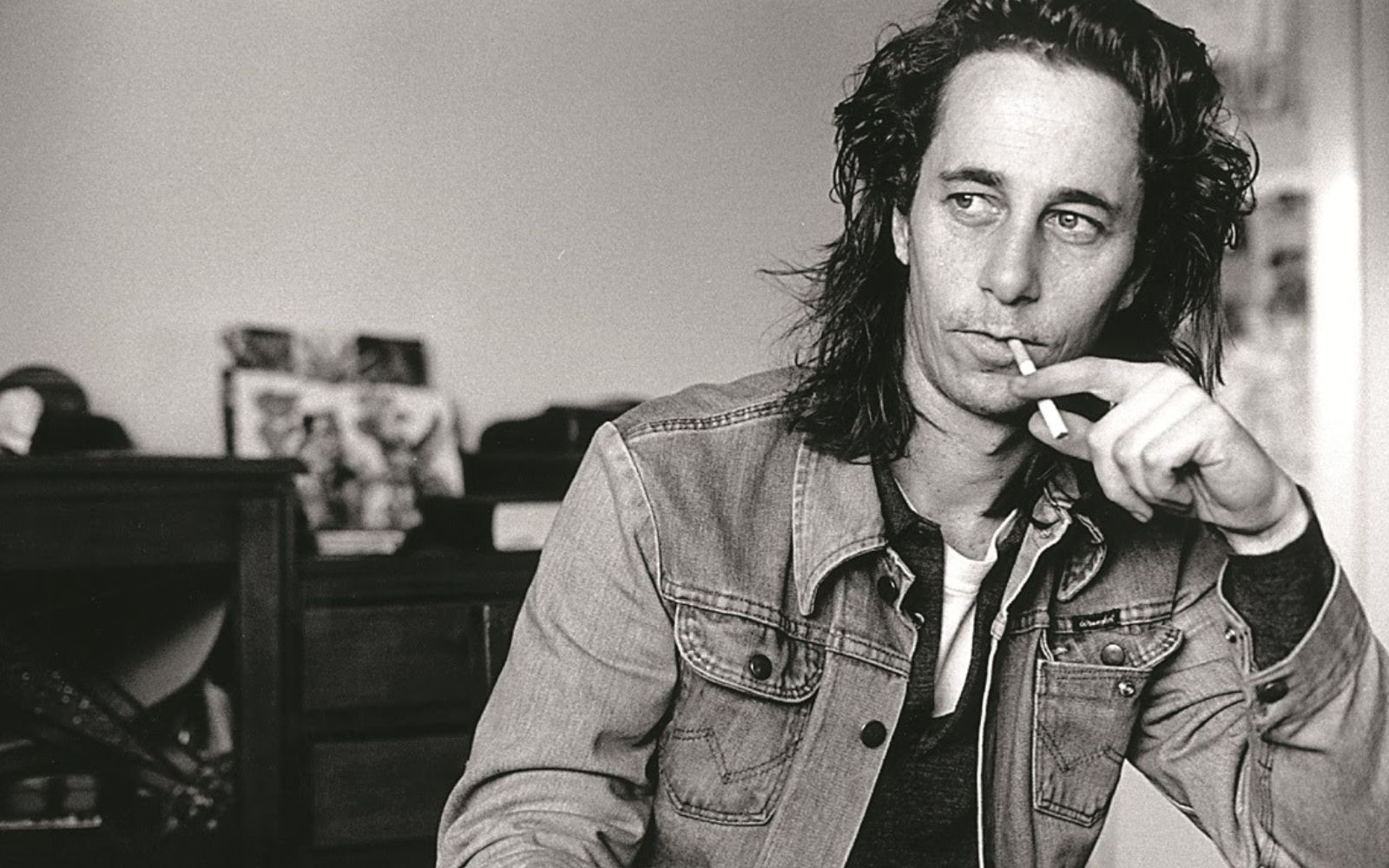
Conway Savage has been Australia's answer to a piano man since he was thirteen.
Conway Savage has been Australia’s answer to a piano man since he was thirteen. While most musicians are inducted into the pub circuit as emerging adults, Savage was already seasoned behind the swinging door.
Raised by publican parents and fortified by an art school sensibility, these watering holes served less as a stage and more as an extension of Fish Creek — a locale where music was just as much a part of one’s daily ritual as clocking off and grabbing a pint.
When speaking to his collaborators Suzie Higgie (Falling Joys) and Mick Harvey (The Birthday Party, Nick Cave and The Bad Seeds) ahead of These Are The Waves: Celebrating the Music of Conway Savage, earlier this month, it quickly becomes clear that working with Savage felt as organic as the open country permeating their individual and collective works.
On 17 July, these songs were carried into St Kilda’s Memo Music Hall — the very threshold where the shore kisses the asphalt. Here, music is as much a form of escapism as hunkering down in the outskirts.
Check out our gig guide, our festival guide, our live music venue guide and our nightclub guide. Follow us on Instagram here.
View this post on Instagram
Nylon strings and valve amps: the making of an album
For one, Higgie and Savage’s Soon Will Be Tomorrow from 1998 was recorded in an old rambling schoolhouse up in Mount Victoria.
Rainfall litters the soundscape of singles such as The Letter — the cadences of climate as much an accompanist as Savage’s piano is to the sensitive life. Here, leads like grapevines snake down the hallways. The acoustics of a bathroom are just as impressive as those of the more exorbitant studios Falling Joys were accustomed to.
After all, this was an album built beside the fire — its endoskeleton composed of 16-track reel-to-reel recorders, old microphones, valve amplifiers, and Higgie’s ‘nun’ guitar — a nylon-stringed acoustic she’d been devoted to since the age of nine, when she’d first learnt the instrument’s whims and ways.
It feels more like reminiscing about a friends’ getaway than the labour of recording. Each night, Slim Doherty of Sydney’s The Johnnys would whip up cookouts for the chorus. During the afternoons, Savage watched the footy. The recording process encompassed life, rather than persevering in spite of it.
Occasionally, however, Savage needed a little help off the couch.
“I always joked that I was like the big sister and I kind of bossed him around a bit, you know? ‘Come on Conway,'” Higgie muses. “And because he’s a huge Sydney Swans fan — ‘Okay, you’ve watched the afternoon football match, come on, we’ve got to go and do some stuff.’ And that’s wh[ere] I got the title Soon Will Be Tomorrow, because we only had two weeks, you know.”
“And he was one of those players [who] wouldn’t rehearse a part. You just kind of let him go and he’d noodle around … [It was] a really beautiful, free-spirited way of playing. And invariably, the first take was the take — unless we burst into laughter about something or [were] being stupid. But yeah, it was a lovely process.”
A happy accident: how Conway Savage’s debut solo album came to be
Mick Harvey remembers a similarly serendipitous recording process: Savage’s 1992 debut solo project, cut in an antiquated wooden church somewhere in upstate New York. One forgets that the music industry is, in fact, an industry in Savage’s presence.
Both Harvey and Higgie’s collaborations with Savage seem to have fallen into place in the aftermath of more commercialised recordings. For one, his self-titled project with Harvey occurred incidentally in anticipation of the sessions that would become Nick Cave and The Bad Seeds’ Henry’s Dream.
“The person who’d been designated as the producer — which we normally never had — he just kept not arriving,” Harvey recalls. “So, we had these three or four days that were booked that we couldn’t cancel. And so [we had] nothing to do. I just said to Conway, ‘Well, why don’t we record some of your songs?’ That was it, basically.”
The improvisational spirit is the soul of Savage — his free-wheeling approach unfurling as seamlessly as a river unconfined by a levee. The songs meander with no fixed destination. After all, music to him was simply an intrinsic way of being, no different to breathing — the piano simply an extension of his limbs. As Mick Harvey encapsulates it:
“He was never very interested in, you know, pushing his profile … or try[ing] to get attention for [his songs] or pump up his own tyres, or anything like that.”
Nor was he willing to be confined by genre. One can observe this in the July tribute’s lineup. Collaborators of a jangly indie or chamber pop persuasion sit comfortably beside alternative rockers — the Irish beside the Australians. For one:
“[Conway] really loved country music, but he wasn’t going to play country music. I mean, he would occasionally dabble and there’d be signs that he could do that stuff, a little bit of boogie-woogie or something, you know? But he wasn’t interested in reproducing that music, because there’s nothing in it … Thousands of people are doing that,” Harvey hypothesises.
“It’s not interesting to do that. It’s a formula, and it [means] you’re just part of a formula with not much personality of your own … So [Conway]’s gonna do his own thing with it.”
Conway Savage’s legacy lives on
One sees Nick Cave’s Australian gothic imagery as intrinsically tied to his Wangaratta roots. Suzie Higgie’s kinship with the scrub can be linked to her close association with the ‘bush capital’. Mick Harvey’s 2024 single We Had an Island expresses the turbulence of a romantic relationship as a turning tide. Even the name of the tribute show is evocative of a biosphere.
It is no wonder then that The Bad Seeds paid homage to Conway Savage thirteen months after his death with the 2019 studio album Ghosteen — its title carrying the Irish diminutive suffix ‘-ín’, which lends a word a sense of smallness or endearment, so that ‘Ghosteen’ reads almost as ‘little ghost’.
Mick Harvey has since gone on to initiate the first anthology of Savage’s music under Impressed Recordings — Too Dark to See: Solo & Collaborative Recordings 1992–2010 — decades after contributing to his first solo project.
It makes me wonder: how do Savage’s friends and collaborators go about condensing such a rich and captivating life into a set-list?
With most audiences predominantly recognising Savage as The Bad Seeds’ pianist, do they feel a responsibility to highlight the full scope of his legacy?
“I think that’s what we’re doing,” Higgie affirms. “It will be a wonderful cross-section of his material, and it’s been really fun for everyone to revisit the music that they played on and recorded with him. It’s very moving as well, as much as it’s fun … We miss the guy, you know? We miss him really badly.”
The breadth of musicians gathering in his honour suggests the true enormity of his legacy — as vast and awe-inspiring as the mountain range foregrounding the horizon, as steadfast as the mighty sierra.
The tribute at Memo Music Hall did not so much resurrect his presence as unearth what was already undeniable: his innate gift and its fundamentality to a whole wondrous spectrum of music scenes.
For more information, head here.