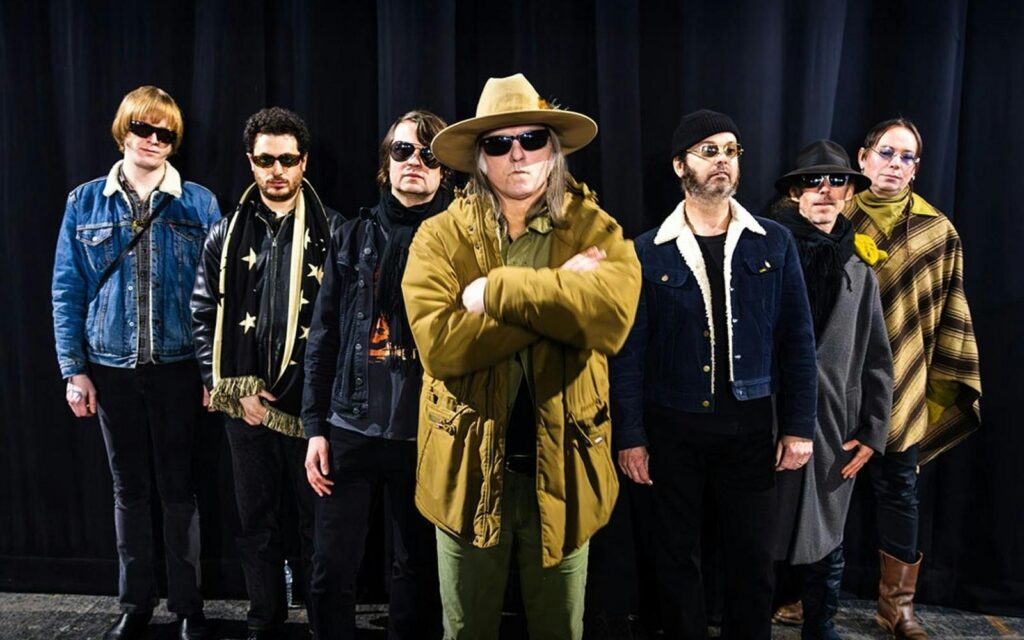
Two other original members join Burnel in the band’s current formation: drummer Jet Black and keyboardist Dave Greenfield. Guitarist Baz Warne entered the picture in 2000 and has been sharing vocal duties with Burnel for the last ten years. Black’s health has long been a point of concern, as he suffers from a chronic heart problem that inhibits his ability to perform. The band members previously intimated they’d stop touring if Black couldn’t continue, but the fact James MacAulay is handling drumming duties on this tour shows they’ve since settled on a compromise.
“[In 2014] on our UK tour Jet played four numbers on the first night, two on the second and needed oxygen on the third,” Burnel says. “Throughout [2015] he has been absent, although he certainly has an opinion and input on all things Stranglers. How many drummers approaching 80-years-old do you know that play in rock bands?”
While the other band members are several years younger than Black, The Stranglers have managed to outlive the vast majority of acts they came up with in the late-‘70s UK punk scene. The Stranglers are still regularly referred to as a punk band, and their irreverent attitude certainly corresponded with the initial mood of that movement. However, they soon began to look further afield, moving away from the simplicity of punk rock and exploring lyrical themes that weren’t purely anti-establishment. The Stranglers could be seen to represent the fact that punk wasn’t so much a sound as a way of thinking, but Burnel says they felt no allegiance to any particular school of thought.
“I agree that it was originally a way of thinking, although a form of suffocating fundamentalism hijacked it and put blinkers and rules on it and it no longer corresponded with our way of thinking.”
The band’s disillusionment with punk by no means impacted on their creative drive. With the release their debut LP Rattus Norvegicus, The Stranglers entered a ten year period of staggering productivity – releasing nine albums between 1977 and 1986. Their next LP didn’t come until 1990, and it was the last to feature founding guitarist and vocalist Hugh Cornwell. Cornwell’s exit could well have spelled the end for the Stranglers, but while they never regained the efficiency of their early years, the band have released a further seven LPs. With each new release, they’ve stayed intent upon positively expanding their oeuvre.
“The problem is to do with quality control,” Burnel says. “I have at the moment about 150 different ideas that I need to make sense of. That takes more and more time especially in view of the worldwide demand for the band and our love of playing live. Also the last thing I want is to start plagiarising ourselves.”
For Burnel and his Stranglers associates, playing in this band has long been a professional responsibility. At this point in time, it’s no longer necessary for them to continue touring, especially to such far flung places as Australia and New Zealand. However, finance has nothing to do with their interest in getting up onstage.
“There is a need to play. There is a need for that communion with people, an audience. As a band we really love each others’ company. The material is really enjoyable to play.”
BY AUGUSTUS WELBY