“The question most major city festivals face is how to create a buzz, how to present a critical mass of work [and] how to invent a focus to encourage the city to go out every night,” explains Holloway. “When I started planning my first Melbourne Festival it was clear that the city already has the best music scene, the best bar and restaurant culture, and the most thriving night time economy in Australia, so the question was different: what do you give the city that already has almost everything? I believe that the answer is to focus on unique and unforgettable events, and to weave them as lightly as possible into the existing city; to move every possible dollar from infrastructure to artists. To build a festival out of the city rather than imposing it onto the city. To make it a festival in, of, and about Melbourne.”
As opposed to previous incarnations, this year’s event will not feature a purpose built hub. Instead, Melbourne’s flagship cultural and live music institutions will be showcased and populated throughout. It’s an attempt to see our favourite local haunts through a reinvigorated light. In other words, this year’s Melbourne Festival is an opportunity to remember how good our city really does have it.
“We do still need somewhere to gather with friends, artists and audiences after our shows every night,” says Holloway. “Curtain House is a unique building. The Toff in Town alone has the fabulous combination of intimacy and class in one room, with a great live music venue in the next. Talking with artists, international visitors and festival-goers alike, there was a genuine energy to rediscover this iconic Melbourne space in a new way during the festival.”
Like most great ideas, Holloway began his task of programming the festival from a place of beautiful simplicity.
“I started off with just two words,” he says. “Festival: what is a city festival in the 21st century, how does it stand outside the day to day, how does it use everything we have to create live events [and] help us see the world anew? And Melbourne: what are the unique qualities of this city, and how can we amplify and challenge them. The festival team and I were looking for a series of events which were irresistible rather than broadly appealing, that spoke to the city and the times, that were immersive and engaging; unique and unforgettable.
“We want the events during the festival to be sharply focused to create energy and urgency. The festival in October is the moment of lightning – charged in the build-up by the friction of ideas, engagement and exploration, harnessed in the aftermath to create energy, debate and inspiration.
“Amidst the continuing conversation about festivals – their quantity, history, relevance and their leadership – it remains clear that our primary purpose is to ‘only connect’. To connect Melbourne with the rest of the world, to connect the accepted present with the emerging future, and to connect the passion of artists with the prose of society.”
These ideals are exemplified in Holloway’s electrifying program as past connects with the present, and the present is complemented with events that buck convention and illustrate exactly where we might end up. Cultural avatars of the 20th and 21st century come to the fore, with David Bowie: Nothing Has Changed seeing the seminal artist reinterpreted by the likes of Tim Rogers, Iota, Adalita, Deborah Conway and Steve Kilbey alongside the Melbourne Symphony Orchestra. Further program highlights include breathtaking ice dancing in Vertical Influences, Paul Kelly and Camille O’Sullivan paying tribute to Yeats in Ancient Rain, large-scale installations that transform the ordinary into something spectacular, and myriad other works that beckon discovery. Aptly, Melbourne Festival is bookended by two events that capture the spirit of Australia’s first people, with contemporary revelations throughout.
“Being from somewhere else means that I’ve had the joy of discovering and exploring Australia with fresh eyes and ears,” says Holloway, who is originally from Sheffield but moved to Western Australia several years ago. “Australia’s stories – whether 40,000 years old or entirely contemporary – are rich and complex. The festival needs to keep finding new ways to explore them. Clinton Walker’s Buried Country explores Aboriginal country music in the most amazing way, and Victoria’s fabulous Back to Back Theatre go right back to Adam and Eve in Lady Eats Apple.”
Under the artful guidance of Holloway, the 2016 Melbourne Festival will blur the lines between audience and performer, all the while inspiring city-dwellers to see their home with new eyes.
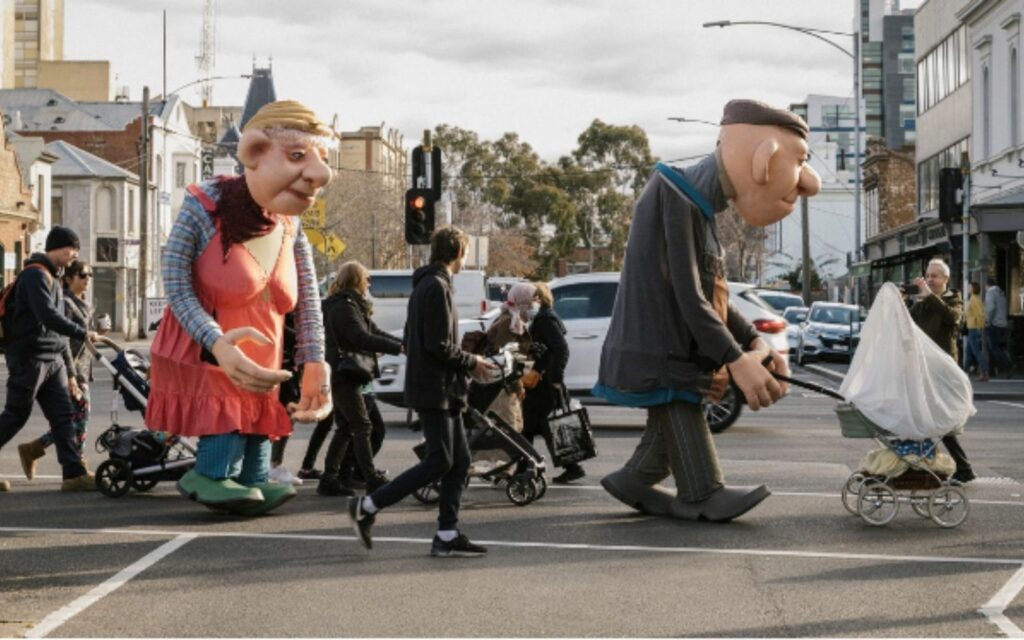
“The festival has free events in public spaces throughout, from the welcome of Tanderrum to the beauty of The Home Within, from the witty empowerment of Haircuts By Children to the demonic pyro and drumming of Tambours de Feu through the laneways and main streets of the CBD,” says Holloway. “There are intimate and immersive works for one person at a time in labyrinths or using virtual reality headsets, and performances like Faye Driscoll’s Attendance or The Money which are entirely completed by the audience.”
Ultimately, events like Melbourne Festival strengthen our community. They remind us of what we are so fortunate to enjoy, while providing a chance to reflect on what Melbourne stands for both as a hotbed for creative niches and as a global leader in the world of arts and music. With its brilliant, reflexive and wide-reaching program, Melbourne Festival is an event for the people – to inspire, provoke and excite.
“I want us to present a festival that is for, in and about Melbourne,” reflects Holloway. “That creates the thrill of anticipation, that is fabulous in the moment and which lives long in memories. I want people to jump in with both feet, buy more tickets than they think they can really afford, commit to more evenings than they think they can spare, and take some wonderful risks.”
By James Di Fabrizio