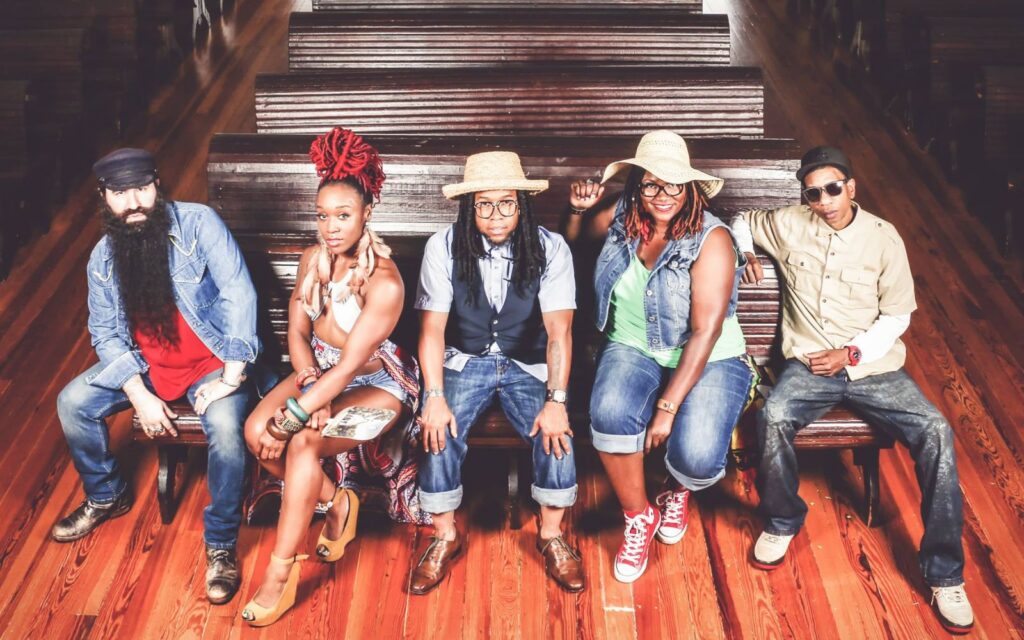
“I don’t think about that stuff too much,” Janeway considers in a fine Alabama drawl. “Yes and no, you know? We’re kind of our own people in a way, but there’s certainly an attraction to the idea of being connected with the history here. I tell people who’ve never been to Muscle Shoals, Alabama that there are people walking on the street who played on Aretha Franklin records, on Wilson Pickett records, all these amazing people, and they’re just going about their day. You’re standing in the shadow of those people, so that is something that you look at and think ‘Wow, this is pretty amazing.’ And it does inspire you at times. But at the same time, we are our own people. Over here, being from Alabama kind of has a stereotype to it and so it’s a little different. When we go overseas, everyone has this thing about Alabama where it’s this mystical place where all these musicians live, and somehow it is, and it’s not. It’s weird. The lineage is so far ahead of us, we’re really not worthy of that kind of title yet.”
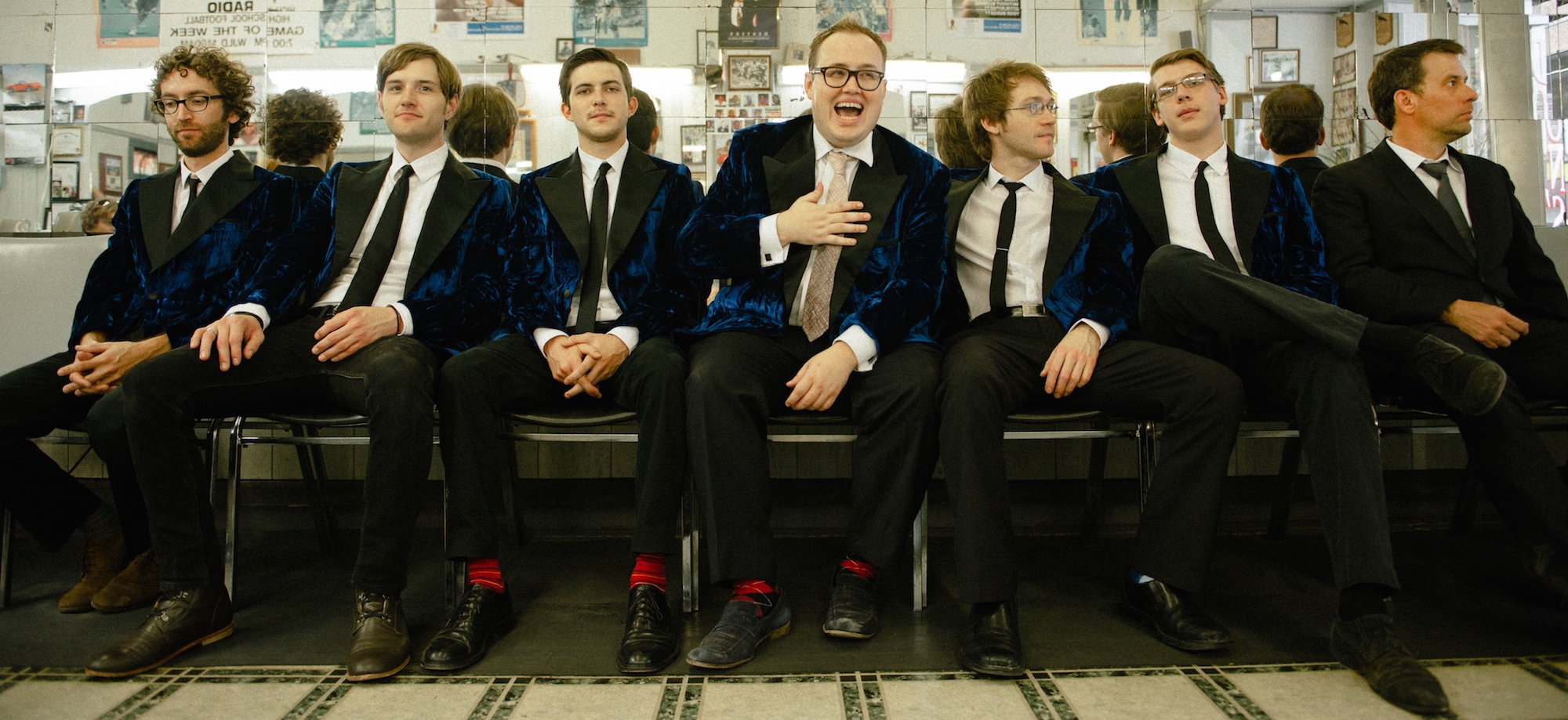
Throughout our conversation, the overarching impression you have of Janeway is of a funny, humble guy who seems bemused by the band’s rollicking success … but also a little wary of it. Music has been in his bones from an early age; growing up in a devoutly religious house, singing at church was an early passion. Yet at the centre of this – the fans, the touring, the accolades – he and the Broken Bones remain earnest working musicians, still learning from their inspirations, still trying to find a sound that fits.
“What I love about people like Tom Waits and Nick Cave is they’re still making very relevant music. Lyrically it’s still very interesting, and they’re both just such incredible performers. They both have this presence, you see them, and your focus is on them. I think honestly, we’re still a very young band, and so for me, having a situation where we’re just finishing up our second record, I can already feel itches in other arenas, these itches that aren’t being scratched yet. I think dipping your toe in many ponds is a good way to express yourself. Because this is my out. I don’t have a ton of outlets, I don’t party much. But I do eat, live and breathe music. For me, our first album kind of represents this thing that happened very quickly, and is definitely a snapshot of the band at that time. I think, as any artist wants to do, you have to expand the sound. That’s part of the whole shebang. This next record is very much a progression in sound. You don’t want to get trapped in that whole quote, unquote retro soul thing, you know? It is a trap, but there’s also nothing wrong with that. I mean, there are a lot of worse things you could do.”
Their debut album, Half the City, is all the more remarkable not only for the collective musicianship, but the way that Janeway wears his heart so clearly on his sleeve. Done so without the sentiment ever becoming repetitive or cloy. He has a voice whose nuance and expression is uniquely North American, yet the force behind it is universal. It’s a pretty fine feat for a man whose outlet is still expanding, and whose interests are still finding ways of seeping into song.
“For me, being brought up in Alabama and not being super educated, I’ve had to play a little catch-up in my life. I feel like I’m playing catch-up on a lot of things. On music, on art. But something that speaks to me on a really high level is that I’m a huge Mark Rothko fan. That speaks to me in a different way. I read a lot of non-fiction, which I guess is odd because it doesn’t really expand the imagination. But a lot of art, bizarrely enough, because there is so much distance between where I grew up, and that world. I’m really attracted to it now, and I’m still exploring that. In a lot of ways I’m still trying to find my identity. I grew up in a very sheltered environment in a very religious small town, so I’m still slowly expanding my horizons, but still keeping that Southerness, I guess you’d call it. But I love Kendrick Lamar, I’m a huge D’Angelo fan, I love Prince, David Bowie. For me, Half the City, musically, represented kind of the past in our Alabama lineage, and now the next record fells like the present, like moving forward. The first record is saying hey, we’re here! And the second album lets you define who you are.”
BY ADAM NORRIS