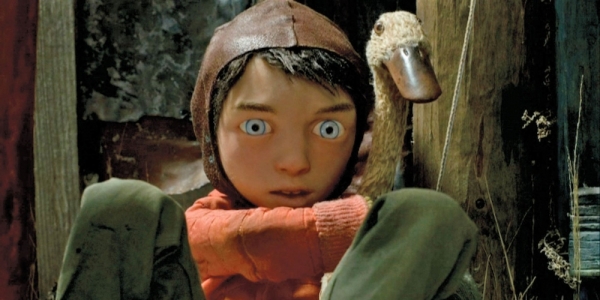
While the Prokofiev 1936 classic might be at the forefront of Kelly’s mind, he concedes that at the moment everything is still in the primary stage. When probed about how rehearsals are going, he reveals, “We will start closer to the time.” With the performance just around the corner, Kelly is seemingly relaxed about the Orchestra’s role but slightly more concerned about ensuring his own input meets his high expectations. “With this project in particular it is a lot about my own preparation believe it or not, because I need to know the film well enough. I literally conduct to the film. I really need to know it in a pretty organic way actually.”
With the film taking centre stage, Kelly is aware that the orchestra’s role is to enhance to the award winning imagery as opposed to outshine it. His role in the proceedings means that his own knowledge of the animation is as detailed as his knowledge of the back of his hand. On that note, he admits, “I am just warming up but I have watched it half a dozen time already. I imagine that total will be more like thirty or forty by the time I am done preparing.”
“The story itself is a good old fashioned fairy tale in a way. It is dangerous, it is scary, it is potentially fatal. People get hurt. Well not people, but favourite animals get hurt but in the end there is a sense of triumphing over fear. It is an adventure as such really.” With Prokofiev’s classic tale as a precedent, skillfully enhanced by Templeton, Kelly wants to ensure that the MSO’s contribution is as effortlessly remarkable. “I suppose in terms of Prokofiev’s music that is the core of it in a way. It is such an incredibly strongly defined piece of music. If you ask people who, if you asked them, would say ‘I have never heard an orchestra’ or ‘I don’t know anything orchestras’, if you played them the scene for the Wolf, they would straight away go ‘Ahh, yeah I know that – it is about wolf’. Each of the themes – the bird, the duck, the cat, the Grandfather, the wolf, Peter – they are all just part of our collective unconsciousness really. There wouldn’t be many children in Australia in a traditional educational environment wouldn’t at least have been exposed to Peter and the Wolf. There is a bedrock of familiarity there.”
Working with such instantly recognisable material is always a challenge, with a huge weight of expectation attached, but Kelly sees that as all part of the game. With the piece timed to coincide with the school holidays, Kelly concedes that while the performance is “aimed at the kids, it will be equally enjoyable for teenagers, parents, grandparents. Everyone has such an attachment and affinity to the piece, that the appeal is widespread.” All that being said, as a musician Kelly does see the performance as the perfect introduction to orchestral music for the younger generation. With so many people who view orchestral performances as inaccessible, Peter and the Wolf provides a platform of appeal. “I think that these days, more than ever, we all, but especially young people, are used to an awful lot of sensory input. Being able to give them the experience of this wonderful music with an exquisitely animated film of a classic story is ideal.”
With a captive audience with open ears, Kelly and his colleagues are ensuring that they make the most of a golden opportunity to entrance their young audience with the magic of music. He states,
“At the beginning of the performances we are going to have a little chat about themes and a little chat about the animation itself. They will understand a little from the inside as well as from the outside. I think that once the lights go down it will be a totally immersive kind of experience.” With the focus firmly on an all encompassing experience, Kelly admits that playing at ACMI will only serve to enhance Prokofiev’s appeal. In the very dry acoustic of the cinema, cinemas of course need to be dry, the orchestra is going to be amplified. In a way it is going to be very cinematic I think.”
BY JEREMY WILLIAMS