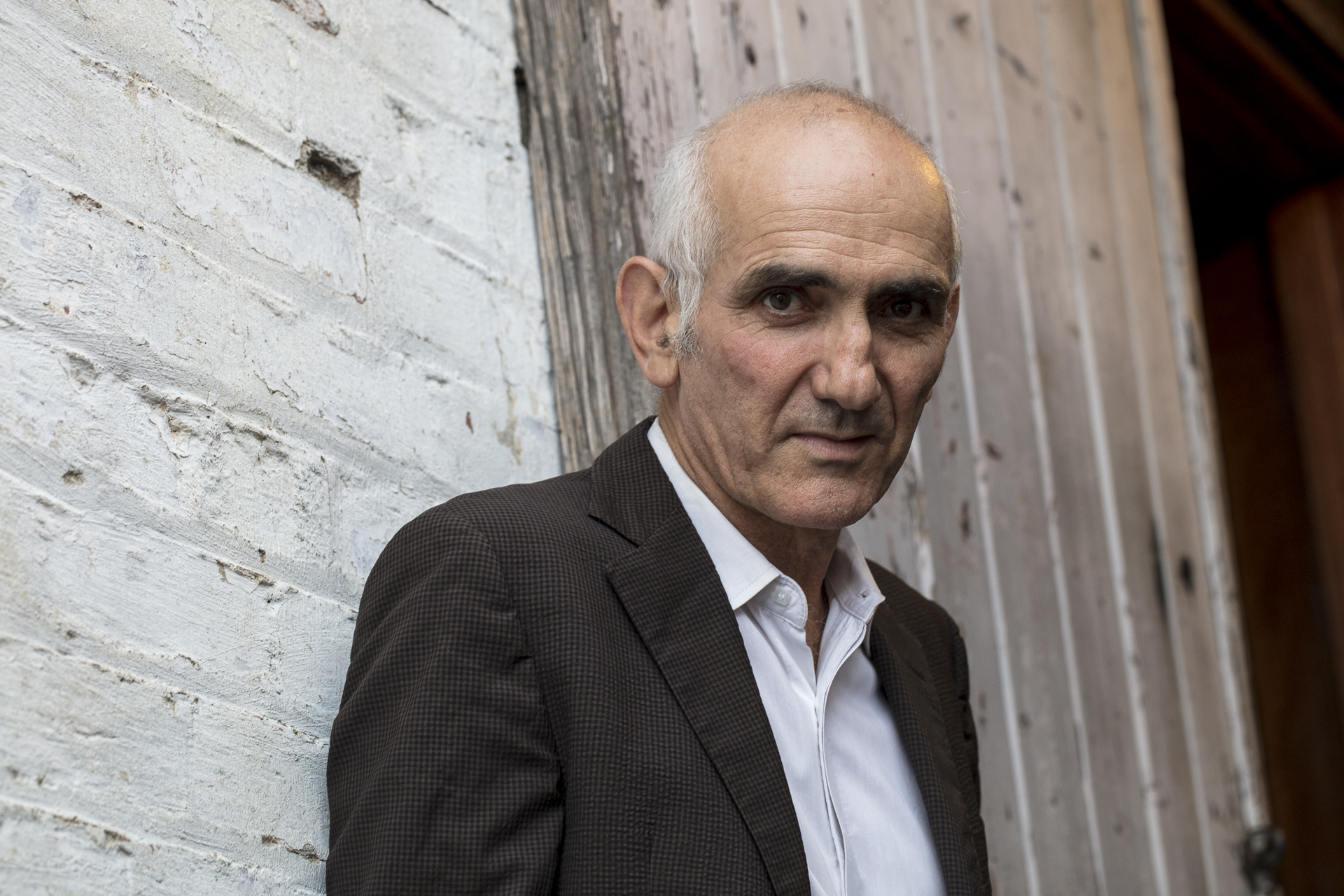
As far as iconic Australian songwriting goes, you’d be hard pressed to find a lyric more universally loved than “Who’s going to make the gravy?” For that, we have Paul Kelly to thank.
There’s a timeless quality to Kelly’s songwriting that allows his music to transcend generations. The jangle pop of Before Too Long or the slow-burning melancholy of (You Can Put Your) Shoes Under My Bed sound just as sharp now as they did when they were first released.
His latest studio album, Life is Fine, marks his 23rd record across a career spanning over 40 years.
Throughout that time, he’s penned hits that have earned a canonical presence within our national consciousness as well as exploring new avenues of his creativity – diving deep into his love for poetry and applying it to his craft. It makes sense when you think about it. Kelly has always been a natural-born storyteller.
“If I like a poem, I try to put a tune to it,” he says. “That in turn has changed the way I write songs. For some reason I believed that you couldn’t write the words first; that it would somehow constrain the music. But I was completely wrong. That’s given me another way to write and more variation in the type of songs I write.”
Case in point, the title track from Life is Fine. Originally a poem written by American writer Langston Hughes, the words have been reimagined atop a bed of lilting slide guitar and acoustic strumming, all the while anchored by immediately recognisable dry vocals. The protagonist finds himself unable to commit suicide – the water he tries to drown himself in is too cold; the building he wants to jump off too tall. Death just refuses to take. He instead concedes that while he’s still alive, he might as well keep living. It’s a theme consistent with many songs in Kelly’s work. He acts as a lyrical conduit, singing from the perspective of down-and-out characters that find a glimmer of hope in bleak situations.
“It’s almost like hearing a voice,” he says. “I hear the voice first, and I’m hearing that voice in my head when I’m writing the song. Most songs come at you sideways and they take you by surprise. How to Make Gravy is like that. It’s a voice that starts talking to me and then I try and follow it down.”
These voices Kelly talks about aren’t just the ones narrating his music. They’re our voices too. The voices of the working class and underdogs; of fallen soldiers and street brawlers. That’s what makes his music resonate across numerous borders. Last year, Kelly lent that voice to a collaboration with Dan Sultan and A.B Original for a politically charged rework of Dumb Things, tackling the divide between white and black Australia.
“Music is part of a conversation,” he says. “Sometimes a whole lot of things start moving and a ripple becomes a wave. Music can cut through a lot of talking and can be a part of change. Music’s always been part of that.”
Life is Fine marks Paul Kelly’s first ever #1 album, proving firsthand that his music still captivates the hearts of fans old and young. He’ll now take that record on the road, sharing it with Melbourne at a special open-air concert in the Royal Botanic Gardens.
“I’m really excited about that,” says Kelly. “It’ll have a good festival atmosphere and we’ve got a really strong bill with Steve Earle and Middle Kids. It’ll be all ages too, so that brings a whole other broadness to the event.”
As for what’s beyond that, there’s no doubt his music will go the way of other revered songwriters and poets – staying with us for generations; a snapshot of who we are and what we were.
“I came up in folk music where songs got passed on from singer to singer,” says Kelly. “If a few of my songs get sung and passed along, I’ll be happy.”