Souleyman, who’s been a hugely popular folk performer in Syria since he started out in the mid-‘90s, first ventured from his Arab homeland in 2009, and was astounded by the response he received from trendy young festival-going types across the UK, Europe and United States. “I thought that only those who can also understand my words could appreciate the music,” Souleyman says. “Now I know that there are things the audience understands even without understanding the words, because people respond instinctively to the feeling, to the emotion I convey. [Feelings] are the same in every language.”
Souleyman’s onstage manner seems perfectly geared to the simplicities of cross-cultural musical communication. With the backing of multi-instrumentalist Razid Sa’id, Souleyman warbles repetitive melodies through the microphone, employing that characteristically Arab vocalisation technique that seems to access a place far different than Western crooners and wailers know. In the downtime between his otherwise tireless verses, Souleyman simply stands over the monitors and lifts his hands high to clap along with Sa’id’s tempo. The audience, of course, joins in. “When I manage to get a big audience to move, I am overwhelmed with joy and pride,” he says. So how do Souleyman’s festival and club shows abroad differ from those he gives at home?
“In Syria, I very often perform at weddings … they usually last much longer. I sometimes go for hours during a wedding. We all dance, sing, [take] a break, eat, sing, and dance some more. It is a festivity.”
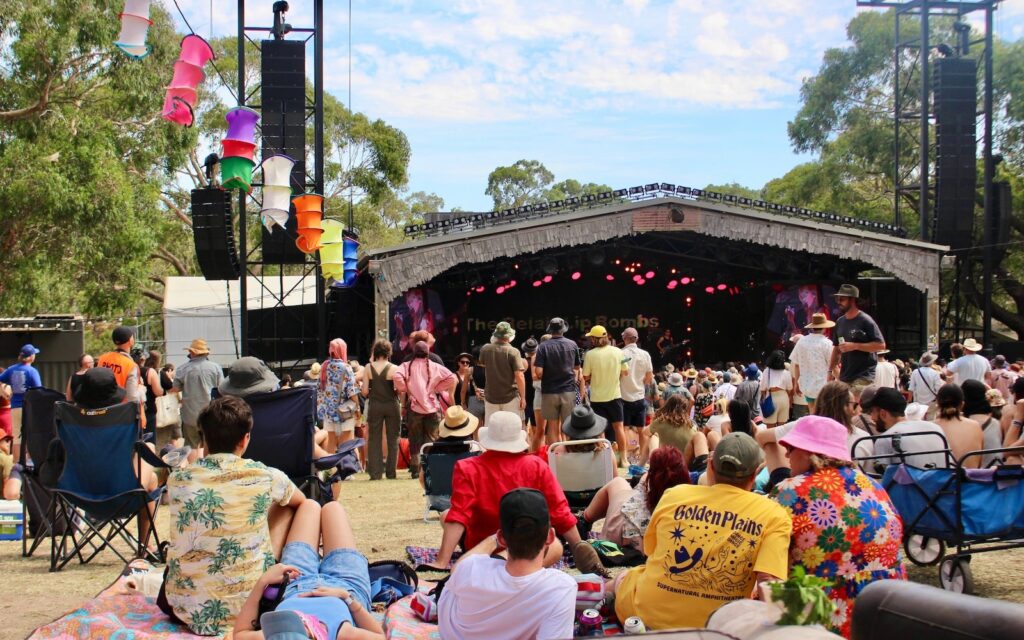
Over the last few years, Souleyman has convinced some pretty influential Western music identities of his talents. He’s recorded collaborations with Björk and Damon Albarn, and appeared at Glastonbury, Bonnaroo and Montreal Jazz Festival. With unexpected success on this level, however, comes an inevitable pocket of cynicism: a suspicion about Souleyman’s authenticity, and the arguably exploitative intentions of his Western management representatives. Have Souleyman’s achievements been made possible via reduction? Has his version of Syrian folk-dance been sanitised for Western consumption?
A more likely factor behind his popularity is the nature of dabke itself. Souleyman says his style “belongs to the traditional, popular category” of Syrian music, and this description is revealing. For this is a musical practice passed down through generations – it has the longevity and history of communal folk music, but also the explicitly popular appeal of a soundtrack that defines the Arabic wedding, street party or football celebration. An Omar Souleyman show, then, carries with it the potential for an eruption of emotional energy, in whatever form that may take. And while onlookers might judge Souleymaniacs as snobbish hipsters who cynically trawl all corners of the human universe for something the mainstream has missed, well, the man himself has no patience for such judgement – for him, it’s all about individuality.
“What I really like about being in the West is that people leave each other alone,” he says. “In my culture, everybody has something to say about everything. People interfere in each other’s lives very much. I was fascinated when I discovered that there are other ways of dealing with each other, too.”
BY CHRIS MARTIN