Monkey Grip cinematographer David Gribble (ACS) has spent decades translating Australia onto film.
Originally hailing from Brisbane and based in Sydney, the Monkey Grip cinematographer has captured everything from the suburban sprawl of Australia’s east coast to Hollywood’s boulevards, working with heavy-weight directors like Jane Campion and Gillian Armstrong, and universally adored actors including Robin Williams, Sir Anthony Hopkins and Willem Dafoe.
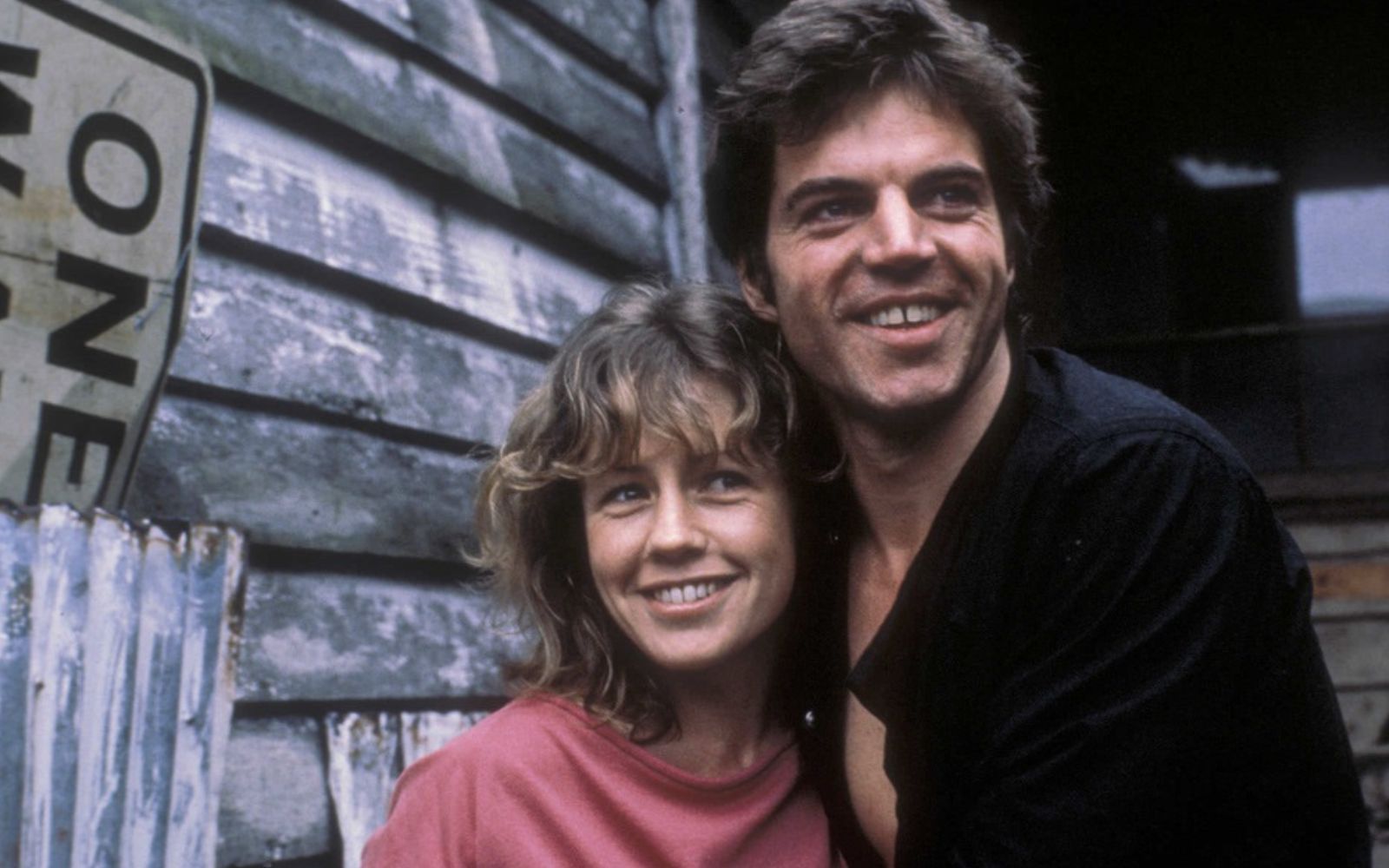
Yet it’s his work on Monkey Grip (1982), Helen Garner’s chronicle of Melbourne’s tender and blistering inner north, that most vividly captures the visual language of a whole nation in transition.
The irony of a Sydney cinematographer capturing Melbourne’s spirit only adds to the film’s quiet achievement. With the film’s source material so synonymous with Melbourne, how does one evoke the city’s characteristic grit and greyness, not only in regards to its physical texture, but its emotional one; especially after a lifetime spent in the sun?
Monkey Grip
- Based on Helen Garner’s novel
- Directed by Ken Cameron
- Starred Noni Hazlehurst and Colin Friels
- Set in Melbourne’s inner north
Check out our list of Best Melbourne films here, Best Melbourne Bands here, and Best Melbourne Albums here.
View this post on Instagram
Set against the backdrop of the post-Whitlam era, Monkey Grip emerged as a recollection of the social experimentation and newfound cultural freedom the period had afforded. The Whitlam government’s investment in the arts had unleashed a wave of filmmaking that turned its gaze inward. It saw the birth of Australia’s first film schools; Swinburne Film and Television School (now VCA) in 1972, and AFTRS in 1973, alongside the establishment of feminist film co-ops across the country and the emergence of the Carlton New Wave.
Garner’s novel, and Gribble’s visual interpretation of it, embodied this cultural shift: toward the domestic, the political, the intimate and the capricious. It was Australian realism represented on Australian screens for the first time.
It was as vital as it was contentious; especially in the eighties, when Malcolm Fraser sought to assess the arts as an ‘industry’, and by the same token, its economic viability.
It is this idea of ‘industry’ and ‘economics’ as the only standpoint for arts and culture being considered ‘worthwhile’ which still has its impacts on Australia over forty years later; not only in terms of financial investment, but censorship.
“The funny thing is”, Gribble remarks on the parallels, “The liberals introduced the money for the film industry originally, but then…I think they just don’t understand creativity. Too much money, I think — ultra-capitalism and the arts. Look what they did [in 2021] — all the artistic courses were put up like ten times! And I go, ‘what the fuck are they doing!’ I think they thought culture was, y’know, ballet or something. And all those films, they project Australian interest around the world!”
Monkey Grip nearly didn’t make it to release. It is unsettling to consider; let alone the prospect that other distinctive and defining films like it may never stand a chance against the recent legislations punishing Australia’s future arts practitioners.
The Australian Film Commission and distributors deemed the Ken Cameron adaptation ‘pornographic’, and a $150,000 shortfall threatened to derail production.
Producers put themselves at stake to complete films. Patricia Lovell, one of Gribble’s contemporaries, handed over the last $100 she had in the bank to secure the rights to Picnic At Hanging Rock (1975) until she could obtain more funding. She mortgaged her house at least twice to get Gallipoli (1981) on the road. David Elfick also put his house on the line to complete Newsfront (1978). Yet the frankness that unsettled its financiers would later define its legacy.
Few Australian films of the time dealt so openly with the realities of desire; its tenderness, vulnerability, its potential as a means for self-sabotage. For Gribble, this meant capturing not only the emotional nakedness of his characters but their physical one too, without voyeurism or sentimentality.
“I would be lighting something as I see how emotionally it should be,” he says.
Authenticity over artifice guided every frame. “She said to me at the beginning, ‘I don’t want to look beautiful. I want natural,’” Gribble recalls of lead actress Noni Hazlehurst.
“We had this warehouse-y sort of place, with these windows and the sun was coming in, and she was all backlit. I went over to her and said, ‘ah, Noni, gee, I’m really sorry’. She said, ‘what? What?’ ‘You’re gonna look beautiful in this shot. Should I change it somehow to make you not look beautiful?’”
Hazlehurst’s candidness matched his.
“She came in, took her clothes off, and said to the crew who were in the room, ‘Have a good look now so you don’t have to perv during the shoot.’ And this was Noni, from the kids’ series!” Gribble laughs.
It is not only Hazlehurst who turns out a characteristically raw performance; one which is neither romanticised nor cynical. That same run-and-gun ethos ran through the film’s musical sequences, including a live performance by the Divinyls’ Chrissy Amphlett.
“My operator was complaining that everything was too dark,” Gribble recalls. “I said, ‘just follow the sound’…Y’know, I like moody stuff. [Amphlett] had the microphone and she would use it a bit, so I got to the gaffer and said, ‘can you strip down one of the fluro tubes so it’s just wires and we’ll attach it to her stand, so we’ll see that?’ And that became part of her act. That thing with the tube… I’ve still got the goddamn thing down in my weekender…There should be some rock place that wants to grab that!”
Amphlett, Hazlehurst and Gribble’s practical ingenuity mirrored the improvisational energy of the Whitlam years; resourceful, spontaneous, and defiantly unpolished.
A part of me wonders if this is why so many politically-inclined Australian films during the eighties period were notable for its inclusion of pop-stars; with One Night Stand (1984) featuring a performance by Midnight Oil, and Dogs in Space (1986) starring INXS frontman Michael Hutchence.
Perhaps these inclusions were a cunning ploy to soften the blow of an ‘R’ rating – as to not completely ostracise mainstream audiences from alternative ideas.
It’s a bit like rock and roll; as Gribble puts it, “…you have to cope with what lights are there and – can we turn those off, can we turn those on, or put some gel on something…there’s a lot of stuff that comes into play [with a musical performance]. It might be a terrible pub with red and green lights…You know what I mean? You sort of have to cope”.
For Gribble, filmmaking remains an act of magic; a realisation of the old adage ‘turning a yellow spot into the sun’. When tasked with conjuring Melbourne’s inner north out of Sydney’s suburbs, Gribble turned to his intuition to reveal, not disguise.
“I’m into old houses and Sydney [I knew] was a bigger town. A lot of the streets were one type of terrace. Whenever I went to Melbourne I’d go, ‘there’s two like that, then the next one is different’, and then [there are] those smaller developments…basically you could still do the same thing. And we didn’t have any streets that looked like Melbourne, so a lot of interiors, I suppose when you think about it…At that stage I was just concentrating on what was in front of me.
“And, this is the location, or you might have a choice of different locations but other people are probably making their mind up about the cost of that location or the times available, or the actor isn’t coming in until…y’know…So you fall in love with a certain location then it falls over because someone wants more money so you really just concentrate on what you’re doing…[And] there’s no point in fighting the light that’s there. You reproduce what’s happening, otherwise you’re just not gonna get it. The sun will come out or something, or the sun isn’t out…So you’ve gotta go with that”.
I amuse myself wondering if shooting in Sydney was perhaps a continuity decision after all, given Melbourne’s notoriously unpredictable weather.
“You just kind of get screwed,” Gribble laughs. “I used to do a lot of shooting down Melbourne. Car commercials for General Motors and things. And Fosters beer and stuff. But the car commercials, you’d go there and you’re shooting and I’d look at the script and see it says: raining…in the script here…
“…And they’d say ‘nah, it’s gonna rain at 4pm’. And you’d go, ‘what?’ Bloody 4pm, it starts raining! Okay, but now we’ve got that other shot with the sunset… ‘oh yeah, well…it’ll be sunny at 6!’ And then bloody hell, the rain stops, the sun comes out and you go ‘what the hell!’ You know the weather; wait fifteen minutes.”
Although Gribble’s sorcery may not extend to altering the forecast, he sure has retained his mystical ingenuity. He recalls a recent shoot for his wife Rosemary Reid’s short film, iHostage.
“That had some underwater stuff in it. I did those [shots] with a painter’s extending stick and a Go-Pro on it, running a cable up to an iPad so you didn’t have to get wet”.
Even on shoots some forty odd years later, he brings the same scrappy inventiveness that shaped Monkey Grip’s Melbourne vision.
“I think Aussie cameramen were more used to working on a shoestring and on location, not on sets so much, which does makes you be really inventive…Because [Australians] had low budgets, we were economical”.
That philosophy defines both his work and the world it depicts. Nora, Garner’s single mother protagonist, is soft in her hardness — torn between feminist ideals and emotional dependencies. Her tension between personal desire and the politics of her time mirrors the struggle of making Monkey Grip itself: an act of persistence and contradiction, of strength in being vulnerable.
Perhaps that’s why Gribble’s work endures: its daring, its unapologetic sense of identity and humanity, its inventiveness against the odds.
Cult classics like The FJ Holden (1977), Running on Empty (1988), and Skippy: The Bush Kangaroo (1968) stand as proof of a national identity built on his instinctive and candid gaze.
In an era increasingly unforgiving of the arts, Gribble’s adaptability feels vital. His willingness to embrace new technologies and accessible filmmaking tools suggests a forward-thinking spirit that could help sustain Australia’s creative future.
His early correspondence with renowned director Jane Campion speaks to a deeper ethos; of community, generosity, and the kind of creative solidarity that keeps artists afloat through lean times. It’s the same spirit that defines a truly good set, the rare kind that reminds practitioners of why they fell in love with filmmaking in the first place.
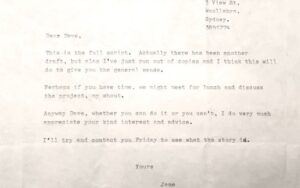
I am struck by the way he still advocates for her first film; one in which is not mentioned in any of the writings on her work.
Since then, she has gone on to be the first female director to receive the coveted Palme d’Or at Cannes. Yet, I find myself more impressed by the humble beginnings. It is the ultimate leap forward, decidedly embarking upon your first film; especially in a country which pushes back, above all when you are mystified by it. I
t is the most daring one could ever be; and a feat that cannot be done alone. Having a crew that supports you is as crucial as anything. Filmmaking, after all, is a team sport; and Gribble’s career is proof of just how much that spirit endures.
There’s much to take away from David Gribble’s long and illustrious career. Despite the ever changing nature of the industry, he remains committed to adaptation; all the while, retaining his imaginative touch.
Rather than seeing Australia’s isolation as a limitation, he treats it as a canvas for invention. His first film was in 1967, and nearly sixty years later, there’s no sign it will be his last. He’s even taking rushes in straight after our interview.
“You know,” he says with a grin, “I’m still working because whenever there’s something new, embrace it before it embraces you”.
Check out our list of the best Melbourne films of all time, here.