Noga was living in London in 2014 when he was invited to a production by London theatre company Punch Drunk of Woyzeck. Transplanting the story to 1960s Hollywood, the production saw audience members wearing masks and being led through a set constructed in a Paddington warehouse. Noga was familiar with the story through Tom Waits’ adaptation on his 2002 Blood Money album, and Werner Herzog’s 1979 film.
When Punch Drunk put out a call for artists and songwriters to go onto the set and create a piece of art in response to the play, Noga put his hand up straight away. To his surprise, he got the call and spent a day on set. “It was hilarious – I knew I was in a big warehouse in Paddington, but the set was so insane I was sitting in a caravan in a forest outside of this studio in California in the ‘60s,” Noga says.
He was so inspired by his artistic reaction to Woyzeck that he quickly found himself immersed in his own Woyzeck project, one that would culminate in King. “When I was on the set that day I wrote an instrumental song,” Noga says. “I took that first instrumental back to my place in London where I was living on my own at the time, and I thought ‘I’m going to keep running with this theme and see what happens.’ And before I knew it I’d written a bloody concept album.”
Buchner’s original play told the story of Woyzeck, a lowly military barber who murders his wife, Marie, upon discovering her infidelity with an army officer. The appearance of various characters allow Buchner to explore notions of class, ethics, morality and sanity. The fact that the play remained unfinished at the time of Buchner’s death has allowed artists and musicians of subsequent generations to impose their own interpretation on the story.
In composing his own musical interpretation, Noga chose to concentrate on the protagonists, re-named Jack and Mary, and locate the ill-fated couple in a generic 1950s Australian country town. “I was more focused on Jack, the main character, a man’s descent into madness and the twisted love story, the relationship,” Noga says. “My version of events is pretty open to interpretation – people can read into it what they will.”
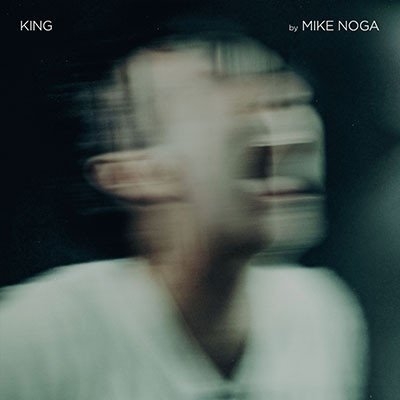
The title of the album, King, has a multi-faceted meaning. In his desire to escape his suffocating cultural surroundings, Jack dreams of being the King of England or a Hollywood film star. Jack’s expectation that murder will bring him triumph has shades of Shakespeare’s tragedy Macbeth, a historical literary reference point that’s illustrated by the image in the liner notes of a crowd impaled with a knife. And finally there’s Noga’s nod to Elvis, when he sings the opening lines to Blue Suede Shoes in the course of charting Jack’s decline into madness in I Wanna Be An American. “The ghost of Elvis is on the album,” Noga laughs.
The setting for King is any Australian country town in the 1950s. Noga grew up in Hobart, and saw the regional town of Queenstown on Tasmania’s west coast as the type of geographical and cultural landscape in which Jack is trapped. “It’s an old mining town. That was always in my head when I was writing,” he says. “The whole brief was to make it, I hate to use the word dark, but I kept saying to Paul Dempsey who was producing, just imagine a David Lynch film. I wanted to keep it quite sinister throughout – especially in the middle [where] it gets quite nutty.”
In composing the music for King, Noga was keen to map the songs closely to Jack’s unfolding psychological turmoil. The album swings from the pop-tinged country rock to straight out rock’n’roll to hip hop, each moment mirroring Jack’s mental state. Far from being restrictive, following the mood swings of his protagonist imposed an important creative discipline on Noga. “It was really interesting for me because my other stuff is really personal, folky songwriting. This time was the complete opposite – I was writing through someone else’s eyes,” Noga says. “It was really interesting – the parameters that I set myself. At one stage the character goes mad, so I had to write a really mad sounding song. Those restrictions or parameters I had to follow were really freeing, and it was really fun for me to put these guidelines on myself.”
King also features a couple of previously recorded tracks, including Down Like JFK, which was recorded originally for a Mike Noga and the Gentlemen of Fortune EP over five years ago. “At that particular point the album needed a flat-out rock’n’roll song and pretty violent imagery,” Noga says. “I was writing a song and I realised that Down Like JFK has a lot of blood, and I needed something that was insane and that one fit the bill.”
With the music nearly complete, Noga realised he needed a spoken word narrative to tie his songs together. His first choice was Australian actor Noah Taylor, who Noga had met in the actor’s adopted home town of Brighton on the English coast. Taylor’s vocal delivery reminded Noga of 1950s Australia. “I sent Noah the stuff and didn’t hear back from him for a long time – I think he was doing Game of Thrones, so he was bloody busy,” Noga says. “Months later I thought he didn’t want to do it, and then I open up my inbox and there’s 50 emails from him and he’s done 10 takes of each different bit in a different voice, in a different kind of character. He’s a total pro.”
Noga brought the music and Taylor’s narration back with him to Australia where he enlisted the assistance of Something for Kate’s Paul Dempsey to produce the album. “We spent a lot of time on it, we spent a lot of time experimenting with different sounds, we had a map drawn out on the wall where each bit would fit,” Noga says. When it came to I Wanna Live in America, the point at which Jack’s madness is transparent, Dempsey gave Noga carte blanche to sound insane. “We did vocals and he was sitting right near me, I was like ‘turn your back, this is going to be weird.’ He was listening to me through headphones, I could see him occasionally and I was thinking ‘Poor guy, he really thinks I’ve lost the plot’,” Noga says.
In Noga’s mind, King is the best music he’s ever created, both in terms of the individual songs and the overall concept. The fact that King caters for competing interpretation of reality – that Jack has dreamt the entire psychotic episode and the happy ending with Mary is reality, or his happy ending with Mary is a psychotic attempt to disguise the reality of his murdering behaviour – adds another layer of complexity to the story. “I won’t tell you which one’s right – you can figure that out,” Noga says.
He isn’t sure how King will be received, but he’s confident that it represents a quantum leap in his musical career. While he baulks at the prospect of a rock opera, Noga is already in discussions with a theatre company in Queensland to adapt King for the stage. “There’s lots of scope to present it in different formats,” Noga says. “I’d like to take it to arts festivals. I’m not joking when I say I’m getting older. I’m not some hip young thing on triple j, I’m a hip old thing on Double J.”
BY PATRICK EMERY