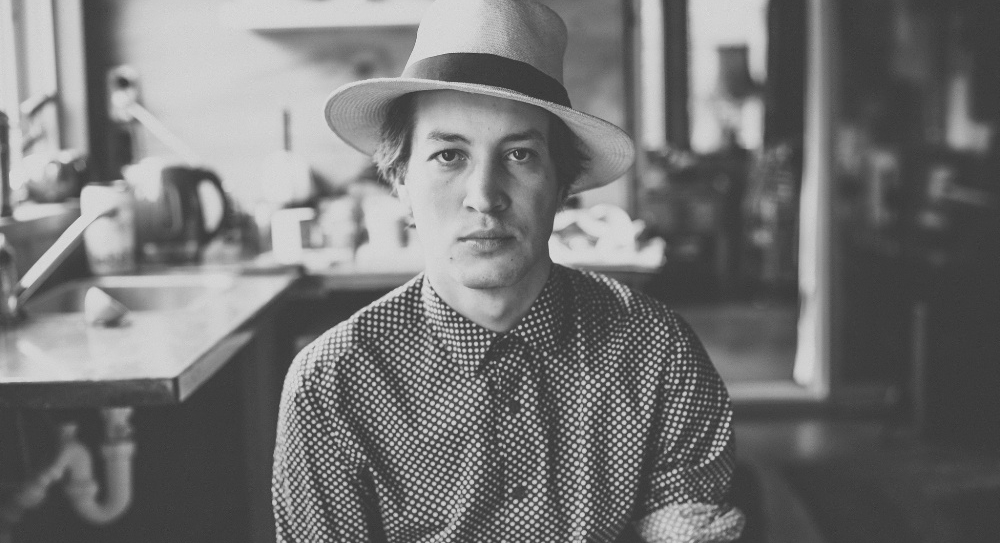
Williams’ recently released self-titled debut (which is definitely more bolo tie than weed cap) sees the artist arriving fully formed. He’s benefited from a music-heavy adolescence, honing his impressive vocal talent in the high school choir before going on to perform in the band The Unfaithful Ways. “At the time I was playing solo gigs here and there,” he says. “I knew at some point there would be a time I would be doing my own thing. I don’t know… it doesn’t feel wrong.”
While Williams has now established himself in Melbourne, the album was put together during a series of trips back to his hometown of Lyttelton in New Zealand’s South Island. “It was easier in one way,” he says, “but there are always more distractions than what I give it credit for. I have this idyllic idea of going home and hanging out with mum, but I forget I have so many friends there that do like to party.”
There’s an enchanting disconnect between Williams’ resolute performance manner and the heartbreaking, at times harrowing, subjects of his material. “I know they are emotionally charged songs, so it is a struggle to keep an arms length away from them,” he says. “I think for the kind of music I play, that distance is vital for the tragic elements of the songs. That’s the tradition of country music and the blues – wear your tie, deliver the message. There’s a really good Leonard Cohen poem about how you should deliver poetry: you shouldn’t rant and rave, basically to that effect. I try to put as many tears into the song, but then perform it in that way.
“It came really naturally,” he continues. “When I first started to write songs, that’s all I could really do. I listened to rubbish when I was a kid, like we all did. But I had a firm grounding with The Beatles and Elvis – dad was always good at throwing stuff in front of me. I started to listen to country music when I was 12 or 13 and that’s when the germination of learning to write songs happened, and that’s how it turned out. I think it was just good timing it happened that way.”
The album achieves a brilliant mix of staying true to tradition while expressing a voice of its own, particularly on the resplendent take on Billy Fury’s Lost Without You, which finds Williams presiding over a cavalcade of strings. “It’s become a specialty of Ben Edwards, the producer,” he says of the orchestration. “Over the last few projects we’ve done together he’s been developing a really nice big sound for certain things. We laid down all the bare tracks, then we pretty much directly referenced the original of that song. But then we did weird things, like the synth part. It’s him flexing his muscles in that regard.”
Williams revives the lost art of the cover many times throughout the album, striving for a reverence of song rather than a ploy at familiarity. “They’re all pretty obscure,” he says, which was the standard in the era his music invokes. “It’s really lost its integrity in the eyes of the public, because of the rise of singer-songwriters, and people being bored of hearing Dirty Old Town down at the pub every weekend. The folk tradition is obviously so derivative and referential, it’s a really nice thing when I do sing these songs. It’s pretty important to me.”
BY LACHLAN KANONIUK