“It is pretty exhausting,” Garratt says, “but I’m also very lucky that I am with a team that I have been working with for a long time, since before all the press and the accolades. I’ve kept those people around me because I feel like that’s the most sensible thing to do. But they understand how physically and mentally exhausting the live show is for me, and so they try not to book up too many interviews while I’m out on the road because it does tend to get too much.
“Like this year I went to America, and I didn’t do any shows. I just went to America for a week and went around the Midwest and did loads of radio interviews and went straight from there to Europe and then did radio interviews in Germany. It’s great. It’s fun. You get to see the different cities and different countries in a totally different light.”
All this press is in support of Garratt’s debut LP, Phase, a pulsing collection of soul soaked tunes the young musician wrote, produced and performed all by himself. Though, it’s not as if Garratt is a hard act to sell. After all, not only does the musician spit soundbites at a frenetic pace, he also speaks about his audience with a deep-seated affection.
“I make a lot of my music by myself and performing is exactly the same,” he says. “I go up onstage every night on my own and play lots of different instruments and have fun playing these songs I’ve spent so much time caring over. It is really, really fun. It is tiring, and it is exhausting, but I love coming out on the road, and meeting people.
“It’s at a point now where the crowds are wanting to come to the shows now because they like the music. Even having that kind of attitude to walk onstage to is so [great]. It makes everything – all the travelling and the late nights and the early mornings – totally worthwhile.”
To say audiences merely ‘like’ Garratt’s music is an understatement. Upon release in February Phase was a critical and commercial success across the world – not least of all here in Australia, where lead single Weathered became an airwave fixture. The album’s high international appeal means that Garratt has been able to experience crowds in almost every corner of the globe. His upcoming Splendour In The Grass slot and associated sideshows will be the first time he has made his way to our shores.
Nonetheless, even though Australia hasn’t appeared on his tour itinerary until now, his trips around the world have given him a fascinating insight into how staggeringly varied crowd etiquette can be.
“Audiences around the world are completely different,” he says. “In the UK, things are different only because my music is listened to a bit more in the UK and my name is more recognisable. But in America, even audiences from state to state can be drastically different. New York and LA are kind of renowned for being difficult audiences to win over, but when you win them over they’re so incredibly supportive.”
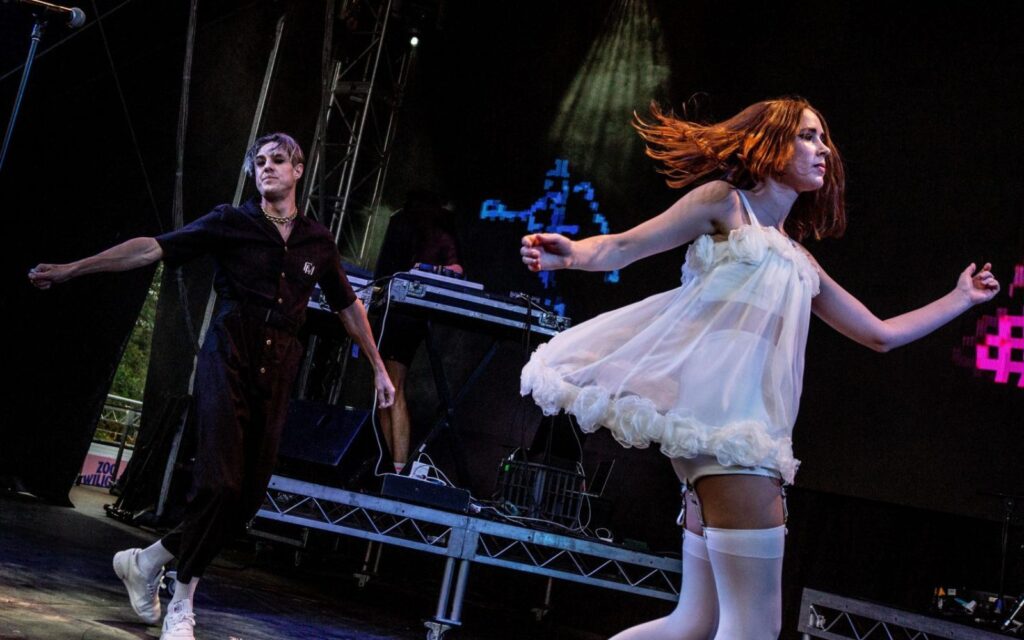
Garratt admits that the stripped back nature of his live show can occasionally prove problematic. It’s only him up there under the hot lights, and he can only blame his successes and failures on himself. “Emotionally it’s nerve-wracking, because there isn’t that kind of support structure for me to fall back on if I need it. If I stop, the show stops. If I miss a chord it’s obvious. If I miss a beat on the kit it’s obvious. But I’ve really come to enjoy that part of the show – that humanising quality.
“That’s the show for me really. It’s all the mistakes and all the problems. And the crowd really love it when something goes wrong because it turns me into a person, whereas five minutes before I was an octopus to some of the people just because I do a lot of different things onstage.”
For Garratt, the key to a good gig is not theatrics; it’s not stage lighting, or projections, or even things like onstage banter. It all comes down to a simple matter of respect. “That’s why you hear nightmare audiences of people hating gigs they went to see because they felt like the performer onstage didn’t care, or was rude. You hear those nightmare situations because that performer didn’t respect their audience.
“It’s a really important thing to me. I do mean it when I say there are two band mates. There’s me and there’s the ever-changing second member, which [changes] depending on the 500 to 1500 people in the audience. It’s amazing.”
BY JOSEPH EARP