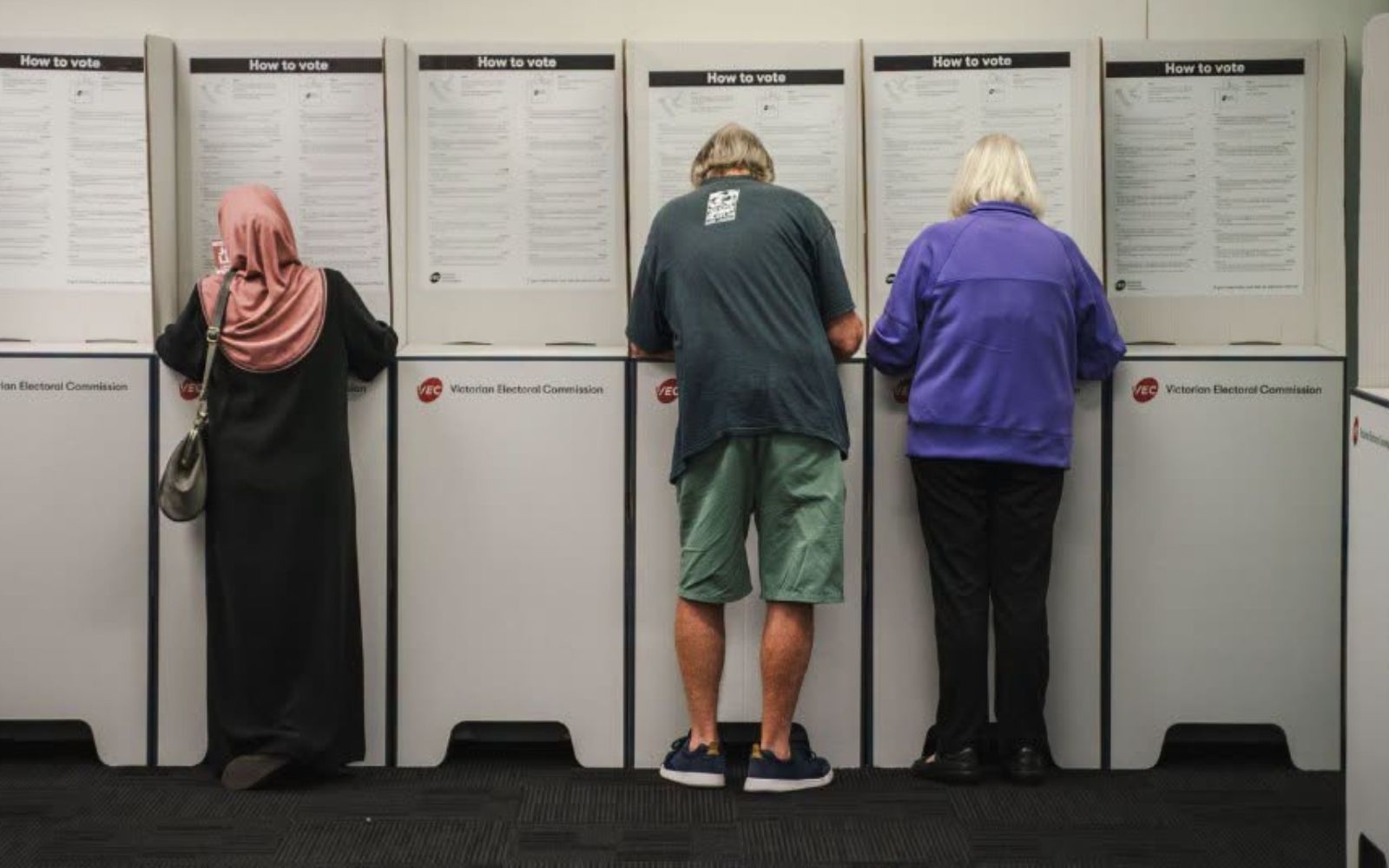
Group voting tickets are out, and how to vote in the Victorian election now means numbering at least five boxes on the big ballot.
Parties can’t pass on your upper house preferences any more, so how to vote in the Victorian election has changed.
State Parliament passed laws in August removing group voting tickets from the Legislative Council. For anyone working out how to vote in the Victorian election on 28 November, that means numbering at least five boxes on the upper house ballot, above or below the line.
Every voter gets two ballot papers from the Victorian Electoral Commission (VEC). The small one elects your district’s MP to the Legislative Assembly, and its rules haven’t moved. The big one elects five MPs for your region in the Legislative Council, and that’s where the 2026 Victorian state election looks different to 2022. Early voting opens on 18 November, and Beat’s guide to where to vote early and how to postal vote lists centres across Melbourne and regional Victoria.
2026 Victorian state election key dates
- Early voting: 18 to 27 November
- Postal vote applications close: 25 November
- Election day: 28 November, 8am to 6pm
- Where: any voting centre in Victoria on election day
Stay up to date with what’s happening in and around Melbourne here.
What changed on the upper house ballot
At the 2022 state election, voting above the line meant writing a single 1 in one group’s box. That group’s voting ticket then decided where the rest of your preferences went.
Those tickets are gone. Above the line, you now number at least five parties or groups in your own order. Your vote flows to each group’s candidates in the order they appear below the line, which each group set when it registered.
Below the line, the minimum is the same as 2022: five candidates. The shift is all above the line.
That makes the big ballot work a lot like the Senate paper from the 2025 federal election, with smaller numbers. The Senate asks for at least six boxes above the line or 12 below. Victoria’s upper house asks for five either way, one for each MP your region elects.
Parliament’s Electoral Matters Committee described Victoria as the last Australian jurisdiction still using group voting tickets, and the bill removing them received Royal Assent on 18 August. The state government says the change puts voters in control of their preferences. Crossbench MPs moved amendments to the bill, and one argued that removing the tickets without changing the upper house’s structure would hand more power to the major parties. The committee has recommended a separate process after this election to look at that structure.
How to vote in the Victorian election above or below the line
Pick one side of the thick black line and stay there. Above the line, write 1 in the box for your first-choice party or group, 2 for your second, and keep going until at least five boxes have numbers. Leave everything below the line blank.
Below the line, number at least five individual candidates the same way and leave the boxes above the line empty. You can keep numbering past five on either side, but the VEC says five is the minimum for your vote to count.
Parties and candidates will hand out upper house how-to-vote cards, now registered under updated VEC rules. They show how a party or candidate wants you to vote. The order on your ballot is yours to choose. The lower house ballot hasn’t changed.
The small ballot still needs every box numbered, from your first choice to your last. Victoria has 88 districts, each electing one MP to the Legislative Assembly. The VEC will run a full distribution of preferences in all 88, so every district’s final margin comes from a complete count.
What makes a vote informal, and how to fix a mistake: Ticks, crosses, other symbols, a zero, or a missed or repeated number can make a ballot informal, and so can numbering too few boxes. Informal votes aren’t counted.
If you slip, cross out the wrong number and write the right one next to it. If the paper ends up a mess, hand it back to election staff and ask for a fresh one.
Who you’re electing to the Legislative Council
Victoria’s 40 upper house MPs come from eight regions of 11 districts each, five MPs per region. Five are metropolitan regions: Northern, North-Eastern, Western, Southern and South-Eastern Metropolitan. Upper house MPs review legislation the lower house passes, so any election promise that needs a new law has to get through them.
That includes the permanent, legislatively protected Victorian Music Trust the Vote Victorian Music campaign is asking every party to commit to. Beat has broken down the campaign’s asks, including the plan to reshape how Victoria funds its musicians.
If you want a dry run before you queue, the VEC’s guide to filling out state ballot papers walks through how to vote in the Victorian election one ballot at a time, and Beat’s Victorian politics coverage has the rest of the campaign.
For more information, head here.