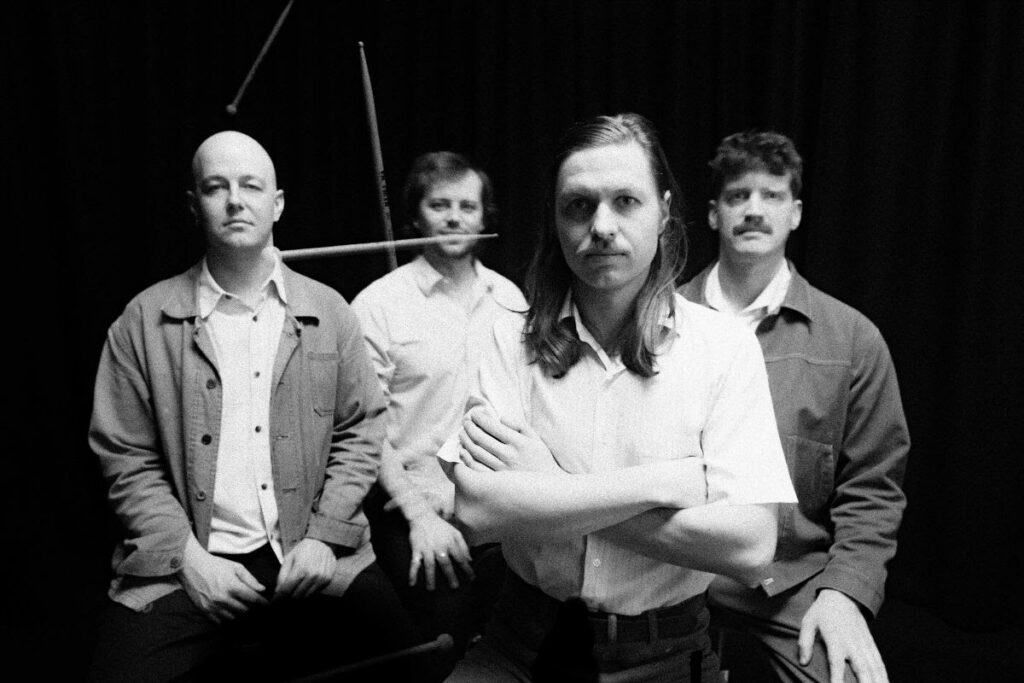
Deep Sea Arcade are thrilled with the album’s reception. “It’s been really good, in terms of reviews, and the stuff that people have been saying,” singer Nic McKenzie tells me. “People are enjoying it and responding to it well, and getting all the right vibes off it that were intended when it was put down.” Given the nearly four-year gap between the band’s debut single Crouch End and the album release, I ask if the delay was a calculated move to allow the band time to refine their sound before committing to a full-length. “I think the sound was already developed from the start,” McKenzie says, “but we really spent a lot of time crafting the music and getting the songs just right. We didn’t want to release an album until we were well and truly happy with it.”
The arrangements on Outlands are lush and lovely, layers of guitar and electronics showing through, along with a variety of vintage synths like Mellotrons and a Juno 60. It’s hardly surprising, then, that McKenzie is a big collector of such gear, and loves to use it wherever possible. “We collect Junos and Roland Jupiters and Casiotones – I have four or five different Casiotones,” he tells me, of the band’s bowerbird-like habits. “I have a Casiotone 101 that’s my favourite at the moment, but I go through different phases. They’re a big, important part of our sound. We’re bit on gear, and not just keyboards – we have a lot of different microphones for recording drums. We’re big into replacing the drum sounds with samples and things like that.”
Many of the drum sounds on Outlands are drawn from surprising and unexpected sources. “A lot of the time, we use drum machines like the DMX for inspiration, but there are a lot of weirder sounds on the album – especially on the song Ride,” McKenzie says. “I actually recorded the sounds for that track with a video camera.” It turns out that during a university film class, a lecturer told the students to go into the field with a handy cam, capture a variety of sounds and then edit them together. McKenzie was so taken with the sounds he captured that they ended up forming the basis for the song, before drummer Carlos Adura added his own beats over the top, and the track came to life.
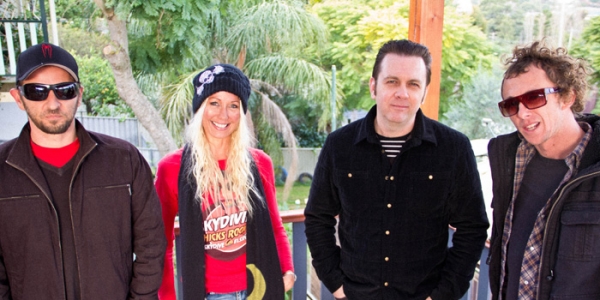
In fact McKenzie is on the record as saying that if his band were the Teenage Mutant Ninja Turtles, then Adura would be the Splinter of the piece. Curious as to what this means, I ask him to embellish on it a bit further. “Oh man,” he laughs, “I said that because when we’re on tour, Carlos is known to have these moments where he has an epiphany and decides to tell the rest of us about how the world works. It’s really funny when that happens – something really strange comes over him, like he’s turned into some sort of a sensei, so we like to make fun of him and call him Splinter.” This leads to a more pertinent question about band dynamics. Given that McKenzie and band-mate Nick Weaver are life-long friends and have been making music together for so long, I ask how easy it was for the new members to slot in when Deep Sea Arcade expanded. “In a lot of ways, it was pretty easy,” he says. “I mean, the guys are essentially playing things that Nick and I have written, but they’ve always been able to adapt and play the material in their own way, which is great.” For example, he continues, Tim the guitarist has a lot of fun creating his own reverb and sounds, and Carlos brings an energy and sound to the band that wasn’t reachable before – especially in the early days when the band were working a lot more with programmed drums and the like. “They bring a third dimension to the two dimensions that Nick and I had previously,” McKenzie says.
The title Outlands is a reference to Jean Luc Godard’s film Alphaville – a life-long film geek, McKenzie loves Godard and directs the band’s film clips, which he’s known to style around the aesthetic of the ‘60s French filmmaker. “I’m really into Godard films like Weekend and Breathless,” McKenzie tells me. “I love his films and the way that he uses art direction and mise-en-scène, and how everything looks. In terms of the art direction and the videos for the band, his work is maybe one of the key inspirations.” When it came time to pick an album title, Outlands seemed perfect for describing the mood and feeling of the songs. “There are lots of images of barren landscapes and things like that – it just resonated in the right way.”
Moving from the cinematic to the musical, I ask McKenzie what bands have helped shape Deep Sea Arcade’s sound. “I guess in terms of more modern ones, we’re big fans of Black Angels and Wooden Shjips,” he tells me. “Both of those bands make a lot of references to the past, and both were big influences when it came to mixing the album.” But a lot of inspiration also came from the heady world of ‘90s indie pop. “We were all big fans of The Dandy Warhols, Supergrass, Blur and bands like that, so you can definitely hear elements of those creeping into our sound. From there, we’re also big fans of Gorillaz – I love their approach, and I’d say you can maybe even hear a little bit of that, too.”
BY ALASDAIR DUNCAN