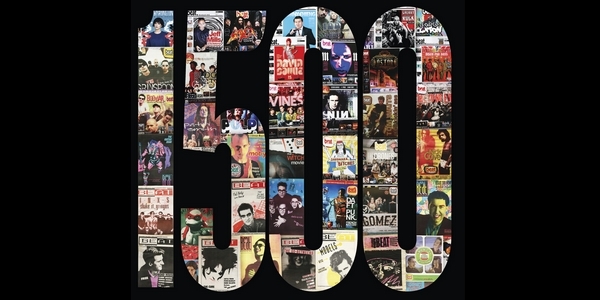
And in Melbourne, Rob Furst, former member of late-‘70s punk band La Femme and one-time promoter and tour manager for the Gun Club’s infamous 1983 Australian tour, launches Beat Magazine: an upstart – and completely free – competitor to established music publications such as RAM, Juke and Rolling Stone. Beat was first published on Wednesday July 30, featuring former Split Enz guitarist Neil Finn’s new band, Crowded House on the cover.
“I wanted to be the James Bond of rock publishing,” Furst says with typical egotistical flourish. “But instead I’ve just gone slowly insane.”
29 years later, and RAM and Juke have bitten the dust, some say because of the disruptive effect of the streetpress business model. Meanwhile, streetpress itself is under siege from the pervasive impact of the Internet and social media. “People were saying streetpress was dead and buried when I started at Beat in 2003. Streetpress has proven harder to kill than Keith Richards – and has probably involved only half as many drugs,” laughs Jaymz Clements, who filled the editor’s chair between 2008 and 2011.
Beat’s 29 years of publication have seen around 20 editors, all of them confronted by the same inventory of operational and financial dramas: tight deadlines, reluctant creditors, fragile artist egos and cynical critics. Furst acknowledges the editorial position has its challenges. “An editor needs to be able to flatter the boss, submit to impossible demands, and to be able weather abuse from colleagues, management, bands we slag, lunatic festival organisers and PR flacks.”
For the editors, however, the challenges are more than rhetorical. Being a Beat editor isn’t, as Jaymz Clements had vainly hoped it would be, just being spooned caviar by Nic Cester, Dave Larkin and Adalita. Taryn Stenvei took over in tumultuous circumstances in 2011. Although she had a sense of the difficulties she was about to confront, nothing could truly prepare her for “the sheer tidal wave of work in those first few weeks”, with hundreds of emails and phone calls each day from labels, PR operatives and bands, each of them hoping for that special treatment.
Ali Hawken, who took over from Stenvei in 2013, agrees. “I think the standout moment for me was when an intern who had come in for a day of work experience pulled me aside and said, ‘Wow, I thought it would be really glamorous being the editor of a music magazine and all, but really you just spend all day on the phone and writing emails,” she says. “Everything involving Dan Watt was a challenge,” Clements says, with a wink.
So what’s the key to survival? “Wine,” Hawken says. “The gift of the gods. No wonder Jesus loved that stuff so much.” Gratuity can go a long way, too. “I remember gritting my teeth and saying, ‘Remember the free tickets, remember the free tickets’,” Stenvei says. “You have to keep laughing,” says Nick Snelling, who edited Beat from 2004 until 2008 (Snelling had to combat the ire of the Mess+Noise punditry for misspelling Ozomatli on the front cover early in his tenure). “You take the piss. General smart arsery. That’s how you cope.”
Rob Furst’s hard-nosed approach to business is notorious in local music circles. The man himself is said to thrive on his reputation, the sometimes salacious hearsay of his fiscal sensibility in all areas of his life corroborating his status as a tough deal maker. Rob Furst, pay later, goes the witty cry – and in an industry replete with vacuous promises and economic volatility, anyone achieving genuine financial success is subject of perpetual suspicion.
“I learned a lot from the way Rob conducted his business, but I am too much of a bleeding bad heart to ever adopt or condone the same business approach,” says Mary Mihelakos, Beat’s editor from 1995 ‘til 2004. “However, Rob managed to have a minimal amount of bad debtors compared to other publishers.”
But maybe it’s the potential for defamation action (though, really, what sort of narcissist would sue their own publication?), maybe it’s the notoriously incestuous nature of the local music industry, or it could just be grudging admiration for their former employer, but all of the former editors professed respect for both Furst’s business acumen and his support of their editorial activities.
Hawken remembers Furst responding to a 4am mayday call to overcome a near calamitous publishing situation and ensure Beat met its editorial deadline.
Stenvei recalls the infamous hijacked cover in 2012, when former typesetter Luke Benge celebrated his departure for greener pastures by replacing the intended cover with a drawing of Benge’s naked self and the rallying cry ‘Sayonara Bitches, It’s Been Real.’ “The week after that, Beat had more ads than it had in months. We were the most talked about thing in town. It was glorious,” Stenvei laughs.
Then there’s the streetpress business model, under which editorial content is counter-balanced against advertising revenue. Surely, it’s been said, such a model undermines the perceived integrity of the magazine’s editorial content? “When the model is designed to be that way, can it be compromised? Everyone knew what the situation was and how it worked,” says Craig Mathieson, who graduated from freelance contributor to editor in the early 1990s.
Snelling remembers a journalist on triple j’s Hack program threatening to produce an ‘exposé’ on the corrupting influence of advertising in the streetpress. Yes, advertising was fundamental to the business model, Snelling conceded, but that did not equate with the allegations of mercenary behaviour – allegations that could also be directed at triple j. “I was quite confronted by his assertion, because it wasn’t the truth, and was highly unfair. The magazine isn’t a charity, and we all went out of our way to support music,” Snelling says.
“Reviews are a piece of music journalism that shouldn’t be bought or held hostage, nor is one writer’s opinion of something indicative of what our magazine as a whole thinks,” Hawken says. “Basically, I think the streetpress model evokes some pretty complicated feelings,” Clements says. “There’s almost a weird, tacit agreement when reading it – you understand there’s a fuckload of ads so the mag can be made in order for you to read it, but you also want to not read shilling PR bullshit, right?” As for Furst, he’s confused at the premise of the issue. “Sorry, are you referring to the stuff between the ads? I don’t understand the question,” Furst says.
Changes in technology have had a profound impact both on the music industry, and the streetpress business model. Mihelakos remembers a world before digital publishing and online publication. “I started working at Beat before we could receive emails. It was all phone calls and face to face. For a few years there was only one computer that received emails and it was dial up. We used graph paper and did cut and paste layout and had a bromide room.”
But now the world’s changed: bands can reach a (potential) global audience for a pittance, and any two-bit sanctimonious critic can post their musings with a few clicks of the keyboard. So why, goes the line of self-diagnosed futurists, should anyone bother with dead tree media that relies on an anachronistic business model?
It’s a proclamation that Furst can barely be bothered acknowledging. “Ah, trotting out the old ‘changing media landscape’,” he snaps. “Got to be up there in the Top 10 Overused Phrases of the Decade. Let me hit you right back with another meaningless platitude: Content is king. Wherever it is.”
Furst’s provocative musings notwithstanding, Beat’s former editors, point to the efforts the magazine – and key editorial personnel, such as Beat’s social media guru, online, arts and associate music editor Tyson Wray – has gone to to counter the threat of social media. “Beat’s Facebook kills, and Tyson truly gets that zone,” Stenvei says.
Mathieson, while expecting even newspapers such as The Age to move online within ten days, says it’s a testament to Beat’s relevance that it’s still physically visible. “You still see the bundles around, people still stop to grab one on their way somewhere or at a venue, so Beat has hung in there. I think the audience for music journalism is far more literate now, so some of the embarrassing, over-egged copy we filed in the heat of the moment back in the day would be mercilessly taken to bits now.”
The last word must surely go to the indefatigable and brazenly shameless Rob Furst. “This industry and the wonderful people in it have so much to give. Between us, we can make this a better world,” Furst says, tongue hidden so far inside his cheek you couldn’t extract it with a crowbar. “Can you hear that noise? That’s the sound of me puking. Seriously, we are not in the serious business. We don’t save lives in the entertainment biz. We’re in the fun business. What people want and the industry promotes, we reflect.”
So there.
BY PATRICK EMERY