“My history with Richmond goes back a long way,” Brodie says. “When I started playing music – for me anyway – there was the Carlton scene, and I was a bit too young for that, then there was the St Kilda scene, which was probably a bit intimidating. Richmond was there as an alternative, something a bit more inviting, a bit less intimidating.
“Some friends from high school started playing at the Richmond Club Hotel and we begged them for a support slot. I was 15. I played at the Town Hall Hotel, which is now a restaurant on Bridge Road. Then there was the GB. That really housed Melbourne grunge before it was grunge,” he says. “I’ve had a really interesting time in Melbourne music. And all of these places, you could get into without any ID back then.
“I’m not interested in football or anything, so the MCG didn’t really figure. I had the Corner Hotel instead,” says Brodie. “And Richmond was kind of nefarious at the time, which allowed for young bands because, especially when you’re a teenager or extending into your early 20s, you could easily play in front of 200 or 300 people. You got to stand in a pub and bash your head against the stage and rock out to your friend’s band.”
For Brodie, the promise of a city on the horizon line as a kid inspired him to make his way into the inner city to participate in the music culture. And he wasn’t alone in being drawn to the City of Yarra like a moth to the flame of a cigarette lighter held aloft during a power ballad. “I was born in Glen Waverley. The owner of Cherry Bar, James Young, grew up in Glen Waverley as well, and he said when he was doing his show on 3RRR the largest subscriber area in Melbourne was from Glen Waverley, because it’s on the end of a train line and there’s nothing to do. I think that creates a curiosity about the world and wanting to get out of it.”
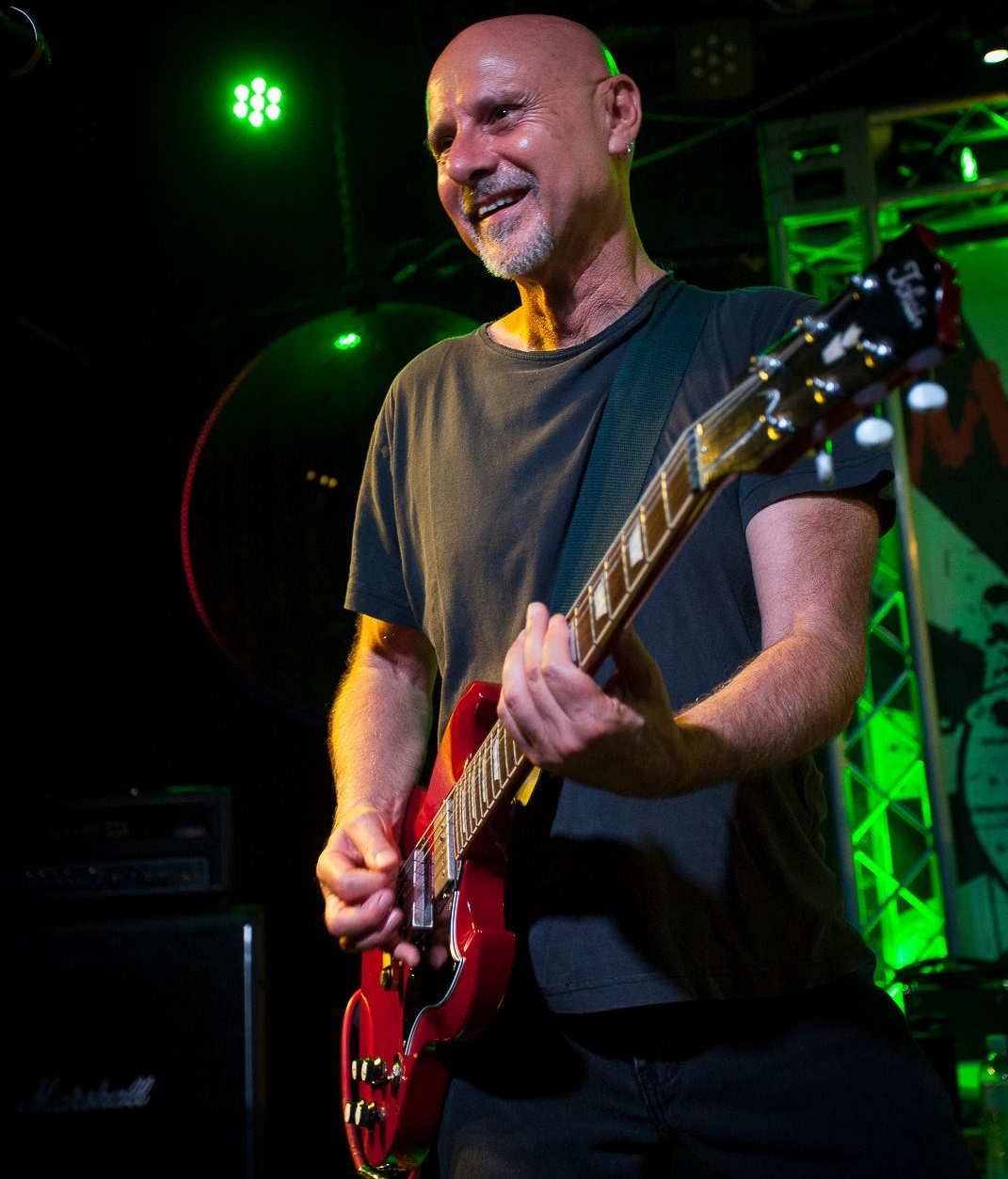
Brodie’s show is in collaboration with New South Welshmen James Thomson & The Strange Pilgrims. “This is my first band show in two years,” he says. “I’ve just been playing solo all that time. I sort of wanted to have a break from playing in bands so I just did the solo thing. I took it overseas to Europe for three months last year. I caught trains everywhere, which was great. I played in France, Spain, Denmark, Switzerland. It was fantastic. And it was good to give myself some confidence in entertaining the crowd with just my guitar. You have to play well, choose good songs and present a good show, really, because you don’t have a rhythm section to rely on.
“Then I came back to Australia and got offered a festival in NSW, in the Hunter Valley,” Brodie says. “I’d met these guys, the Strange Pilgrims, when I played in Maitland, and they said they’d love to play as my backing band. I was initially pretty hesitant but then we played together and it was great and we decided to do a tour. So it’s called the From Melbourne to Maitland tour because that’s where it’s starting and ending, and the first night of the tour is the Leaps & Bounds Festival. We’ve got a picture of boxer Les Darcy on our poster because he’s Maitland’s biggest export.”
There’s often something magical that happens when an artist with an established sound and presence teams up with an already locked in band. Think Elvis Costello and the guys from Clover, or Tom Petty and the Heartbreakers playing with Bob Dylan, or Pearl Jam backing Neil Young. So Brodie is particularly looking forward to seeing what happens when he steps onto that stage with James Thomson & The Strange Pilgrims.
“It’s good for them and good for me,” he says. “It’s good for me to have a great band, and it’ll be good for them because they’re a relatively young band and they could use the exposure. Then I’m going to Europe again in September, but similar to what we’re talking about, I’m just getting a pick up band there, some French guys. That’s something I used to really steer away from and stick with the same members, but these days, especially with the shithouse economic climate for musicians, it’s cost-effective to have pick up bands. As long as they learn the songs. Eh, even if they don’t it’s okay.”
BY PETER HODGSON