Crews at West Tarneit crushed 60 cubic metres of excavated basalt and poured it straight back into the new Melbourne train station as concrete.
Crews at West Tarneit Station have recycled rock dug from beneath the rail line into the new Melbourne train station, which is set over the coming months.
The material came out during excavation for the pedestrian underpass, the tunnel that will link both platforms at the new Melbourne train station and connect the precinct to a suburb that keeps expanding around it. About 60 cubic metres of basalt was removed.
Ordinarily only a small share of that rock would find a second life nearby, with the remainder carted off to a quarry and written off as waste. Instead the basalt went to Aurora Construction Materials, less than 20 minutes from the worksite, where it was crushed and folded into a concrete mix.
The station sits inside a much larger program. Big Build Rail is working through the removal of 110 level crossings across Melbourne by 2032, alongside a run of new and rebuilt stations, and material reuse has quietly become one of the measures the agency reports on across those sites. West Tarneit is a small test of an idea that has reshaped how the network gets built over the past decade.
Stay up to date with what’s happening in and around Melbourne here.
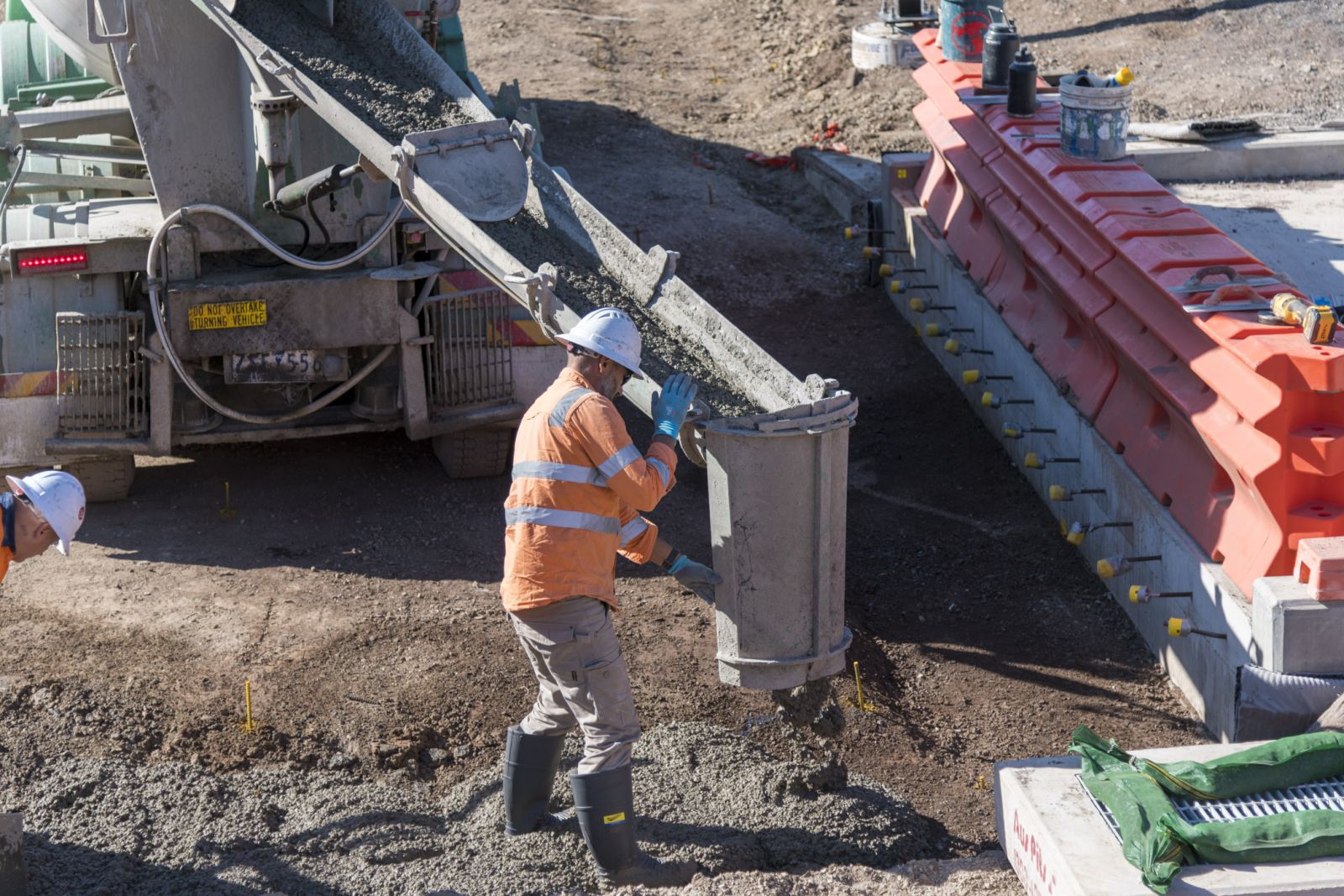
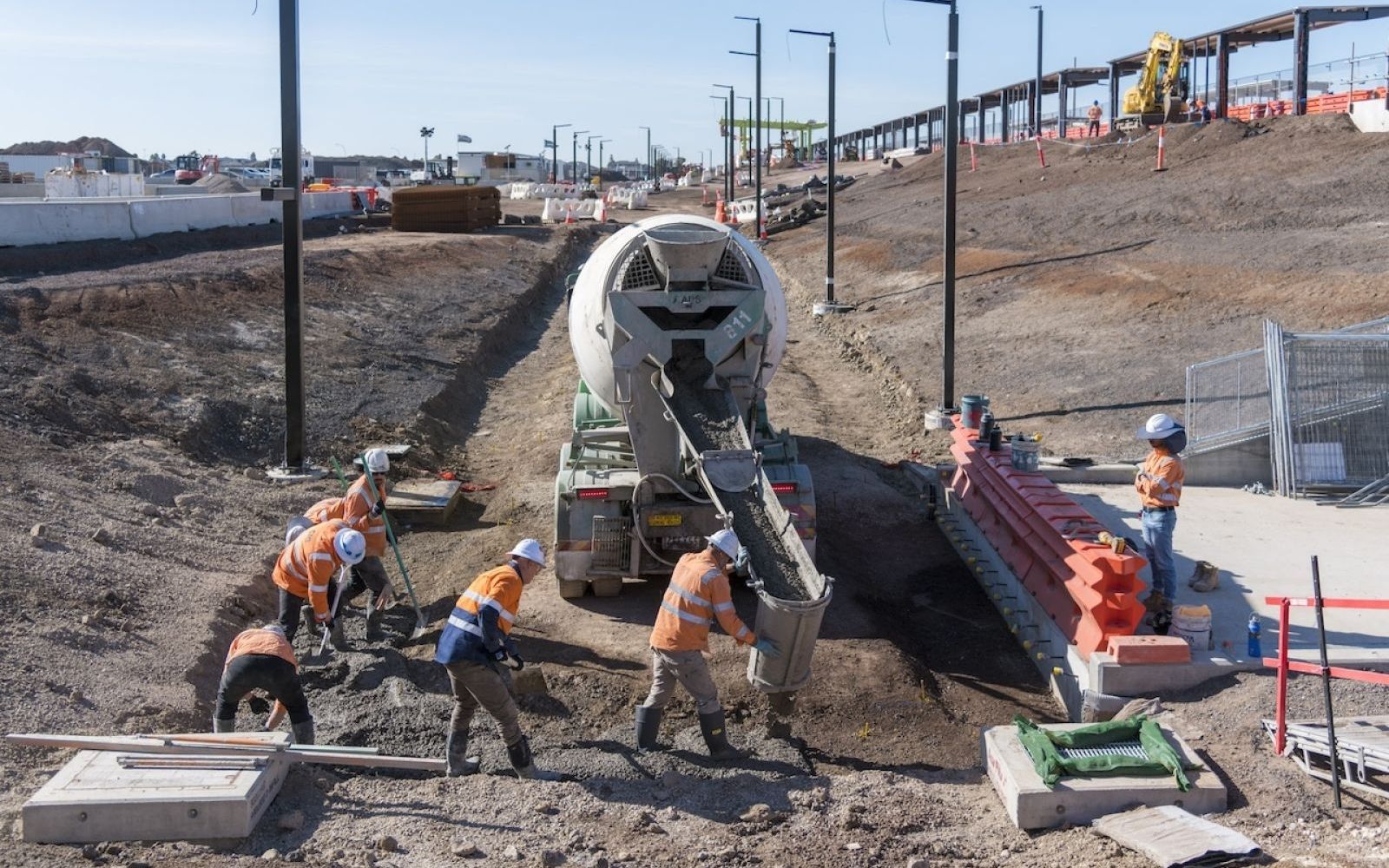
Concrete made partly from rock dug out of the site goes down at the new Melbourne train station in Melbourne’s west. Image: Victoria’s Big Build
That mix then came back to West Tarneit and was poured to form some of the ramps in the new precinct – which is to say, part of the station is made from the ground it sits on.
Why this train station approach is unusual
Reusing excavated rock in concrete at the same site it came from remains relatively uncommon in Australia, and the reasons are mostly logistical rather than technical. Getting material out, processed and back again within a workable radius is difficult on most jobs.
Similar methods have been trialled on only a small number of projects to date, which is why Big Build Rail has been keen to point at this one. The proximity of the Aurora facility did most of the heavy lifting here.
Roads in the region have had their own overhaul running in parallel. The west has absorbed an enormous share of the state’s transport spending in recent years, most visibly through the tunnel project that finally gave the CBD a bypass after a 25-year gap. A station at Tarneit’s northern edge is the rail half of that same push.
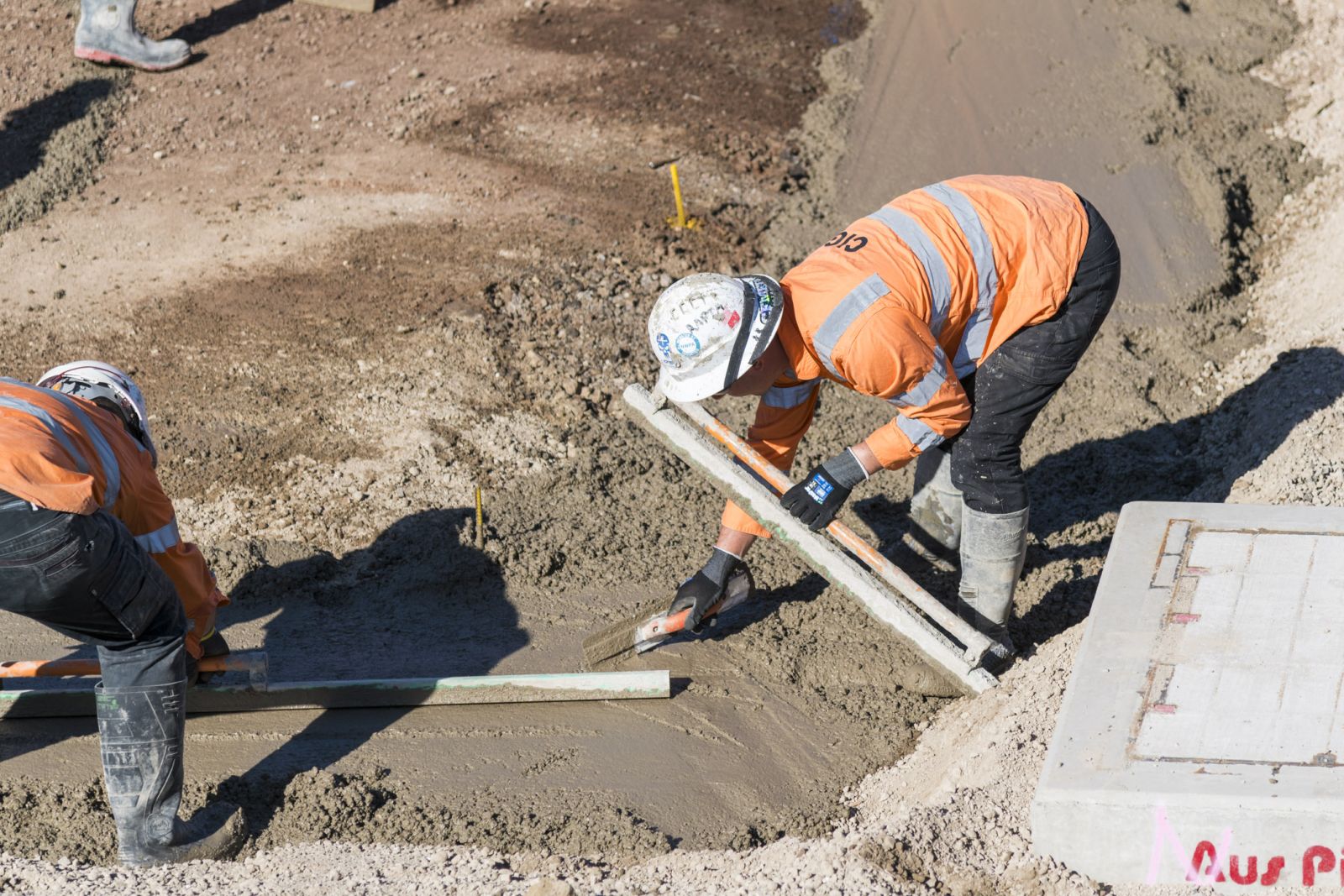
Hand-finishing the wet mix at West Tarneit – the new Melbourne train station opens later this year. Image: Victoria’s Big Build
What the new Melbourne train station will include
West Tarneit Station sits on the V/Line Geelong line, between Wyndham Vale and Tarneit, near the corner of Leakes and Davis roads. It opens later in 2026.
The station will have two platforms, 400 car spaces, a four-bay bus interchange and the accessible pedestrian underpass that produced all that basalt in the first place. The intent is to take some load off Tarneit Station, which has been groaning under demand for years.
Vehicle, pedestrian and cyclist access will run in from Leakes Road via a new road, with a signalised intersection at Heartlands Boulevard. A new bus route will run between West Tarneit and Tarneit stations, and the existing Route 182 will be redirected to serve the new precinct.
Adding stations isn’t the only lever being pulled on the network. Elsewhere, the approach has gone the other way, with three closely spaced stations on the Upfield line being consolidated into two to free up capacity. Wyndham’s problem is the opposite one, which is why a brand new site was the answer here.
A precinct built for a suburb that keeps growing
The underpass is tiled in a range of bright green tones, and those shades carry through the rest of the design. Landscaping runs to 17,000 native trees, plants, shrubs and grasses, including wattles, correas and bottlebrushes.
More than a third of surveyed commuters said they intended to cycle in, so the project includes 30 bike hoops and a secure Parkiteer with 26 spaces, positioned close to the main entrance. Separated walking and cycling paths run either side of the rail line, and a Protective Services Officer facility is part of the build.
The community also picked the name. Out of 625 responses to a naming survey, West Tarneit Station drew the strongest preference, beating Davis Creek, Melaleuca, Sunray and Tarneit Rise.
Better connections tend to change what’s reachable, not just how long it takes to get there. The west has been building out its cultural infrastructure at the same clip as its rail, with Footscray Community Arts recently completing an outdoor performance space on the riverside site it has occupied since the 1970s. Getting there without a car is part of the point.
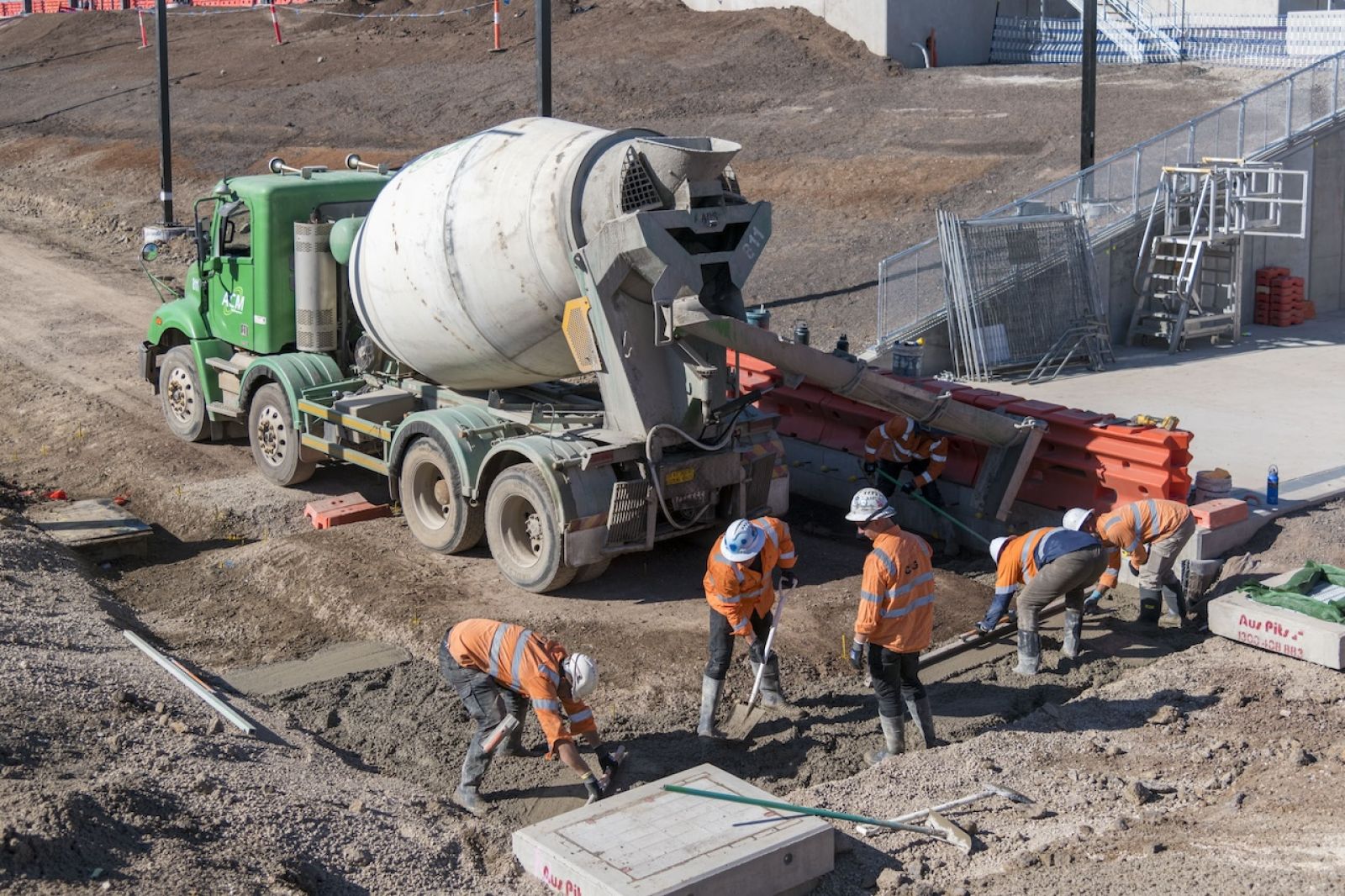
Recycled basalt from the pedestrian underpass ended up back on site as concrete at the new Melbourne train station. Image: Victoria’s Big Build
The rest of the project’s materials record
The basalt experiment isn’t the only waste measure on the job. The precast structures used to build the station are made from lower carbon concrete, with 50 per cent of the concrete material made up of repurposed waste generated in coal and steel production, against an industry benchmark of five per cent.
Big Build Rail estimates that swap avoided roughly 190 tonnes of carbon emissions. Over two weeks of round-the-clock work in January, crews lifted 206 precast structures into place for the platforms and another 35 for the underpass, totalling 510 cubic metres of concrete, all manufactured in regional Victoria.
Above ground, the car park and bus interchange swallowed 1,620 tonnes of hot asphalt, laid at 170 degrees Celsius across 11,410 square metres.
What it means for Melbourne’s west
For anyone in Tarneit weighing up a night out, the calculation shifts when a V/Line service is a short walk away rather than a 15-minute drive and a fight for a park. The west’s after-dark programming has expanded accordingly, from festivals that take over Footscray’s laneways for a fortnight to the venue circuit that has grown around them.
Wyndham has been one of the fastest-growing parts of the state for well over a decade, and transport infrastructure has spent most of that time playing catch-up. A second station in the Tarneit area is a meaningful change to how the northern side of the suburb gets to work.
The platforms have been built long enough for nine-car V/Locity trains, and the wider design leaves room for proposed track duplication and electrification through Tarneit down the track.
Whether the recycled-rock method scales beyond a handful of projects is a separate question, but the new Melbourne train station has at least demonstrated it can be done on a live worksite without slowing anything down.
For more information, head here.