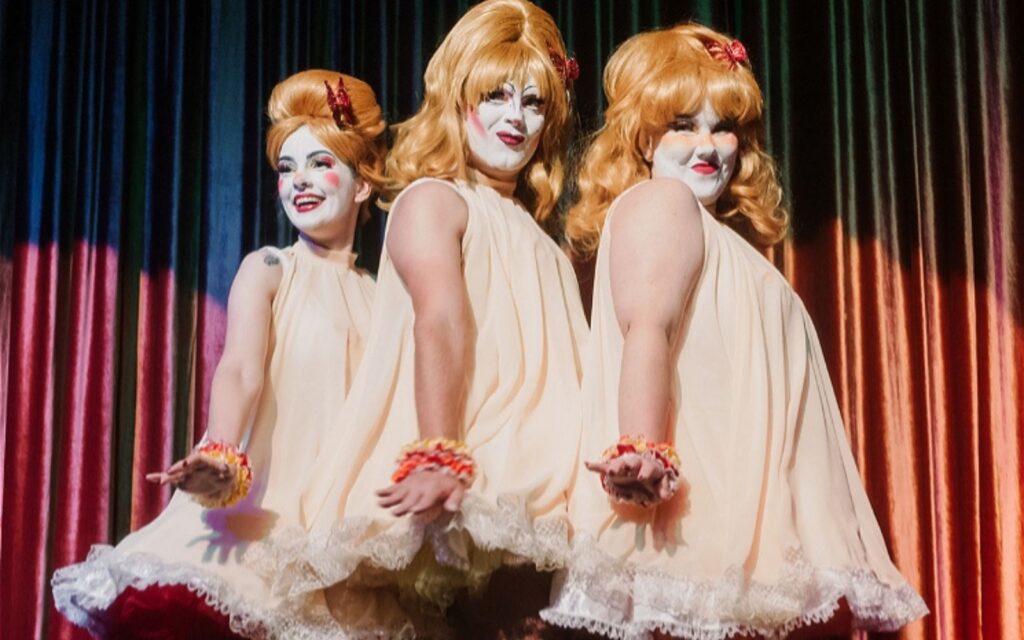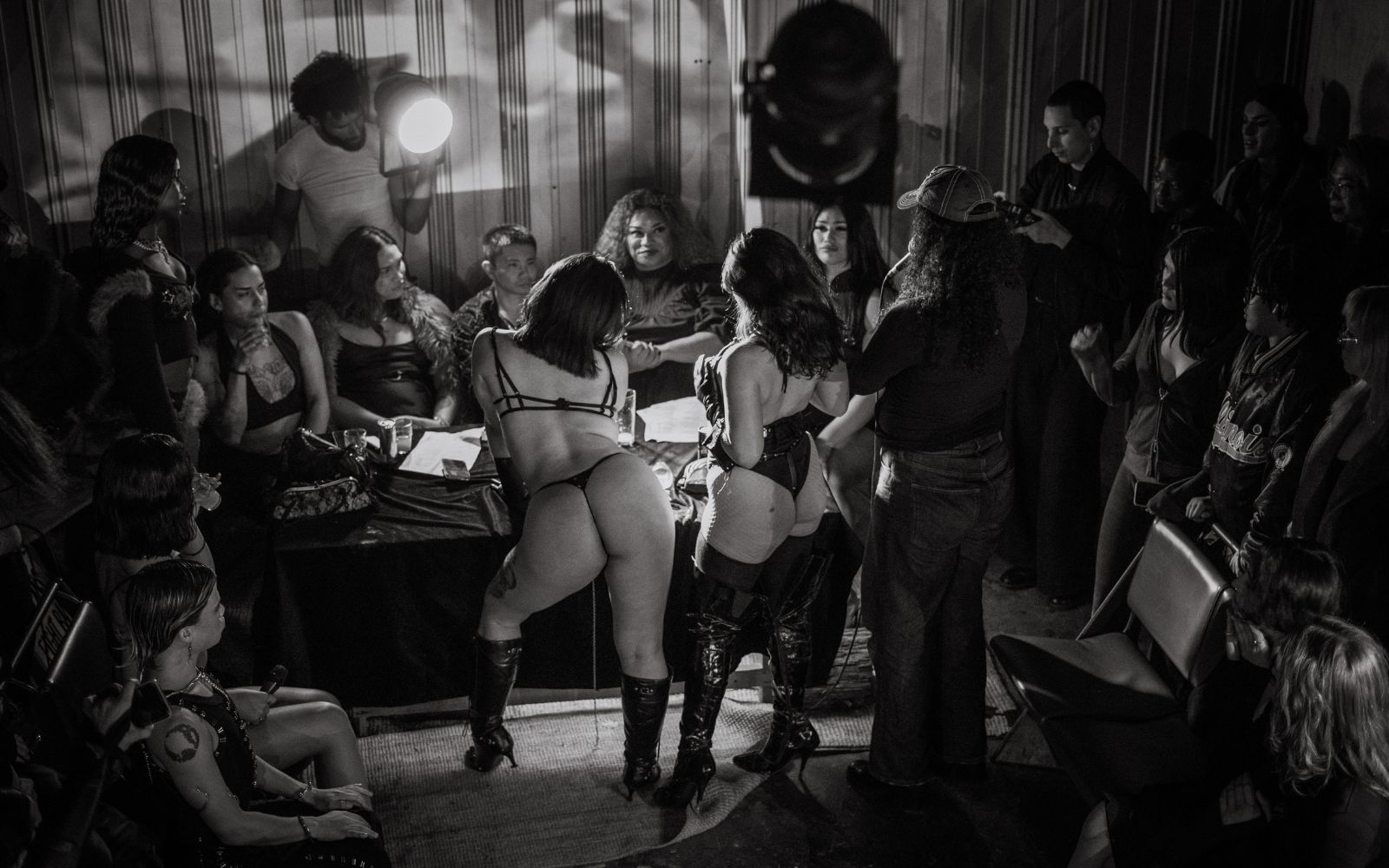
Ximena Jiménez has spent four years photographing Melbourne's ballroom community, finding home in spaces that celebrate radical joy.
For proud Peruvian photographer Ximena Jiménez, the journey into Melbourne’s ballroom scene began at a Selena Quintanilla tribute in early 2022.
Walking into a queer event in Fitzroy, they heard reggaeton pumping through the speakers; music that felt familiar after years away from home. Then came the moment that changed everything: an Acknowledgement of Country delivered in Spanish.
“That moment moved me deeply. I started crying because it was so powerful to hear something so familiar, spoken out loud,” Jiménez says.
That person was Angel from House of Furia, a ballroom house in Melbourne. Houses are like families in the ballroom scene, and watching Angel perform sparked something.
“Since then, I started looking for more BIPOC queer events, spaces that felt safer and more comfortable. Why? Because I don’t always feel at ease in white spaces. It’s not that people are unfriendly, it’s that I don’t recognise myself there.”
Check out our gig guide, our festival guide, our live music venue guide and our nightclub guide. Follow us on Instagram here.
View this post on Instagram
Jiménez began messaging Angel, trading event tickets for photography. As the events grew, so did the work.
“Those became my first proper gigs, and those early shoots laid the foundation that later opened doors for me to photograph other events.”
From there came collaborations with Latinx projects like Bellaqueo and Amarilla Dance, followed by work with Fringe, Midsumma, and local bands like Black Jesus Experience.
But attending these events wasn’t always easy for someone who describes themselves as socially anxious and shy about speaking English. “The lights and music could be overwhelming. But over time, I learned to plan better, packing noise cancelling earplugs, taking breaks to rest, and most importantly being kind to myself.”
Sometimes stepping outside for fresh air led to meeting people smoking ciggies, asking for a photo, happy moments that balanced an overstimulated brain with the photography they love.
Navigating spaces as an observer rather than a participant required care. “As a brown queer artist from South America, I often felt uneasy reading works by European anthropologists and photographers who treated people as objects, photographing them without dignity or respect,” Jiménez explains.
Before bringing a camera to ballroom events, they reached out to organisers and House Mothers for permission.
“I don’t see the ballroom photos as something I own. They are part of a shared archive, a record of collective resistance to the Western gaze, and a celebration of joy and creativity.”
On stage, Jiménez focuses on movement, presence and the heels. Backstage, they look for candid moments; performers checking themselves in mirrors, little gestures while putting on makeup, audience reactions, judges’ expressions.
“These moments tell the story of the performance in a way that lets you feel the energy and motion.”
Growing up in Lima with almost no BIPOC representation in media, constantly reminded that brown skin and dark hair didn’t fit Eurocentric beauty standards, Jiménez found something powerful in ballroom.
“Their audacity and confidence inspired me to reconnect with movement and with my own body.”
Watching performers move with tangible strength and furia, they discovered a community that builds its own rules and families; something that resonated deeply after migrating from Perú to Australia alone during COVID.
“I did not need to walk the runway or dance, just being there in that vibrant, unapologetic environment felt like a blessing.”
Jiménez’s work was recently featured in MADE TO MOVE as part of CADENA, a four-day festival celebrating Latinx artists in Melbourne organised by N0 R3PLY Collective and Chuleo Club.
The exhibition brought Melbourne ballroom photos off the screen and into the world, printed large and alive; a collaborative effort showcasing a scene built on radical joy and resistance.
Jiménez highlighted MADE TO MOVE was created with migrant hands, and none of it would have been possible without Alejandra Fontecilla Saieh, who handled framing, project management and curation.
For more Ximena, head here.