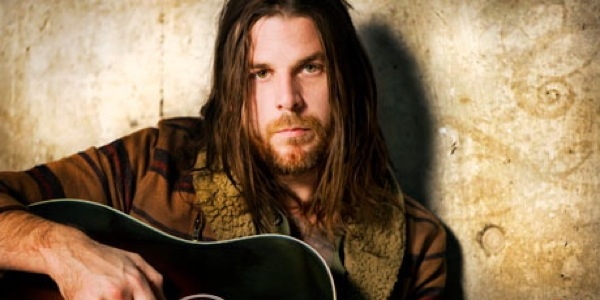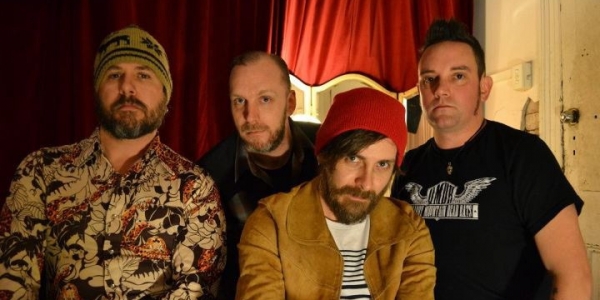
“I reckon we’re fairly craggy lookin’ guys: we’re kind of old and mean,” laughs the gravel-voiced Zeppelin on the doppelgänger legacy of the Sons. “We’ve been [playing] for a while now, through various bands, because we all started when we were about 14. So after a certain 20 years of that we’ve learned a few things and found out a few things not to do, and had some really fun times.”
Zeppelin heads the group, contributing bass, double bass, keys and great vocals which make some tracks sparky punk, and some as deep as a Johnny Cash lament. Stu Manchu supplies guitar and vocals, Coz el lobo Loco is on guitar and backing vocals, and Kidd Gloves is on drums and backing vocals. Then there’s the bounty of contributing instrumentalists, including the second drummer, a jaunty mandolin on Grey Street Bluegrass and a sweetly weeping violin aboard No Sad Goodbyes.
The artwork and aesthetic for the album makes me think of Ali Baba and the Forty Thieves, with a weird mix of magic and brutality. It’s the work of Manchu, who uses vintage and Western images in the band’s visuals which suggest rockabilly travels. “The two drummers are the cutthroats who lock people in pubs,” explains Zeppelin, referring to an incident in Tasmania in which the stickmen took the venue keys from the bouncer, claimed to be “standover men and leg-breakers” and worked the taps for a while, “and we’re the conjurers who pull songs out of our arse.” The aforementioned drummer Gloves is often joined by Knuckles O’Hara, who sits at the second drum stool. They don’t exactly play the same thing, but together they’re a force.
“They play the same sort of root beat, I guess,” says Zeppelin. “But they play different fills and opposing stuff, and depending on which one of them’s drunker, sometimes even out of time syncopation stuff, but that’s not really intentional,” he chuckles. “Having two drummers behind you in a live sense is just incredible. It’s like riding a wave of kick drum.” It’s also good for measuring your own skills. “If you’re out of time with one drummer you’re not that good but if you’re out of time with two, you should just stop playing.”
The band members have traversed a dragway of personal ups and downs since the last album and Zeppelin says there’s a definite change to the scope of the songs’ meanings. “[The record] could almost have been called ‘Breakdowns, Breakups and Fuckups,’” he says. “We used to write about maybe being depressed, or angsty sort of stuff. But for the third album a lot of it’s about revenge, you know: it’s about solutions, not problems. I guess we’re kind of like dodgy meat in a butcher’s shop, we’re just getting older and tougher but we’re not dead yet.” (Self-deprecation is part of the Sons’ starch.)
“I guess this is a little more [of a] stripped-back and reflective album,” he continues. “We found our way back on to some old electric piano and I was playing some upright bass. I haven’t really played one before. My youngest brother who’s in a tonne of bands used to play it, so I used to muck around on his occasionally.” Once you have the theoretical knowledge of music in place, Zeppelin says it’s only about working out where the notes are on your new instrument and figuring out technique, although he admits he’s no bass king. “But it’s good fun,” he says. “It’s a real woody, resonant thing to have against your body, and it really fit the mood of the songs.”
Adhering to Hunter S. Thompson’s gonzo approach to writing, Zeppelin has created journals on the Sons’ experiences throughout their tours of Australia and Japan. “You write about what you know, but you want to write something interesting, so go and do something interesting,” he laughs. “Pretty much every song is coming from a real situation that’s happened, but it’s just interpreted through our filters.”
He’s got “about a novel’s worth” of tour diaries, which incorporate dreams, hallucinations and metaphors mixed in with the objectively real things. Zeppelin chuckles that he may have to get legal advice before anything in it is published, but considering the man’s ability to communicate both pathos and beer-fuelled rapture through his lyrics, I think his prose could be even better.
BY ZOË RADAS