“We looked at a whole lot of work that we found really interesting. A lot of it was about what was happening in clubs and intimate rooms, with audiences being part of or in the show,” Obarzanek explains. “It was really about creating a space where that can continue to happen. I think other works in AsiaTOPA are more conventional in the sense of the relationship with the audience. You buy a ticket, you sit down in a theatre, and you look at people on stage. Here, things are happening all around you. You are literally on stage, looking out at this vast auditorium. It’s really an opportunity to be with the artists together.”
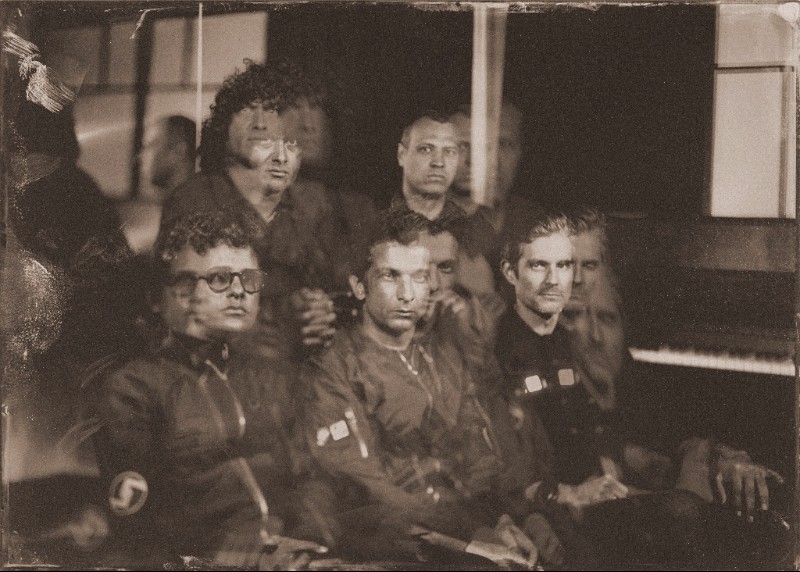
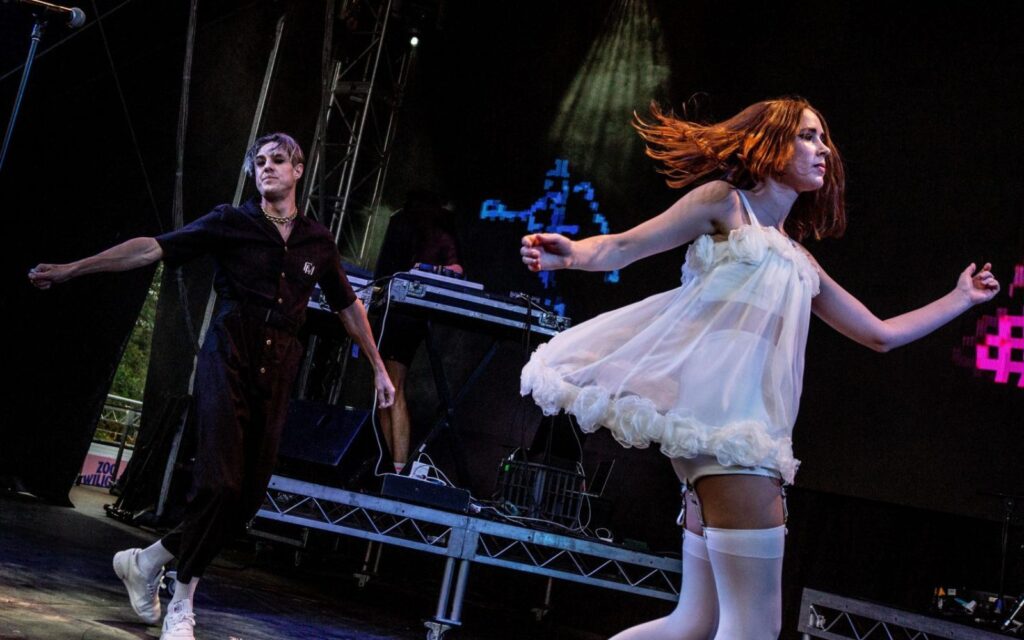
As part of AsiaTOPA, the festival celebrating Australia’s artistic connection with Asia, XO State provides five nights of performance art, dance, video art, several bars and bands in an intimate yet spacious setting – all taking place on the stage itself. The program is split into two sections – Dusk and Dark. Dusk offers two huge shows on rotation: Attractor (a collaboration between Obarzanek, dance company Dancenorth, lauded choreographer Lucy Guerin and experimental Indonesian music duo Senyawa) and Macho Dancer (the work of artist and choreographer Eisa Jocson).
As well as close proximity, the performances incorporate varying degrees of interactivity, offering willing participants the opportunity to join in the fun. Following Dusk is Dark, a series of live acts involving performance art, immersive video and headline bands at the vanguard of Asian music. With a heavier emphasis on music and inventive expression, Dark is the club you party in after Dusk’s show.
“People want to be involved, I think, more than ever before, and I think artists are making works that address that,” Obarzanek says. “There’s certainly a much more active space between visual arts and performing arts than there ever used to be. XO State is more of a response to what’s happening rather than inventing something new, or acknowledging what’s happening that’s different.”
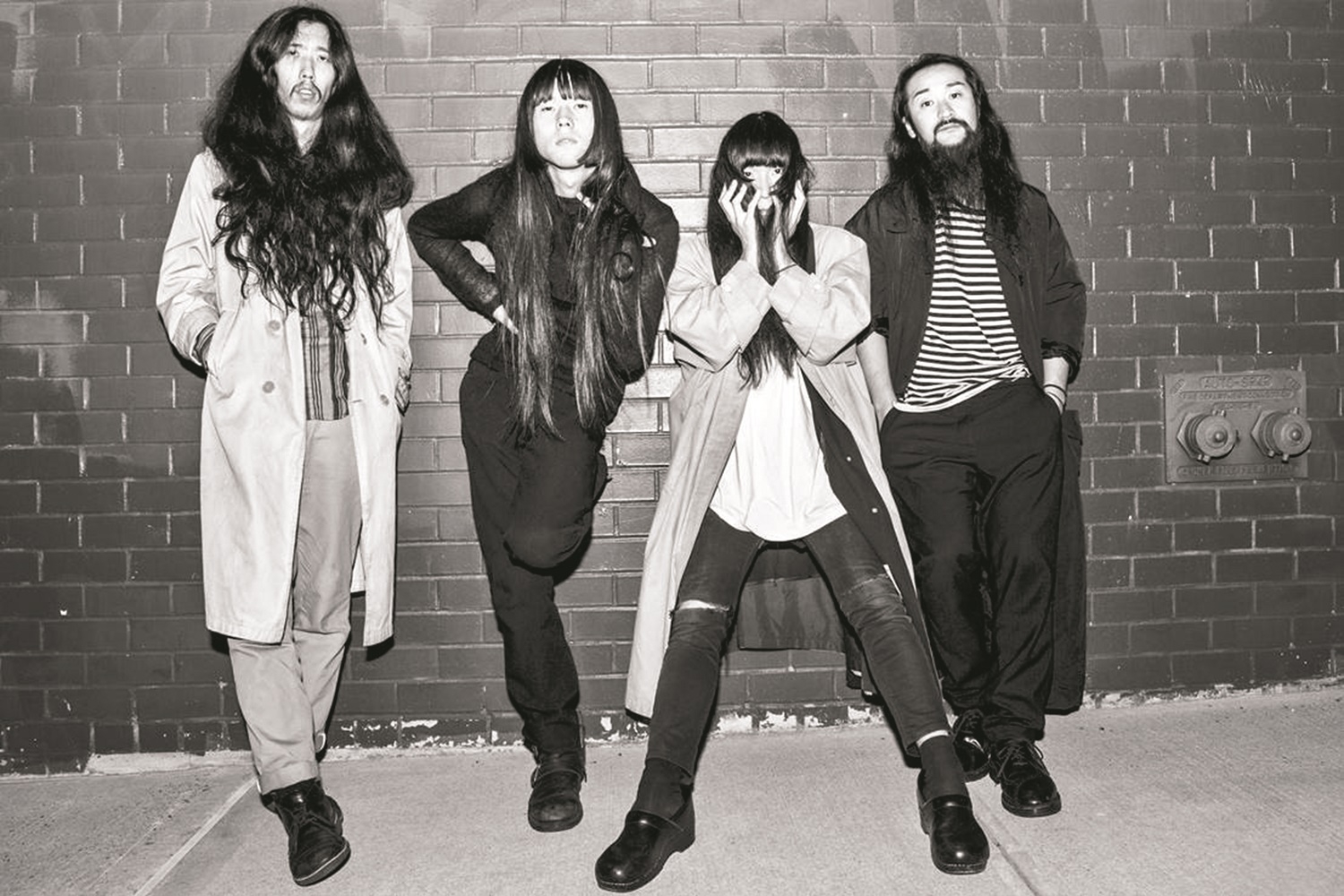
Attractor is a trance-noise odyssey, drawing performers and audience alike into a surreal, meditative experience. Senyawa’s experimental sound cleverly synthesises elements of Javanese ritual, trance and traditional music with the secular world of heavy metal and global popular culture, creating a unique environment that transforms into a celebration of abandon into dance. By the end of the show, the audience participants often outnumber the cast, as they choose to be drawn into the movement and momentum.
Macho Dancer explores the cultural phenomenon of male stripping in Manilla – a highly stylised, hyper-masculine form of dance. When performed by a woman, Jocson smashes gender boundaries and embraces androgyny – on a stage complete with catwalk to emulate the club environment you’d expect to see. Interested in the economy of dancers and performers in the Philippines, Jocson removes Macho Dancing from its ‘natural’ context to examine the commercial transaction in a different light.
“When I normally watch dance, I seem to think that that sensuality and sexuality is encased, or idiosyncratic to the person who’s performing – that it’s part of them,” Obarzanek says. “She demonstrates that it’s all technique. Once you learn a technique – these trigger points that arouse people, or people pay attention to – she can break it down and repeat things. You realise that you’re actually responding to a highly rehearsed series of moves and actions combined with music to have this effect on you. It completely undermines the notion that it’s a natural thing, and that it’s very specific to the person that’s performing. She can turn it off, turn it on; become a ‘man’, become a ‘woman’. You go, ‘Oh my God, this is really a job.’ It’s very effective.”
Obarzanek is proud of the hard work that has gone into XO State, and is now determined to represent the integrity and excitement of what these artists have accomplished. With the unfathomable amount of cultural variety on display, Obarzanek is excited to observe Australian audiences discovering the ritual, passion and interest that he himself has witnessed and appreciated.
“When we looked at the vast body of work across Asia, it was impossible to give it a common theme,” Obarzanek says “When we say ‘Asia’, what does it mean? For most Asians, in various Asian countries, ‘Asia’ doesn’t mean anything to them, in regards to being something that comes together.
“They see themselves as completely individual cultures, and they are. We made a decision that we would focus on contemporary work rather than traditional work. AsiaTOPA is really more concerned with what’s going on now, and what’s going on now is a very globalised world. We see the influences of contemporary work in Asia, and the connection to traditional and cultural work, but we’ve made a decision – specifically in XO – to concern ourselves with what artists are making now.”