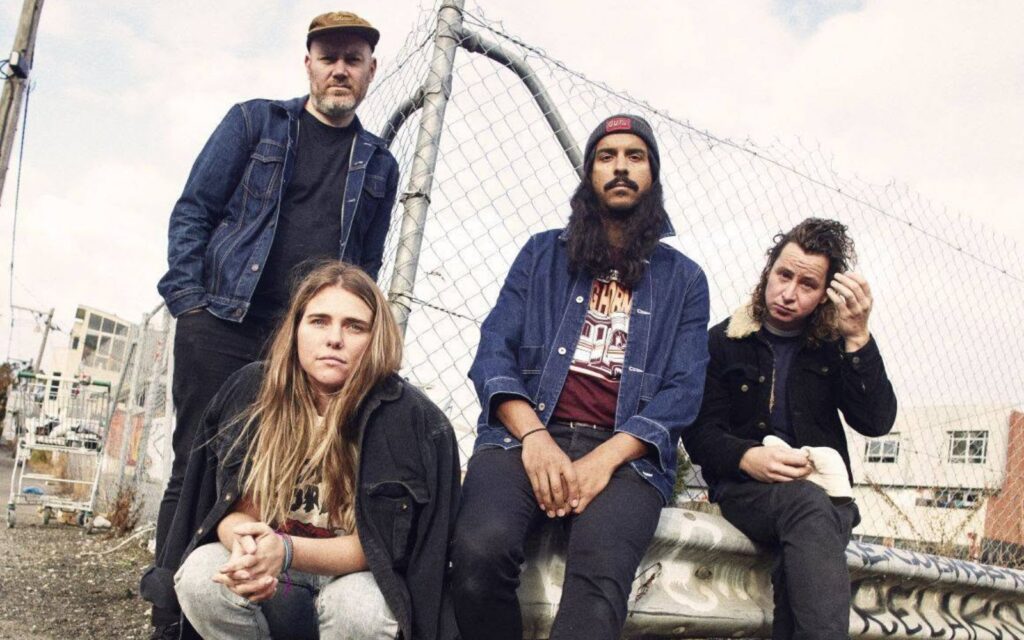
Triple R veteran DJ Ennio Styles, on the eve of the Radiothon, is not only marking his tenth year with the station, but also his 500th show. His love affair with radio began in the early ’80s, when his parents shared with him the brilliance that is Stevie Wonder’s Hotter Than July, paired with the one-two punch of Thriller and Off The Wall by the one and only Michael Jackson. “They were the first albums I owned,” recalls Styles, “so it was a pretty good start, really! But I didn’t really know there was music beyond the mainstream.”
Styles’ path to Triple R was prompted by an unlikely source – American Top 40. “I realised that there were [records] in the American Top 40 that weren’t getting released in Australia – [one example] was Run DMC, and their album Raising Hell. There was a song on the album called You Be Illin’, which I loved. And [host] Casey Kasem played it, and I could never understand why I couldn’t find it, and why none of the other radio shows were playing it. And it was that that kind of triggered in me the idea that I’ve got to look a bit further to find more music like that. And that led me to Triple R.”
When he was fourteen, he hosted his first show on Triple R. “It was about 1987, and I started listening to Triple R. They had this show called I Am Stranded, where subscribers could come in and take over and present an hour of radio. Somebody else pushed all the buttons and everything, but I came in with all my music – my Ice-T, Trouble Funk and Model 500 – and played an hour. I think from then on I was hooked.”
Styles certainly understands the importance of community radio and its reliance on public support. “I started listening to Triple R in my teenage years, and started subscribing pretty early on. So you listen to it, and you hear the radiothons, and you come to understand that that’s how the place works.” When asked about how Triple R and other subscriber-funded radio contribute to the community, Styles gets philosophical. “I think community radio – not just Triple R, but PBS and 3CR and the other stations in Melbourne – is really quite a strong part of the radio and cultural landscape. And I think that’s part of what contributes to making Melbourne such a culturally rich and interesting city, because a lot of these things are inter-related. So what happens on radio – you hear about the gigs, you hear about the rallies, the spoken-word events and the festivals … all these sorts of things which don’t get so much coverage in mainstream media.”