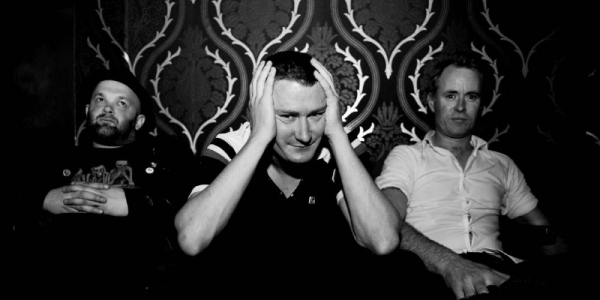
Tom Lyngcoln has this vision. The man that fronts The Nation Blue holds nothing back. He and his band came to Melbourne at the start of the century and though they were outsiders to begin, they quickly garnered a cult following due to their visceral live shows.
Lyngcoln’s onstage persona projects a veil of danger and despair, while his lyrics are a harrowing reflection of his dark sensibilities and his guitar style is akin to a sonic assault. “The physical intensity comes from years of repeated abuse,” he says. “It’s doing the same thing night after night, people expect to see it so you’ve got to up the stakes.”
With Lyngcoln, it immediately becomes apparent that there’s a difference between the performer and the man. He is refreshingly modest and makes constant references to his day job as a carpenter and newborn child. Indeed, he doesn’t seem to enjoy reflecting on the positives of the band’s achievement.
“I look up at a lot of the venues around the country and there’s always some evidence that we’ve played there,” Lyngcoln says. “I’ve had to take stock on a few of the things I’ve done over the years. We did a gig in Sydney where I completely destroyed the roof, I got yanked off stage by a bouncer and it took a while for everything to calm down.”
How does one destroy an entire roof? “You take your guitar and repeatedly smash it through the roof until it rains asbestos,” says Lyngcoln, though he does admit he offered to repair the damages.
After a seven-year hiatus, the band is now embarking upon a new era. With each member fresh from other musical projects, their 20th anniversary now coincides with the release of not one but two new albums, Black and Blue.
“I had a child halfway through the process and had a lot of downtime and I found a formula that really worked for me,” Lyngcoln says. “Cranking out 29, 30 songs was pretty easy. We had the time and the resources and realised we had two distinct records sitting there so we put them out.”
With an excess of new material that stretches far beyond what actually ended up on the albums, Lyngcoln admits that these days he struggles to pick up a guitar, such is the amount of writing he’s done.
Whilst both Black and Blue maintain the unnerving punk stamp of their earlier records, the differences between the two albums lie in their themes. “Black is definitely the one that when lyrics started coming through, they were political,” Lyngcoln says. “But on Blue they are more personal.”
Given these dark themes are similar to subject matter Lyngcoln has explored before, he does admit to worrying he might go stale. “I’m pretty fastidious with the lyrics,” he says. “I’m always wary if they drag on, but I got on a couple of them here that I was pretty happy with. I’m about 160 songs deep with all the bands I’ve been in, so I’m starting to run out things to say that’s for sure.”
BY ALEX PINK