When Albert Hofmann discovered the hallucinogenic effects of LSD-25 in 1943, he had no idea what he was starting. Hofmann, a research chemist in a commercial drug company, had isolated lysergic acid diethylamide in 1938; five years later, he accidentally ingested some of the chemical and so set in train a radical course of social, political and artistic events.
Initially the province of academic chemists and clandestine government research programs, the appropriation of LSD by the ’60s counter-cultural movement render it the 20th century’s most charismatic chemical compound. In the 21st century, LSD is still with us, even if its public profile is less about philosophical enlightenment and more in line with tabloid fear of neighbouring narcotic pursuits.
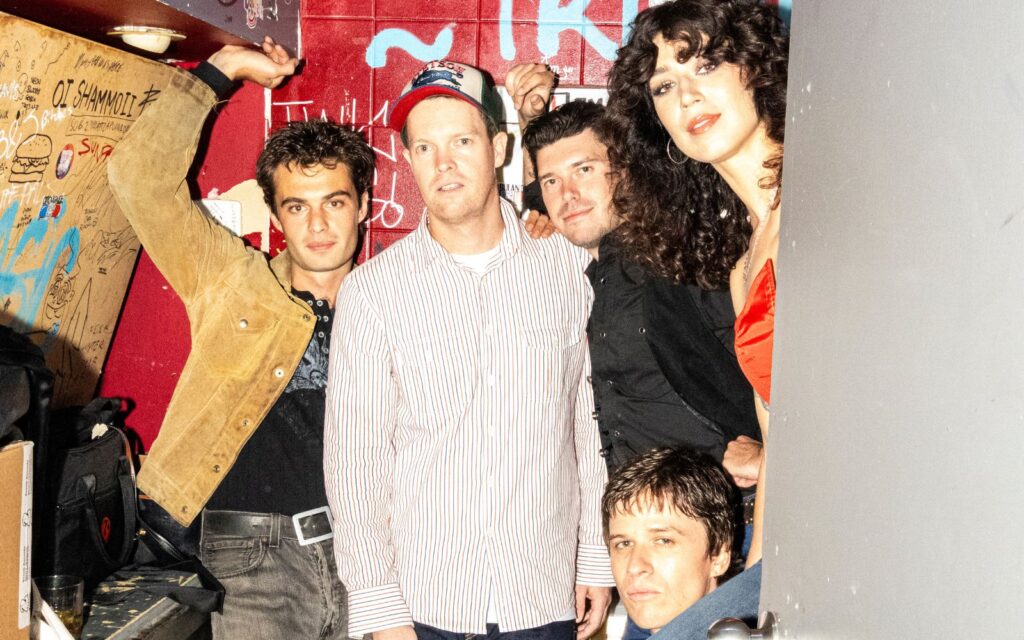
On the 70th anniversary of Hofmann’s discovery, the Morning After Girls returned to our fair shores for a rare live appearance. It was about seven years since I’d last seen them grace the Ding Dong stage. Since that time, the band has suffered a radical internal recalibration, with two former members leaving to form The Black Ryder; Ding Dong itself has undergone its own transformation, with its patronage now split between gig audience and generic late-night walk-in drinking crowd.
Demon Parade has evolved from a band with a colouring book psychedelic quality to a genuine psych-rock outfit. The riffs are tighter, the jams longer, the group aesthetic more intense. There’s a fine between psychedelic exploration and self-indulgence; the last song of the set walked that line, and came to rest on the right side.
The Morning After Girls are serious. Very serious, in fact. There’s ne’er a smile to be found between Sacha Luchashenko and Martin B Sleeman for the entire evening. Luchashenko is furrowed of brow, and intense of manner; Sleeman, with his rake-thin frame and elegantly groomed facial, might have stepped from a medieval court – that is, a court with a propensity for kaleidoscopic musical indulgences.
The music is rich and colourful. It’s a trip back in time to the late ’80s when English youths defied the self-serving individualism of Margaret Thatcher’s Conservative government in favour of chemically-enhanced communitarian journeys in smoke and drug-filled city clubs. When the groove kicks in, there’s not a single moment lost; some judicious technical repair work removes an annoying buzz of interference in the keyboard lead, and all is good in the world. When Hi-Skies kicks in – a good riff can surely take you to the finest cerebral places in the music land – there’s nowhere else you’d rather be. It’s the best of times, and nothing less. Albert Hofmann didn’t know what he was unleashing, but it was a good thing, despite the hysteria and hyperbole.
BY PATRICK EMERY
LOVED: Hi-Skies.
HATED: The freezing night air on the way home.
DRANK: Coopers