It’s one thing to make art from clarity, to write once you’ve made sense of the madness.
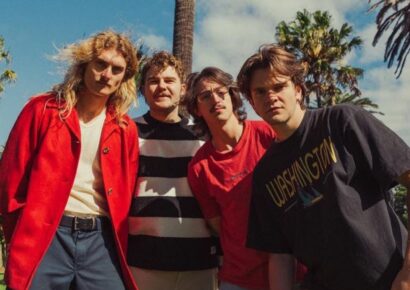
On their debut album, Sky Is Falling, Newcastle outfit dust capture something rarer: the sound of not knowing. The experimental five-piece translate modern-day disorientation into something melodic and electric, proof that the most moving work often arrives before the answers.
Dust have refined the frenetic energy of their breakout EP et cetera, etc for their full-length record.
Check out our gig guide here.
“The goal was to be more intentional with what we played and hold on to that fun, jammy, chaotic side we naturally seem to conjure,” drummer Kye Cherry says. “We spent a long time deciding exactly how we wanted it to sound and feel.”
Two weeks in the studio only sharpened their focus. “We just lived in it,” Kye recalls.
Then, it happened, that unspoken, shared moment bands dream of. Each member knew dust had entered something new. “We were all unanimously like, ‘Yeah, this is it.’”
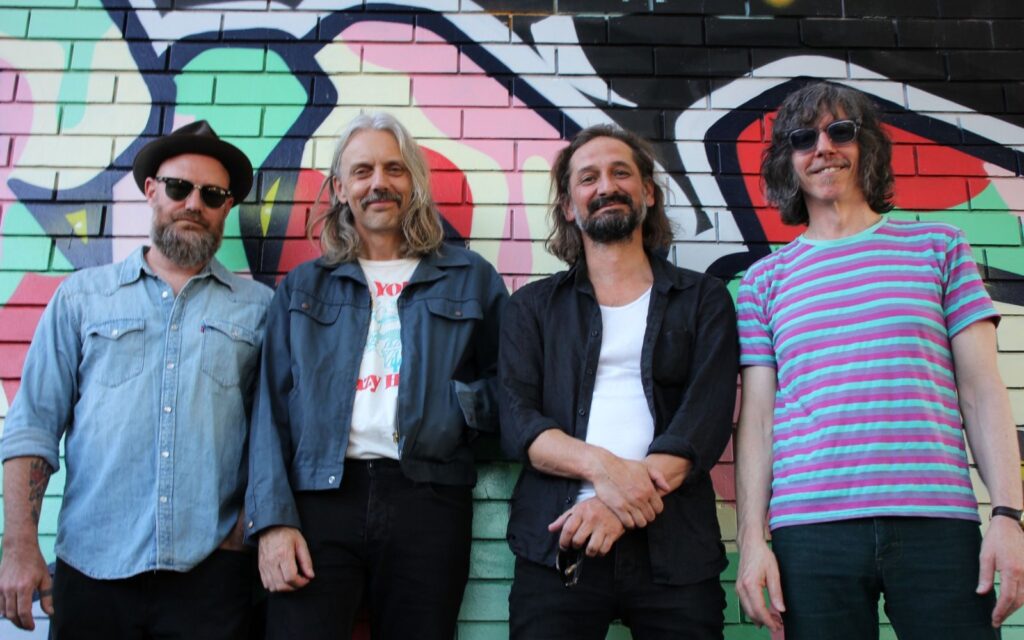
Formed in 2020, the quintet, featuring Kye, bassist Liam Smith, saxophonist/guitarist Adam Ridgway, and dual vocalists/guitarists Justin Teale and Gabriel Stove, quickly amassed a following. Sky Is Falling is their shared vision of a “damaged, but ultimately redemptive world” – a document of five friends attempting to make sense of it all.
Lyrically, dust write from melancholic introspection, but the new record stretches into collective worries: social injustice, fractured relationships and the dread of change. “It’s a commentary on feeling anxious and feeling self-doubt and relationships being tested,” Kye explains.
That yearning for “the betterment of humanity” crystallises on Restless, with the refrain “Maybe this love of restless is what I hate.” It’s an ode to stillness, subtly critiquing self-help culture and the cult of constant motion.
Across the record, uncertainty and nihilism give way to a tenuous peace. Rather than a grand revelation, the closer opts for spoken-word realism: “A constant search for meaning, but all my feelings stay the same.”
“I think that’s the exciting part of the album,” Kye says. “It doesn’t feel like it resolves. It feels open-ended, and that search will continue.” Though often lumped in with Australia’s new wave of post-punk, dust prefer to avoid categorisation.
“Initially, when we were kind of aligned with [post-punk], I think we saw it as more of a narrow thing,” Kye says. “We want to take from all the other sides of our musical influence.”
Their music borrows the scene’s urgency – jagged guitars, abrasive drums – but ventures further afield. Elements of experimental jazz, slowcore, and electronica join eerie bass and Adam’s affecting saxophone. Once decorative, the sax now acts almost as dust’s third vocalist, a counterpoint shaping each song’s emotional arc.
“He used to think it was too indulgent,” Kye says. “Now he really wants to sit in it musically and be in the mix. Often we’ll be like, ‘You should do that bit on the sax’, and he’ll go, ‘Nah, doesn’t need it.’”
That restraint, Kye says, raised the bar. “It inspires me and my drumming, and everyone else and their playing, to serve the song.” dust’s ear for texture – the sway between tension and release – defines much of their practice.
Comic relief cuts through the album’s gloom and vulnerability with lines like “I think I’ve hit another paywall” on its existential closer. Kye laughs remembering bars that snuck into the final cut.
“‘Far out, Brussels sprout’ was a placeholder that just stayed in,” he says of the manic banger, Swamped. “Same as the intro to that song, Adam yelling ‘Gangbuster!’ in the room — all those kinds of chaotic moments we wanted to leave in. A couple of clangers like that are good to lighten the mood.”
Such moments capture the playfully cynical, deadpan tone of Australian humour, that rare ability to stare down existential dread and still find something to laugh at. While many avant-garde acts tend to emerge from the perpetual hum of our capital cities, dust’s slight isolation affords clarity.
“Being from Newcastle has been a good thing,” Kye says. “There’s a lot of bands here, but no one’s really doing the same thing. We get to soak up influence when we go to Sydney or Melbourne, but then retreat to our own zone. We’re not inundated with overly experimental music, so we get to just experiment by ourselves instead of being influenced by other people’s experimentation.”
Sky Is Falling doesn’t land on a single truth, but that’s the point. dust’s strength lies in the space held for ambivalence. In a cultural climate that rarely values empathy, Kye says simply naming their reality can have an impact.
“With so much uncertainty and anxiety in everything, sometimes just talking about it can be powerful. An act of rebellion is just saying it how it is, and how it makes us feel.”
They’re playing The Evelyn Hotel on December 13. Tickets here.