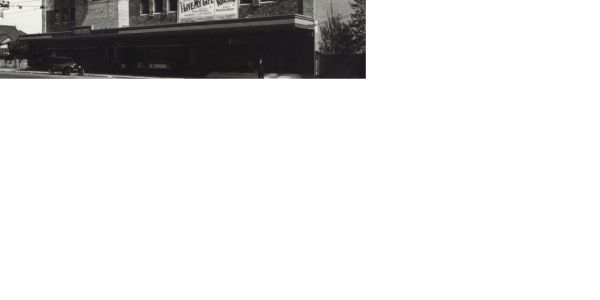
Friends of The Astor Association Inc., is championing a campaign to save the theatre from likely closure after the building which houses it was purchased by nearby St. Michael’s Grammar School. While the school does not own the theatre, after acquiring the building which houses the Astor Theatre, St. Michael’s unveiled plans to close the building for five years when the current lease expires. The school then plans to re-open the building by turning it into a performing arts centre and a uniform shop.
Vanda Hamilton, president of the community group Friends of The Astor Association, is aiming to raise $5 million to buy the St. Kilda building, ensuring that the cinema can continue as a vital part of Australia’s film culture and heritage.
Speaking to Beat, Hamilton claims that discussions with St. Michael’s Grammar School have been less than productive. “We have had a few meetings over the years,” she says. “I could describe their attitude in those discussions as evasive and non-committal and its always been that way. Many of their statements are so broad.”
“The assurance that the Astor will remain a cinema is one which is fairly misleading in my opinion,” she continues. “All their statements mean is that they plan to have an area within the building set aside where people can watch films. But we haven’t seen any architectural evidence to support this,” says Hamilton. “No blueprints of any kind.”
Yet fans of the Astor Theatre are not taking this threat lying down. At the time of our May 18 interview, an online petition to save the theatre had garnered over 8600 signatures, and Hamilton believes that they would “Get to 10,000 by the weekend.”
Built in 1936, the theatre remains an art deco icon. Hamilton believes that the theatre’s importance to film culture in Australia is immeasurable. “In terms of the history of film in Australia, the Astor is certainly one of the last cinemas to show films in their proper, large format. The movies are projected properly by projectionists. We see theatres screening movies this way less and less.”
The Astor Theatre is registered with Heritage Victoria and is Melbourne’s last historically significant single screen theatre and Hamilton maintains that despite theatre’s cultural significance, St. Michael’s Grammar School is steadfast in their plans to close the theatre. “St. Michaels had been asked if they were interested in selling the building, and they simply said no.”
Though the Astor Theatre has been open since 1936, in 1983 George Florence leased the theatre. The theatre’s programming is adored by cinema fans throughout Melbourne, a fact that Hamilton believes is lost on St. Michael’s Grammar School. “George Florence re-opened and reinvigorated the theatre in 1983. There’s always been a theatre in that building but he re-opened it and has been running it since then with the current programming format. He owned the business of the Astor Theatre. The school owns the building, but they do not own or run the Astor Theatre. And we maintain that they will not be running the theatre.”
News of the threat to The Astor Theatre has extended beyond Melbourne, as support has been pouring in from the film industry. Park Circus, a UK based distribution and programming firm have leant their support to Friends of the Astor Theatre, as Hamilton notes that, “[They have] given us leverage to screen their films for free.”
Those with a respect for the importance of film and screening films in their proper form consider the Astor Theatre to be a beacon of light in the aged of digitized film. Hamilton recalls a story from the theatre’s past, all the while attempting to outline the theatre’s importance. “Kenneth Branagh’s Hamlet was going to be distributed by a distributor that didn’t adhere to proper projection. George was horrified and he somehow contacted Branagh and asked for distribution rights to the film. And he was ultimately given them. If he hadn’t done that, Australasia had not been able to see a proper film version of Hamlet. There’s a bunch of day-to-day things that people don’t see, but it’s all very vital to the Astor Theatre and cinema in Australia. And you can’t do that if the ownership simply pays homage to the theatre a few weeks a year.”
And if the Friends of the Astor have their way, they won’t. Hamilton is asking concerned citizens to attend the launch to the campaign where they’ll be screening Labyrinth and concerned celebrities will also be making appearances. Still, the focus remains on members of the community to get out and protect the theatre. “We’re asking people to come along and show their support,” says Hamilton.
BY JOSHUA KLOKE