“I need to care about wanting to play the song night after night to be able to draw from something to perform it all the time,” he says. “It needs to come from somewhere real, or at least honest. And it’s also cathartic for me to get these things off my chest or work through my thoughts.”
Grigg says his writing process begins in a secluded and contemplative environment, fuelled by an organic drive. “When I start writing the song I’m on my own in my room usually playing acoustic guitar, so even the punkier songs or the more energetic songs all start out on acoustic guitar. So it’s a very isolated, personal, and probably introspective place a lot of the songs come from.”
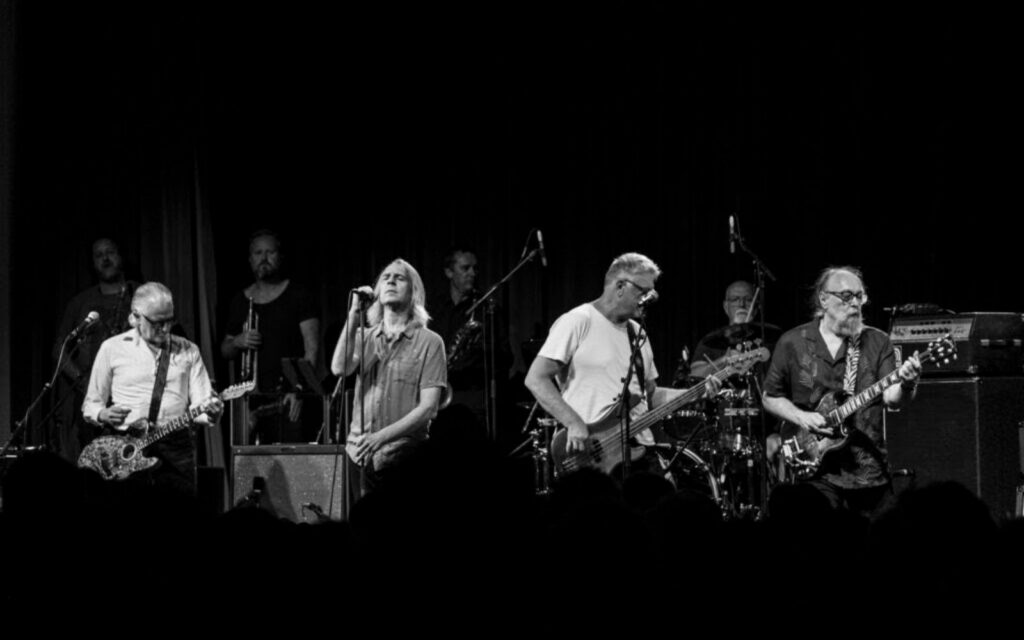
Palms’ music is inherently instinctive. Every wail of the wah pedal and landing blow from the bulleting rhythm section is the product of an uplifting collaboration between close mates. “It’s like me going and I’m playing with my friends and you put the drumming behind everything and it lifts it up. I guess the music is this really joyous thing.” Grigg says.
It’s a component of the new album that, as Grigg suggests, allows fans to connect with the music on different levels. “If you want to find the intensity and you want to have this sort of emotional response to the album then it’s there and you can find it, but if you just want to like tap your foot or sing along or jump around then you can do that as well. It’s all there.”
For Crazy Rack Palms once again recorded with good friend Owen Penglis (Royal Headache, Straight Arrows), splitting time between Linear Studios for live tracking, and Penglis’ basement studio where they pieced together overdubs, vocals and other bits and pieces. The fervent energy of the band coupled with Penglis’ natural feel for production has ingrained these new tracks with a propulsive immediacy.
“Owen is definitely a less is more kind of guy, so if you can take something away he will. Instead of having a distortion pedal, let’s just drive the amp harder or just keep everything very simple. If you let a band just sound like themselves you get a better chance of that band having something sounding idiosyncratic-having something that another band’s not going to have.”
Beyond the familiarity and conceptual clarity offered by Penglis’ recording method, his impressive arsenal of quality vintage gear – everything from reverb units to classic microphones and a hefty reel-to-reel eight track – helped shape the album’s sonic fabric. “Owen has this amp, it’s an old Australian brand called Golden Tone, and it sounds like fucking magic. It’s all over our record and I’m pretty sure, because Owen just did a bunch of stuff on the Royal Headache album, I’m pretty sure it got a run on that album too. Everyone that plays it is just blown away.”
I know when Ty Segall was in the country he played through it. He was just like, ‘Oh my god man. I’ve got to get one of these amps.’ They’re like an Australian ‘60s kind of thing and people just totally fetishise [over them], and rightly so – they sound incredible.”
As Grigg gleefully recounts shooting the Bad Apple clip at SydneyUniversity, it’s easy to see how his sense of humour influences the band’s outlook. The clip was directed and produced by Brent Griffin (aka SPOD), and it wasn’t a laborious endeavour.
“It was just us foolin’ around, and it was actually really fun and probably the easiest I’ve ever made. It was just like, ‘Hang out with your friends, do stupid tricks,’ and Brent just followed us around with a GoPro.”
It’s the same sentiment behind Crazy Rack – it comes from a genuine place, both feel good and eclectic. “I wouldn’t want it to just be vacuous – you know, on the other hand too, who wants it to just be like this vacuous song of like just garage-y nothingness, where people are like, ‘OK’ once they’ve kind of heard the chorus three or four times it’s over. You know, [the sort of song where] there’s nothing more you can get from it. It’s a funny balance I guess, in between the fun and also the depth.”
BY CHRIS SCOTT