Science Gallery Melbourne's exhibition EMERGENCE[Y] is a must-see exploration of survival and adaptation.
Science Gallery Melbourne’s exhibition EMERGENCE[Y] tackles ecological collapse, tech acceleration and social upheaval head-on.
EMERGENCE[Y] is the kind of exhibition that makes you stop, look around, and genuinely wonder what kind of world we’re building.
Spanning living vertical farms, fungal fashion, coral soundscapes and AI-driven political experiments, it’s a sprawling, thought-provoking look at how humans and other life forms might survive and thrive amid planetary transformation.
At the centre of it all is a major new commission from renowned Australian artist Patricia Piccinini, created following a year-long residency with Science Gallery Melbourne that included time in the stem cell research labs at the Murdoch Children’s Research Institute.
EMERGENCE[Y] at University of Melbourne
- Where: Science Gallery Melbourne, University of Melbourne
- When: 6 June – 5 December 2026 (preview event 5 June as part of RISING)
Stay up to date with what’s happening in and around Melbourne here.
View this post on Instagram
Piccinini’s new sculpture revisits her landmark early work Still Life With Stem Cells on its 25th anniversary.
Other highlights across the exhibition include:
- A lush vertical farm from Greenspace and Faculty of Engineering and IT researchers, giving visitors and school groups a hands-on look at how sustainable food systems can work within urban life, with fresh produce actually grown and harvested on-site.
- A collection of fire-resistant, non-combustible speculative garments by Australian designer and academic Alia Parker, made from a composite of mushroom mycelium (the vegetative part of fungi) and post-consumer cotton textile waste.
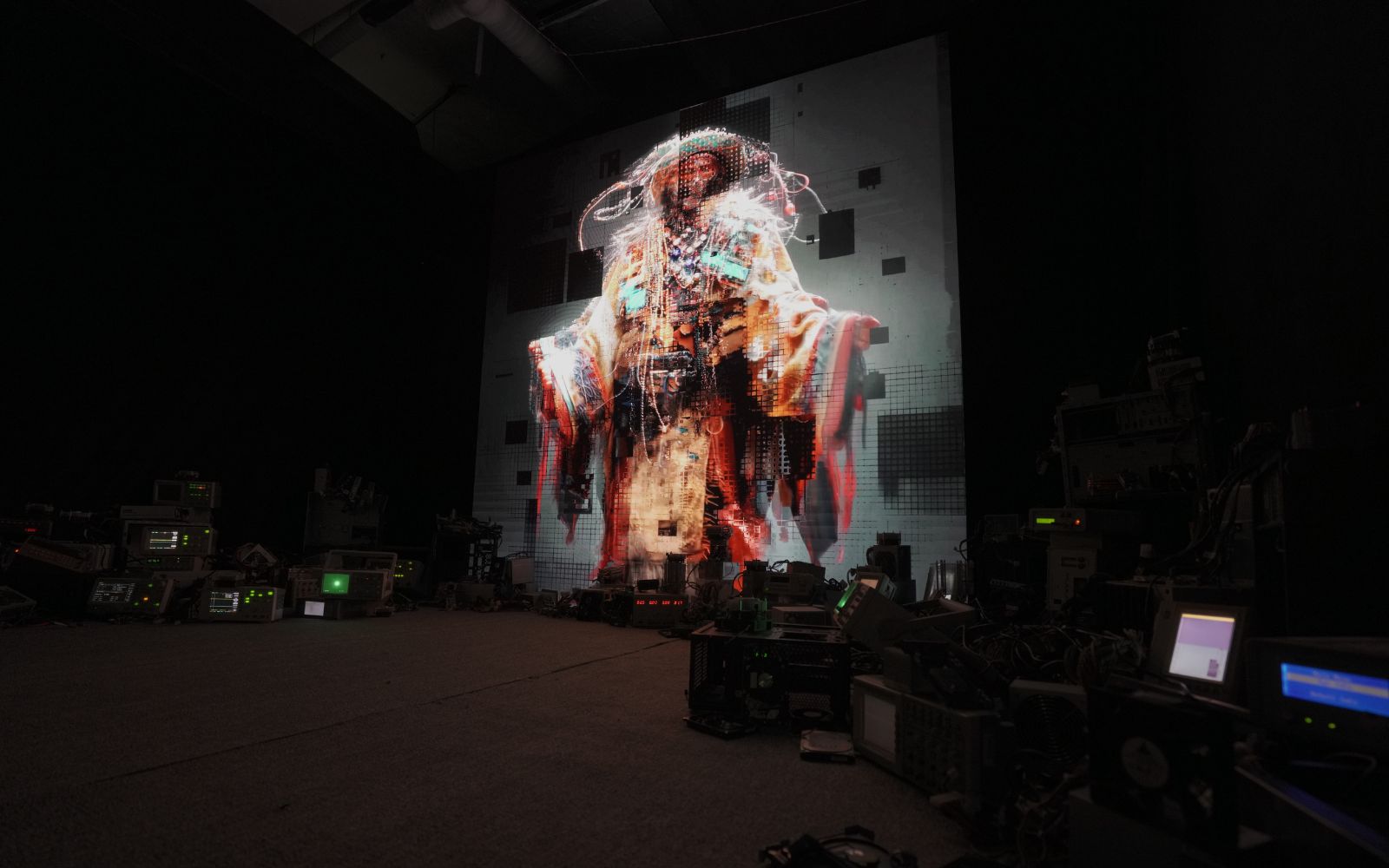
- The Australian premiere of Tuengel by Dr Wang Zhigang, professor of Information Art & Design at Tsinghua University in Beijing, a video installation built from e-waste that plunges visitors into a post-apocalyptic electronic wasteland where humans, animals and intelligent machine life forms coexist among the ruins of obsolete technology.
- tele-present wind by US artist David Bowen, created in collaboration with the NASA Jet Propulsion Laboratory, using live wind data collected from the Perseverance Mars rover.
- Coral Sound Resilience by German artist Marco Barotti, an interdisciplinary art and science project rooted in acoustic ecology that explores how the soundscapes of healthy coral reefs can support reef restoration, with sound sculptures from the work now permanently embedded in damaged reefs around the globe.
Curated by Science Gallery Melbourne Head Curator Tilly Boleyn, with input from a team of academic experts and young people, EMERGENCE[Y] showcases research collaborations from the University of Melbourne alongside creative work from around the globe.
EMERGENCE[Y] opens to the public on 6 June and runs until 5 December 2026.
It’s an invitation to sit with some genuinely big questions and maybe come away with a bit of hope.
For more information, head here.
This article was made in partnership with Science Gallery at the University of Melbourne.