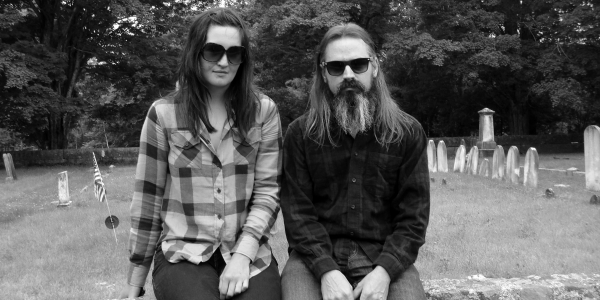
“It’s not all downtime,” Yamada says. “But for some reason that period of time felt restful, but also very unrestful. I’m not sure how to describe it exactly, but for me, it felt like one of those times in life when you’re just … Sometimes I go through these times of feeling I’m finished with whatever habits and mindsets defined a certain time in my life. They just feel old and I start seeking out new ones, ones that fit how I’m feeling about existence, about the world at the time. Right now it’s a mix between laziness and errand-running. We’re in the middle of a lot of heavy touring, so when we get home it’s in these little pockets of time. Half of it is sleeping and watching Seinfeld reruns, and the other half is running around trying to take care of everything we couldn’t do on the road.”
The singer/keyboardist laughs, “It’s like psychological moulting. Sometimes I need to just shed some kind of skin.”
This philosophy seems to be reflected in the band’s music itself. The San Franciscan pair have often spoken of the transformative nature of music, and luring listeners to a different consciousness is fundamental to their output. Moon Duo are drawn to convergence and unexpected connections, and in recent times Yamada has experienced this firsthand while roaming about on tour.
“It’s a strange kind of binary lifestyle. It’s either very, very outward, or very inward. The travel is wonderful, but it also changes one’s brain. Going from place to place to place, I have moments on every tour where I wake up and I have no idea where I am for five minutes and have to reach back in my head to work out where we are. There are moments where I feel a certain malaise about it, and moments where I love it. That dislocation is a unique experience, which has its upsides and downsides, but it has definitely transformed the way I experience time and geography.”
Their upcoming Australian tour will mark their third visit to our shores, and while Yamada is generally a measured, thoughtful speaker, when talk turns to these gigs her voice becomes more animated and excited.
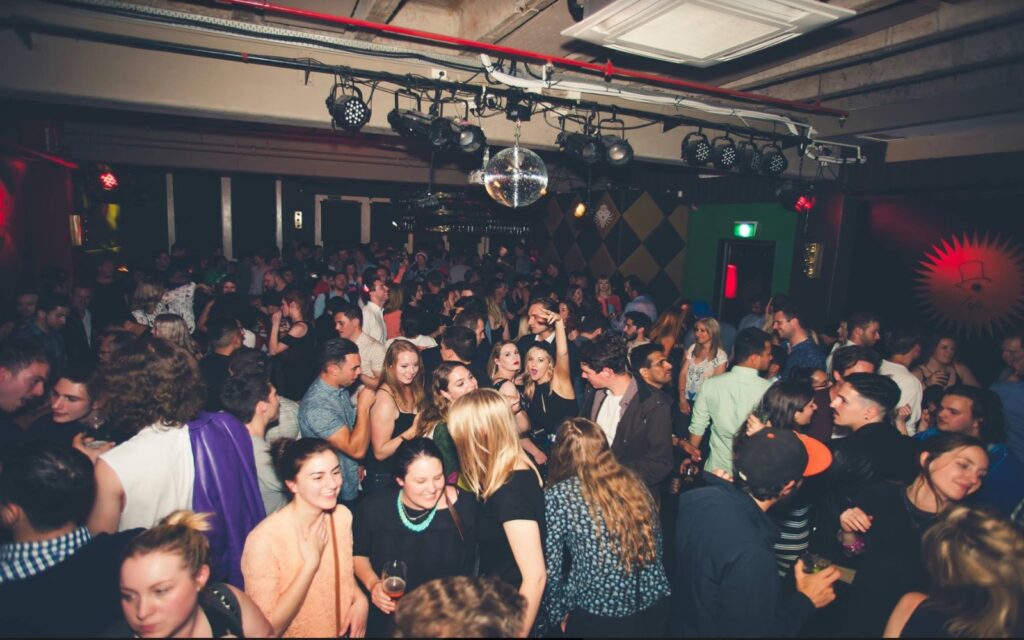
“Wherever we go, we get temporarily but intensely absorbed into the local music scene for the night. I think there’s a sort of communal thread to those scenes around the world, but the audiences and the interactions can vary pretty widely from place to place. Sometimes it’s a reflection of underlying behavioural norms and cultural customs. That is quite interesting. Australian audiences I find very friendly actually, really open. I feel like my memories of Australian shows always involve good hangs with people afterwards. People will come right up and talk to us, and they generally seem really great.”
One of the most enticing aspects of a Moon Duo live show is the inclusion of live painting. It’s an intriguing blend of artistic disciplines, which more and more artists are being drawn towards. As Yamada explains, even identical sets will contain subtle differences, and no two performances are ever repeated. Enhancing this individuality with impromptu artworks compounds the audience’s immersion, a sensory banquet of overlapping image and sound.
“Originally the inspiration was kind of an acid test of those experience in the ‘60s in San Francisco, where their goal was to achieve the state of sensual interplay. And I think that that’s a really great aspect of art as related to music. You have a live music performance, and even if it’s recorded or on video, it can never really be experienced again. Whatever happens on that night, between the band and the crowd, the energy in the room, all of these factors combine in a chemical reaction. And to me, that’s the artistic experience of live music from either side – playing it, or watching it –so I really want to make an effort to make that experience as singular as possible, from as many sensory angles as possible. Usually we have a live mix, and the concert is never quite the same on any given night either. That’s the beauty of it, I think.
“Part of it is that none of us really move around much on stage,” she laughs. “We’re not Nick Cave prowling down on the edge of the stage and getting right in people’s faces, engaging them in that way. That being absent from our performance, it’s kind of an effort to pull people in maybe. We want to create an environment that feels interactive.”
BY ADAM NORRIS