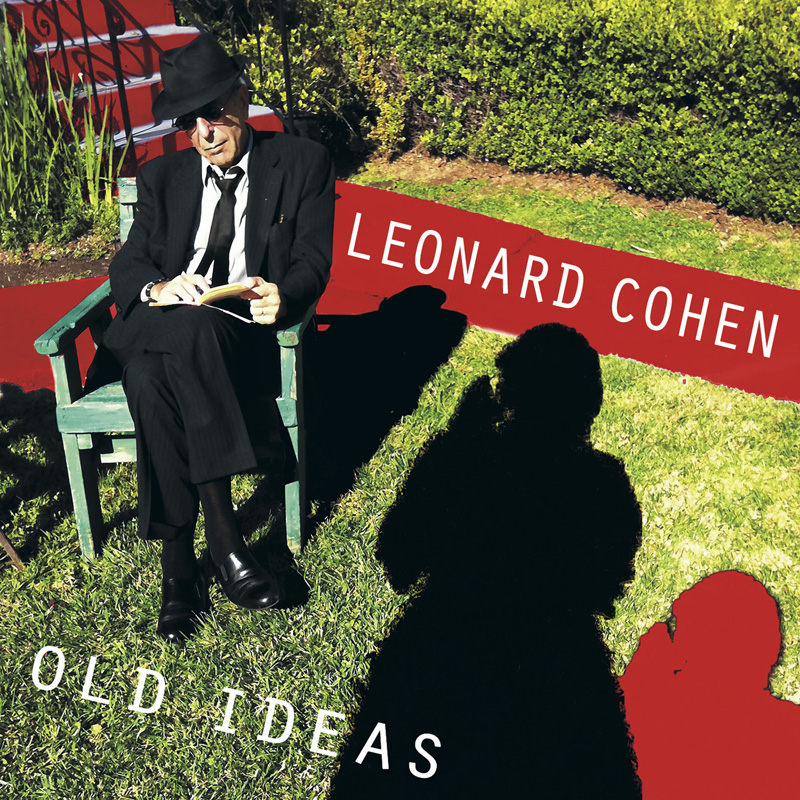
If you listen to Leonard Cohen too young you can seriously fuck up your life. I spent much of my adolescence listening to his records with an intensity that bordered on reverence, scouring his lyrics for the wisdom swathed in metaphor and symbolism for clues on how to deal with my raging heart. It gave me a lifelong appreciation for wordsmiths and lyricists, and must have made me very boring at parties.
As a critic, you try to judge a piece of music on its own merits, without comparing it too much to other acts, or to the artist’s own back catalogue but that is impossible here. Leonard Cohen’s early records laid the groundwork for not only his own career but for thousands of musicians who share his shadow. His music has inspired generations – half the music we listen to references him, whether the people who produce it know it or not.
His impact is unquestionable, his influence everywhere. Every so often his music filters through pop culture for new waves of kids to discover, a generational occurrence, like an eclipse. If you missed out on Jeff Buckley’s transcendent cover of Hallelujah in the ’90s, then Ryan from The OC brought it into your lounge room. If you missed the coke-addled paranoia of The Future, then Trent Reznor and Oliver Stone dropped you into it with the soundtrack to Natural Born Killers.
Calling this record Old Ideas, is a bit of a wink to the listener. Yes, the subject matter on this record – regret, longing, the idea of lust as a form of prayer – has been well covered by Cohen before. At the same time, there’s a fresh approach to this record, a touch of the optimism on show during his recent tour of Australia. Lyrically still on point as he weaves his words around the melodies, there’s a touch of conclusion to the eponymous old ideas here. Over the years the bitterness of the younger Cohen soured into anger, elided into world weariness, and now, at 77 there are traces of acceptance, of peace with the world in his writing.
Cohen’s singing hasn’t fared as well as his outlook. His voice is still the distinctive, emotive baritone that’s been at play since 1988’s I’m Your Man, but now it has been hollowed out by time into a whispering bass grunt. At times it fades, almost disappears into the low-key blues and gospel arrangements of the record, sparse as they are. He can’t sing like he used to, but for a songwriter who has made angst his bread and butter, it’s perfect – with this record, Cohen’s voice has grown into his music.
Is it as good as his older work? No. Does it matter? Probably not. This record is unlikely to convert a new generation to Cohen’s music the way that some of his albums have, but for fans of his work this record will be like a visit from a long-lost, much-adored, slightly seedy uncle. For all its flaws I’m still going to love the shit out of this record.
BY LIAM PIEPER
Best Track: Anyhow
If You Like This, You’ll Like: The back catalogue. Start in 1967 and work your way from there
In A Word: Cohenal