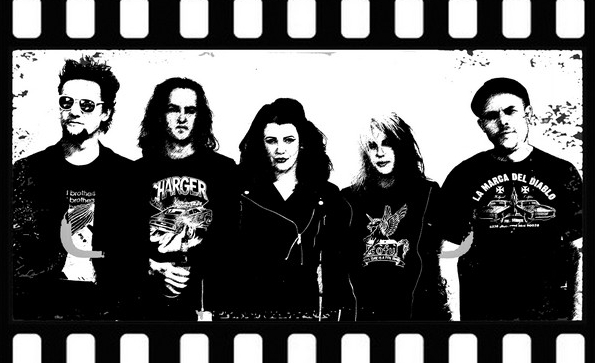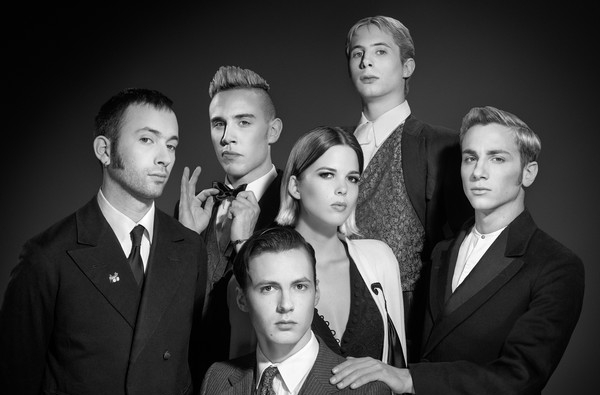
When asked what he thought might be the allure of their music, Got is coy, or maybe just modest. He’s happier to explain the album’s title, which tips the hat to some of the album’s many ingredients. “We enjoy German electro like Kraftwerk, and Berlin is known for the spirit of the big bass, big snare, big kick,” hence the Berlin in Psycho Tropical Berlin, he explains. That influence is notable when you first listen to La Femme, as are some familiar French electro leanings and punk rock elements reminiscent of CSS’s best work.
The elements found in their work don’t stop there, with the trajectory of La Femme’s influences following a chronology of popular music. “In the beginning, when we started making music together, we really liked ‘60s music, garage ‘70s, French stuff too. Then we began to enjoy cold wave style like early ‘80s synth, so we tried to make a mix of these.”
It was an attempt that was, needless to say, pretty damn successful. However it was perhaps the experience of growing up in the surf town of Barritz where Got started La Femme with keyboardist Marlon Magnée, that endowed them with a surf rock sound as well; a sound that would help endear them to Californian audiences in their first non-European shows. After becoming pals with a couple of Cali surfers in Barritz, who provided them some contacts, they headed over and performed some 27 gigs in the space of three months.
“We have a lot of affinity with California,” says Got. “There are some good bonds there, the vibes and the surf vibes are good and we like those vibes. California is a good spot for us,” Got sounds quite Californian himself with all this talk of ‘vibes’, but those vibes were vibing again for them on their recent tour of America, where the band were often asking on their Twitter feed for fans to put them up after shows, a request that was, more often than not, granted.
“We preferred to stay at people’s places, you know, for free. But we’d make some new friends. With hotels you lose money. It’s about travel and humanity and if you stay in a hotel you learn nothing about the country.” Although, staying in hotels does have its advantages: “Sometimes it’s good when you’ve been on the road for days it’s good to take a shower.” Apparently loaning a couch for a night is one thing, but a shower? Get outta here.
Maybe in the early days it would’ve been easy finding room for just Got and Magnée, but these days La Femme consists of, at times, upwards of nine members. They’ve a bass guitarist; drummer; an added percussionist, three vocalists who moonlight, and the closest thing they’ve got to a main singer in Clémence Quélennec, who Got and Magnée found via that most wonderful of things – the Internet.
“I started to write the songs with Marlon, then we had some opportunities to play live, so we asked some friends and started to build the band. When we started to record some songs, we weren’t singers; we tried to have a friend of ours do some singing, but we liked to have many different voices – singing on the same stage but with different voices, so you couldn’t really tell who was singing.”
That’s when they stumbled across Quélennec: “She was making music, and playing keyboard and we were looking for a singer who could play keyboard too, so she was good for us.” They do still muck around with layered vocals to keep everyone guessing though, vocals that are delivered, with the exception of lines here and there, entirely in French. And though many bands reject their native tongues presumably to help win themselves westerner fans, La Femme chose not go down that path.
“If you think that if you can sing in English that everyone will listen, well I don’t think it’s a good way. Like us, we started to listen to American and English bands and we understood nothing. I think in France there are a lot of great artists who perform in French so we just want to keep going, as it’s more natural for us. You can do what you want, if you want to sing in English, there’s great bands that do stuff in English but really you have to do it because you like it, not because you think with this approach I’ll be more famous.”
Certainly at this stage of their career, Got and crew could perhaps feel vindicated in their decision to stay true to their tongue, as thus far their French lyrics have endeared them to audiences rather than alienate them, and if it ain’t broke… well, you know.
BY GARRY WESTMORE