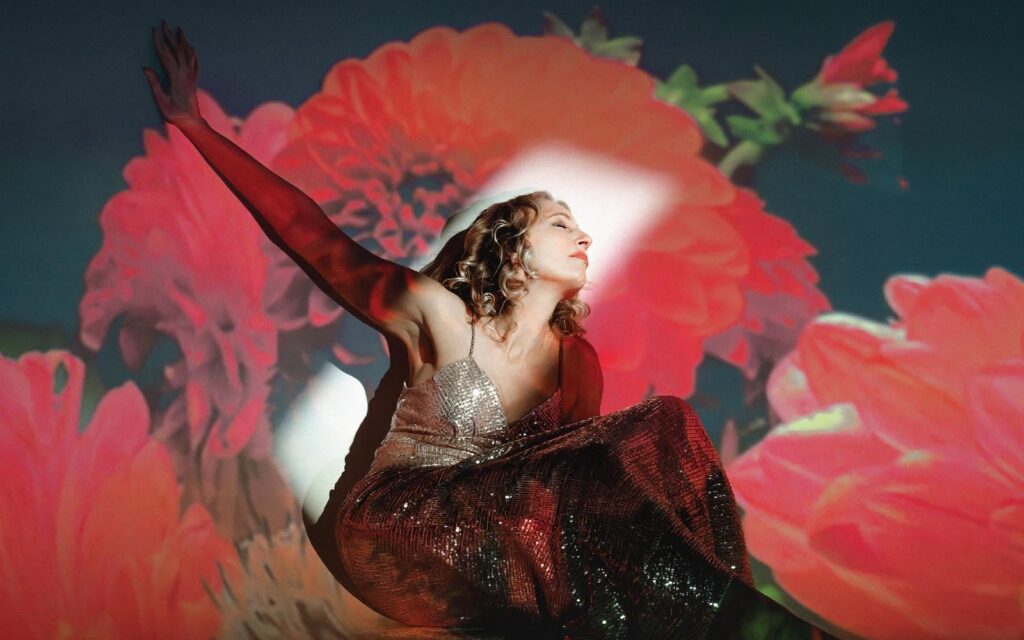
Jazz, Liszt, and a standing ovation; Kym Alexandra Dillon's latest work announces a composer fully at home in her own remarkable voice.
I first witnessed Kym Alexandra Dillon’s work as a composer back in 2022, where I saw a performance of her ethereal song cycle, Diaspalmata: Portrait of Self, performed by Forest Collective.
The work, with words supplied by the Danish philosopher Soren Kikergaard, was awash in existential exploration of self, mired by a singular pursuit of emergence amongst the challenging marshland of identity.
The piece’s exploration of selfhood as absence, as a way of describing oneself, lead to powerful themes of mental lethargy, in tandem with unbridled despair and eventual self-discovery, sung with a delicate forcefulness and eery cheer by baritone Stephen Marsh, conducted by Eliott Gyger.
It is now several years later and the themes of that piece, which in turn planted a brilliant arboreal presence, has now yielded some truly ripe creative fruit.
In her new work Vendestiny performed and released on 17 April, Kym Alexandra Dillon has emerged into new musical territory.
Kym Alexandra Dillon – Vendestiny
- Out now
- Listen here
Check out our gig guide, our festival guide, our live music venue guide and our nightclub guide. Follow us on Instagram here.
View this post on Instagram
Gone is the orchestra, gone is Diapsalmata’s hallowed deconstruction of self and the delicate weavings of its composition, the piece’s music omnipresent yet seemingly unnerved by its very presence.
Indeed, gone are the tepid dissonances of the previous work, which have now emerged into gorgeous medley, with seamless arpeggios and dazzling finger-work utilising the full resonances of the piano.
Dillon’s seemingly effortless virtuosity luminates her excellent use of phrasing to expand her thematic project of time passing, of the delicacy of place, of the interpersonal journey of the individual, of passing time and displacement.
Her first song of the album Vanishing Act is like if Joe Hisaishi had the fingers of Brahms, evoking an almost symphonic immensity.
Bells Across the Hills is likewise a musical expression of sheer gliding lightness, resembling the sadness of passing time by how she lingers over explicit notes, ending her piece with such intricate acuity, as if the individual chords were old friends saying goodbye for the last time.
Travelling Tune and For Honour are equally mesmerising, with her work Three Two One joyfully erupting with jazz fusion which almost tore down the supposed sanctity of a room so used to chamber music.
All of this creative effervescence then cools into her final three pieces, Connexions, Fare Thee well, and The Waves. These works carry the musical influence of a Beethoven sonata, yet introduce a sonority that only one with a decidedly jazz influence could really elevate.
The emotional buoyancy of these works is controlled in almost impressionistic sonic nods, almost sounding like an inverse Claire De Lune, with Fare Thee Well being the most demonstrative of Dillon’s sheer ability as a musical storyteller, carrying the listener through multilayered experiences that make this album such an important work in the wider contemporary Australian classical music scene.
Unlike Diapsalmata, each piece has its own thematic resonance, each exploring unique pathways, composed into such sophistication that one marvels at Dillon’s dazzling abilities at the piano and her resounding capacities as a composer.
View this post on Instagram
The performance was also elevated by Dillon’s nod to two of her greatest musical influences, Franz Liszt and Keith Jarrett.
For the Liszt piece, she performed the piece Au Lac de Wallenstadt, a piece which, in the words of Liszt’s travelling companion Marie d’Agoult, wrote of the harmony: …”I have never been able to hear [it] without weeping.”
Included as well in the program as well was Keith Jarett’s work from the infamous Köln concert, which, if anyone can evoke Jarett’s bracing command of the keyboard, it would be Dillon.
The end of the program finished with an absolutely adoring applause, bookmarked by Dillon’s (seemingly spontaneous) rendition of On Broadway by Goerge Benson.
A delightfully inviting, uplifting way to end an absolutely astounding night of pianistic skill.
Dillon’s songwriting has barley lost any of its energy and power in the past few years. Her sheer talent in both songwriting and piano playing is a true treasure of craft and passion, with Diapsalamata, she looked into the darkness of her old past and identity, eager to seek out meaning out of meaninglessness.
Vendestiny is not without its equal share of sadness and tribulation, yet this new work evokes the work a truly realised, fully formed artist, looking to the future, on the other side of her personal, as well as artistic journey of self-discovery.
Kym Alexandra Dillon’s power as a composer is truly only limited by her love of the creative process itself.
For more information, head here.