Kings Cross is awash with characters; punters line the street looking for a place to eat, somewhere to party, a way to keep their night going into the morning. It’s a level of rowdiness you wouldn’t expect in the middle of the week.
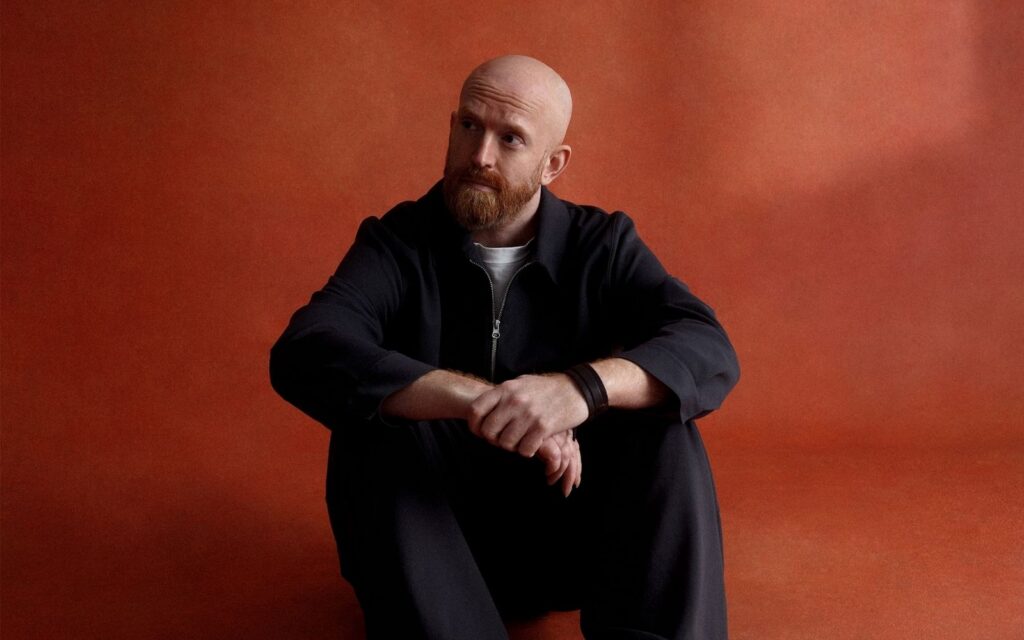
But then you walk a hundred metres and this all falls away. The mythical line of Potts Point has been crossed and the difference is striking. Suits and expensive wines, fine food and day spas. It is here, in East Asian eatery Paper Bird that I meet David Novak and John-Henry Pajack of Polish Club.
Why here, I wonder? An area now notorious for the birth of lock-out laws and decline of Sydney’s live music landscape. It’s a pocket of extremes, which could sum up the band quite well; they’re hardly ones to do things by halves.
“If you don’t want to do music,” Novak says, “If you think it’s hard … Like how someone like Lanie Lane looked around and said this isn’t for me, and quit. I have respect for that. You can complain as much as you want, because you’ve pursued something else. But the people who are like, ‘Oh, it’s so fucking tough, but I’m still doing it. You should know what I’m doing for you guys is fucking hard.’ No, no. The people who are spending money on your concert tickets and spending money working at some shitty restaurant, that’s hard, and you should be thanking them. It shits me.”
“I’ve been working and in bands for ten years now,” Pajack adds. “You do what you have to to make it work. From when we started to now, that feels the same. Even though it’s more successful now, and we get to hang out with cool people. They’re all regular people who just happen to be in good bands. People are really chill.”
“We haven’t met any artists who are really douchebags,” Novak says.
“We’re probably the biggest bags of douche we know,” Pajack nods, and they laugh.
If true, they must be putting on one hell of a positive media face since the pair are both gregarious and very, very funny. Given I’m essentially a stranger to them, it’s nice to see the ease of their camaraderie, the comfort of their banter. As a band with no immediate plans to expand the lineup (five albums in, maybe expect a horn section), they clearly know what they’re trying to achieve with their music. Best part is, that doesn’t necessarily need to match what listeners take away from their songs.
“I think this EP is pretty clear what things are about,” Pajack says, thinking across the scope of their releases. “I have a folder on my computer of a couple of hundred iPhone recordings. We have heaps of little ideas. The EP, three of the songs are old ideas that we went with, we had something there and flipped it. And the other three are brand new.”
“But meaning is never set in stone, for me,” Novak insists. “There’s a meaning I can latch onto when I write it, and again when we record. But I hate when it’s like, ‘It means this, there are no arguments, you should be thinking only this as a listener’. Fuck that. As long as they’re hearing what the words are, they can think whatever the hell they want. That’s what I like to do when I listen to songs. I’d never put that on someone else.”
The food is served, the beers drained and replaced. It’s interesting to note how when one steps away to use the bathroom, the other immediately falls into singing their praises. When together, they talk of the band, of their favourite video games, of the stresses they’ve encountered cracking into the US market. Get them alone, and more personal praise starts to emerge. It’s a brotherly affection that has laid clear foundations for one of the most discussed Aussie rock acts in recent history.
“I think the thing is, we try not to overcook songs,” Pajack says as talk turns to their latest surprise EP, Okie Dokie. “We try and keep it sounding pretty much how it sounds the first time it comes out. If we spend too much time on it, it usually doesn’t sound right. When you try and force things, you get something else. You listen to the iPhone recordings of when we first came up with something, it’s going to sound pretty similar to the recording later on. Tempos might get faster and faster but that’s it.”
“We record as soon as we write a song,” Novak elaborates. “I’ll make up sounds that work with that melody, or one line that I like. But I’m not sitting at home with a Bible of lyrics. Songs like [‘Hard in the City’], the serious, slow, moody ones, I like to keep vague. I like to be really specific with the aggressive ones, with specific lines that people can really latch onto. It’s not really a conscious thing. I think if I get really specific with the emotional ones, it starts to get a little sacrosanct and cheesy. I don’t buy it as much. Whereas if I let the vibe of the song as a whole take control, with simple lyrics that complement that, it’s a lot easier to digest.”
“And you’re not a super sappy emotional dude writing sappy emotional lyrics,” Pajack points out.
“I’m not a 21-year-old mess trying to figure out life,” Novak agrees. “I’m just a fucking lazy prick that’s writing a song, and I’m completely comfortable with that. There will come a point in the day where I’ll feel meh, and hey, there’s a song. It’s therapeutic.”