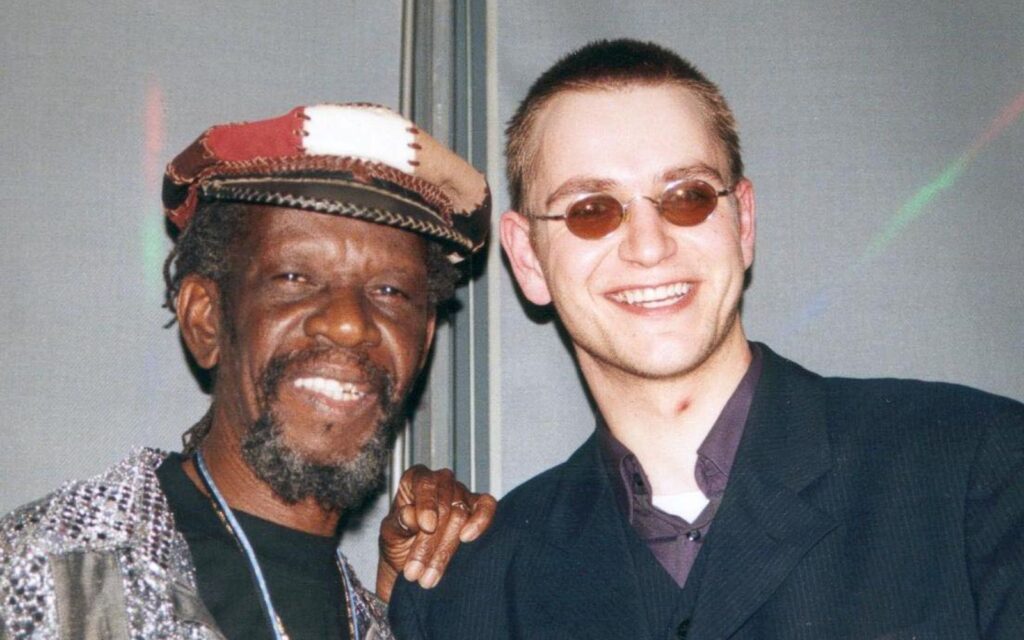
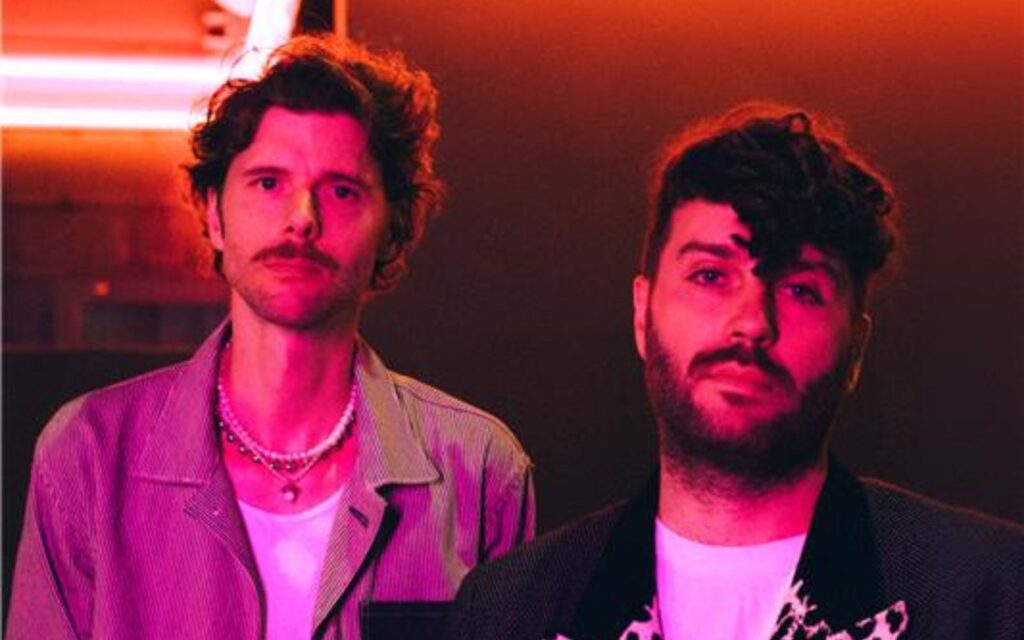
Sitting in the kitchen of their Coburg studio nestled within inner suburban Melbourne, Hiatus Kaiyote are finishing a catch-up meeting with their management. Against one wall of the room is a small shelf adorned with various industry accolades: ‘Best Breakthrough Artist’ won at the Gilles Peterson’s Worldwide Awards and their trophy from The Age/Music Victoria Awards for ‘Best Emerging Artist’. It’s not like they’ve been tucked away somewhere but something about their placement doesn’t really scream prime location.
We’ve moved into the more comfortable lounge room and lead singer/guitarist Nai Palm is curled up into one corner of the couch, flicking through a review of their recent Melbourne show with Badu. Sure, Hiatus Kaiyote have received a multitude of awards, and their list of endorsements from global superstars seems endless. Yet despite the gravity of those names, it doesn’t seem to have had any huge impact on how the band operates.
“The core of our success is artistic integrity,” Palm explains from her cushiony perch. “All the shiny industry shit that happens around it… it’s cool to be recognised in that kind of world because it’s a massive industry validation, but at the end of the day we don’t define ourselves by that. That’s not in our definition of success.
“The Grammy situation was crazy,” she follows. “But then we had Pharrell [Williams] have a good solid chat with us on the red carpet, which is the shiniest fakest part of the music world. We had a genuine conversation with an artist that is really well established who said, ‘I really appreciate what you’re doing artistically”. There’s always moments where you have something to ground yourself with.”
It was the re-release of their track Nakamarra featuring rapper Q-Tip that earned them the Grammynomination for Best RnB Performance. Their tour through America also saw them appear on an assortment of television shows, including The Tonight Show with Jay Leno, The Queen Latifah Show and The Arsenio Hall Show, which resulted in an exclusive, personal invitation from Prince to perform at his house.
But your brain really starts to melt when you discover all this attention is off the back of their debut, self-produced album Tawk Tomahawk. Relentless international touring and working their guts out to promote themselves has been key to their success, but musically they seem to have tapped into a collective consciousness with one another beyond the sum of their individual parts.
Keyboardist Simon Mavin has been knocking around the music industry for a while playing in a range of bands while working as a session musician, but admits the Hiatus Kaiyote experience has flipped his view on music.
“The connections you make with musicians on a band level…who knows what it fucking takes?” Mavin proposes. “It will take so many different combinations of musicians to get what will work. Musicianship, it’s also personality, it’s the way you jell. But this band totally changed my mind frame on how a band works. It’s not just about how you can play your instrument. It’s totally how you conceive music.
“So many people lack that,” he continues. “Musicians lack that sort of mind frame about music. They forget that and get obsessed about mastering things and becoming a motherfucker. These kind of obsessions really come into music.”
“It’s like if I get really good at soloing I can just solo over this which will automatically make it better, like a sticker of awesome, but it’s not really like that,” Palm adds.
For Hiatus Kaiyote, this approach of setting egos aside and coming together as one force doesn’t create a dumbing down of the songs. Instead they’ve created an idiosyncratic breed of soul with intelligently composed layers and complicated rhythm patterns which has allowed each member the room to flex their abilities.
“It’s about finding people you can grow with as a collective and write together,” Palm describes. “We have enough faith in each other’s musicianship, and that counteracts your ego in the songwriting process, which is why it sounds like a band and not another fucking singer with a session band.
“To really consolidate musically, you can complement each other as a whole and write arrangements so that each person is showcasing their art without lessening each other’s sound. It’s about working out a dynamic that showcases everybody at the same time, but through intelligence rather than showcasing yourself.”
It’s impossible to realise the amount of depth in each of the band’s songs until Palm begins to explain her method of songwriting. She weaves in vastly disparate details of her life, merging them with abstract ideas to create connections not obviously apparent to most folk.
“I like the juxtaposition of really random influences,” Palm enthuses. “Mobius came about because I wanted the chorus part to sound like it was being sampled in reverse but doing it live to depict an M. C. Escher art piece. I wanted to sonically create how I perceived it visually, but in a way that sounds like it’s been produced but it’s live.
“There’s so many details of stuff that I’m very conscious of when I’m writing my parts. It’s more like how obscure you can reference. In jazz improvisation, there’s this thing called ‘quoting’ where people will quote the head or a bit of another song. I like to do that but in a really abstract way; how deep can you go with your referencing?
“It’s so vast. It’s not defying genre but it’s taking so many little bits from culture, ancient and contemporary, and seeing how it’s associated with what you’re doing. It’s like finding the common denominator which might not seem that common, but when you break it down it really is. I really get off on that; showing people how things are similar even though it might not seem they are.”
It’s quite peculiar that after all of these massive steps on a global scale, the Australian music industry is staying rather apathetic to the band. This country’s industry is only so big, and travelling outside of the continent has always been a common method for bands to garner success.
“You have to get that escape velocity to want to go to other parts of the world, because you can only really go between Melbourne, Brisbane, Sydney and Perth,” drummer Perrin Moss proposes. “You can just tour all year in Europe if you wanted to. You can’t really do that here, and it also depends on the style of music. We don’t really have that appeal to be able to do a crazy big regional tour because it’s not what people want to vibe on.”
“There’s just not enough people to create that sort of scenario in this country but it’s kind of to be expected,” bassist Paul Bender theorises. “It’s really hard to be a really big band in Australia.”
The idea of writing a song that echoes through the ages is one that must sit close to the top of most artists’ bucket list. The advent of the internet and overnight pop sensations has made that accomplishment a touch more difficult, but soul-stirring music is not something easily suppressed.
“I know we all want to play timeless music; I know I do,” Moss relates. “I don’t quite know how to do that but it seems that everything that is timeless stands out in the genre. There’s always that one person like Frank Zappa, James Brown, J-Dilla. They all tried to push their own shit even though there’s all this other stuff happening around them but they cut through everything. They drew influences from everything around them at the time but then put it all together.
“It’s just really cool and hopefully we’re part of the same kind of movement of musicians all around the world that are pushing for that.”
The waves we first felt from the internet boom now seemed to have settled and it looks like we’re starting to discern the mainstay artists from the throwaways, and if Hiatus Kaiyote keep digging for those common denominators in music and the world, who knows what they will hit upon?
BY RHYS MCRAE