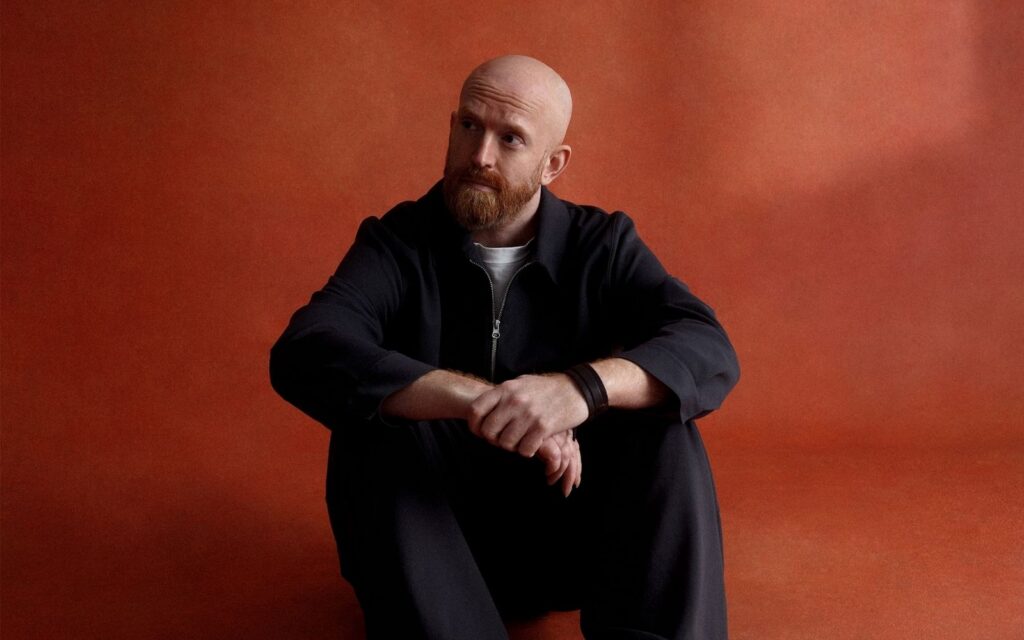
For this, his third record, Ejimiwe steers away from the murky electronics that dominated 2011’s Peanut Butter Blues & Melancholy Jam and 2013’s Some Say I So I Say Light. Instead, on Shedding Skin, Ghostpoet’s plainspoken storytelling is backed by live instrumentation. So while the title Shedding Skin is taken from the record’s fourth track, it also has a strong symbolic resonance. “In some ways I feel like I’m starting again,” Ejimiwe says. “I’ve decided to take another path, and in this world I’ve got to prove myself. But at the same time, I don’t feel like that. I feel like I’m enjoying making music and this is what I’ve chosen to make.”
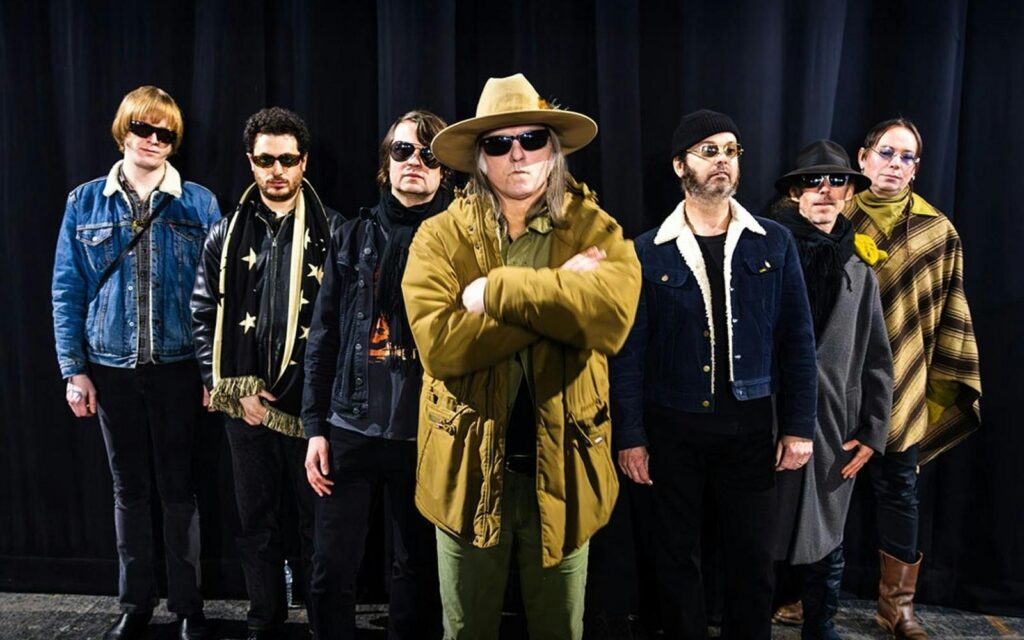
When you observe a few key factors, the rerouting of Ghostpoet’s stylistic journey isn’t as radical as it first appears. Firstly, Ejimiwe had already flirted with a guitar-driven sound on tracks such as Plastic Bag Brain from Some Say I. Secondly, the musicians who appear on Shedding Skin – guitarist Joe Newman, drummer John Blease and bassist/co-producer John Calvert – have been a central feature of the Ghostpoet live show for the past couple of years.
“I’ve always played with a band,” says Ejimiwe. “But I never was in a situation where I could work with a full set of musicians over a period of time. I hadn’t really built up a relationship with anyone to that level. So the timing was just right, more than anything else.
“I’ve always loved guitar music,” he adds. “For a while, all I was doing was listening to guitar music and that was influencing my thinking.”
In spite of his deadpan spoken delivery, a key distinction of Ghostpoet’s body of work is his knack for penning memorable, almost mantra-like chorus refrains. Once again, the majority of Shedding Skin’s tracks are likely to stick in your head, yet none of them come across as overtly engineered singles. To attain this quality, Ejimiwe looked towards some dependable guides.
“I was listening to a lot of Nick Cave and The Bad Seeds, a lot of Interpol, Massive Attack, TV On The Radio,” he says. “I was listening to their music and thinking, ‘What is it about their stuff that they have commercial appeal?’ It’s the balance – it’s still creative, but it appeals to a mass audience. I connect with those kinds of artists. So for me, that’s what I’m trying to do. I’m trying to reach that world, I’m not trying to reach a glossy pop world.”
Although Ejimiwe is very open about his influences, Shedding Skin doesn’t get lost in referencing past artists. Conversely, even with the restyled backdrop, the record affirms Ghostpoet’s distinct creative personality. “As much as it’s a band record, I’m not in a band,” Ejimiwe says. “I’m still very much a solo artist and it was important that there was that distinction. I think as long as people can have that connection, which is me and my vocals and my lyrics, I don’t think it matters to people so much.
“I feel like I’m a Marmite – or Vegemite – artist. You either like me or you don’t, and that’s fine. I think it’s good that art can divide opinions and evoke discussion. I’m at a point now, with it being the third record, where I’ve established my name enough for people to realise that I kind of just make what I want. But at the same time, it’s always going to be a level of quality and that’s what’s important. I’m trying to make music that potentially will last in people’s existences for a long period of time.”
Another prominent feature of Ghostpoet’s back catalogue is his tendency to veer towards darker lyrical themes. Some Say I was a particularly grim affair, steeped in heartbreak and despair – a reflection of Ejimiwe’s personal situation at the time.
“The last record was a very insular record,” he agrees. “I was very much looking inwards and being down, being depressed, going through negative stuff personally, and realising I just have to write through it, rather than abandon music.”
Shedding Skin, meanwhile, comprises a series of socially alert character studies, encompassing homelessness, domestic abuse and relationship disparity. All the while, it’s held together by a narratorial emphasis on overcoming one’s demons.
“I can only talk with some kind of authority on London, and the UK to a certain extent, because I live here,” Ejimiwe says. “Things aren’t great. There’s high unemployment, there’s massive homeless issues and social issues. And this isn’t from a political standpoint; it’s just sticking my head up and looking around and taking in the scenes of the people around me. I thought I had to write from that perspective. At the same time, as much as there’s things that aren’t great, there are amazing things happening here in all different aspects of life. So it was a combination of the two things.
“I don’t like sugar-coating anything in life or lyrically or musically. If I’m talking about something, I want to say what I see, rather than try to romanticise it or put it through an Instagram filter. I want it to be what it is.”
BY AUGUSTUS WELBY