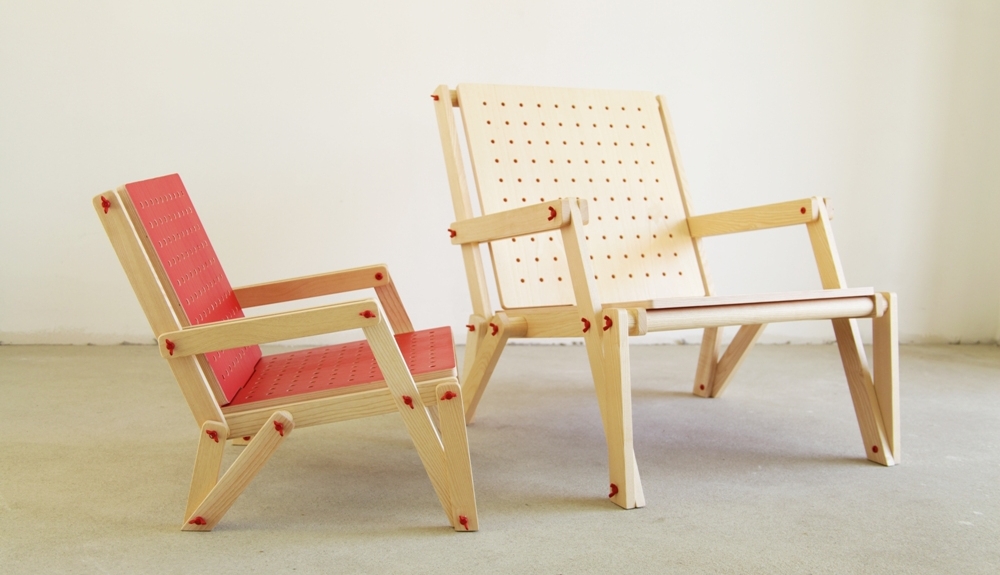
Fringe Furniture now holds a pretty illustrious place in the Australian design landscape. “The quality and caliber of design at Fringe Furniture is certainly very high”, reflects Fringe Producer for the Creative Program Aneke McCulloch. “It’s a combination of things. The general reputation of design is different now – it’s something that is really well respected and we make more of a connection with it than we used to. The reputation of Fringe Furniture has built too – it’s been running for nearly as long as the Fringe and on the circuit of design events this one is really important. We’ve already had some interest from commercial buyers asking to know who’s in it this year. So, it’s got a reputation for marketable quality as well as more artistic experimentation. I’ve looked at what’s in this year and everything is excellent – all killer, no filler.”
Now in its 29th year, McCulloch has some thoughts about Fringe Furniture’s longevity and ongoing popularity. “I think it has to be linked to the idea that as art appreciators we are connecting more and more with design as an artistic form. It’s also an excellent platform for not only furniture, but also object designers – lighting features heavily too. It’s also a place for established designers to try new and experimental design as well as somewhere for emerging designers, people who are just out of uni or starting out, to exhibit their work.”
Every year has a theme and this year’s works are guided by the concept of ‘Living Traces’. The idea is that everything we create becomes a record of our history and at the same time provides a map for how things will continue to unfold – it’s also a bit self-reflexive. “Design reflects society and the way we change is reflected in design,” McCulloch muses. “There’s the idea too that furniture and design evolve around social trends. Each year the cutting edge of design is evolving, as much as the artists and audiences are. There are a lot of pieces that respond to the idea, for instance a chair that was once a tree, and you can see elements of natural shapes in some of the works. Basically, anything that you’re using for manufacture was once something else.”
Don’t go expecting anything staid either. “You don’t go to Fringe Furniture to see an old idea, but you can certainly go to see classic ideas,” McCulloch explains. “It’s about the future of design as well as those quality aspects that stay with us. There’s new and emerging designers making work that’s unlike anything you’ve seen and then we’ve got some really classic pieces from designers who have been around for many years and are making more traditional works with an artisan approach. Those qualities of classic design, you can really see how they stick with us and then you can look at the newer works with curiosity about which of those new design elements will become the future classics. I suppose that’s one of the appeals of Fringe in general – you’ve got an opportunity as an audience member to go and see what could be a future classic or a show by a new performer who may in 10 years time be a big international star.”
BY MEG CRAWFORD