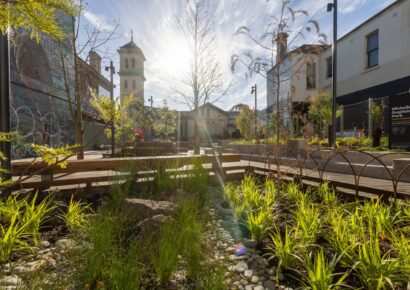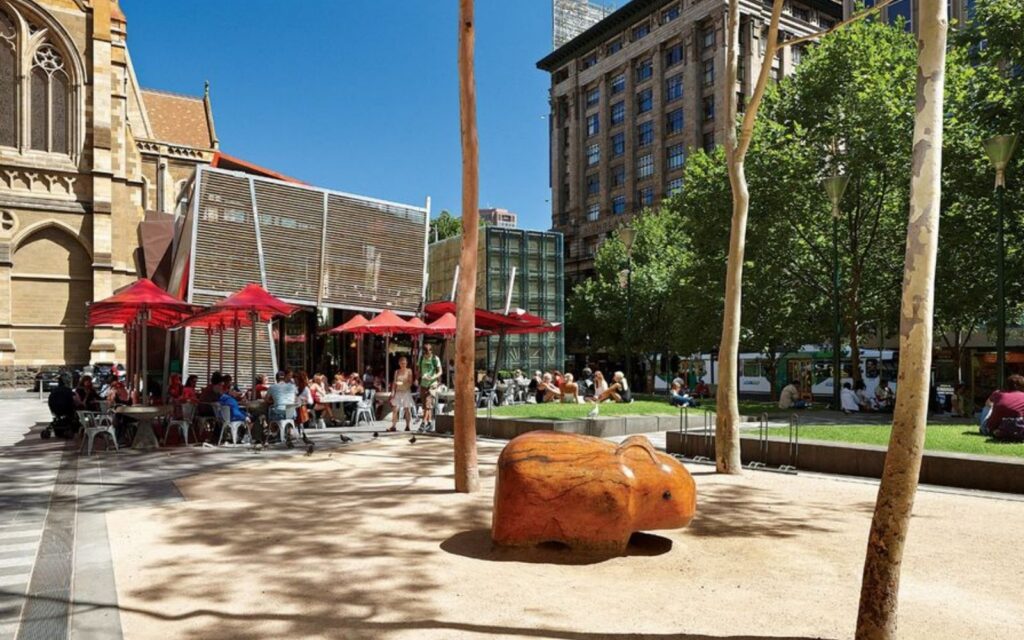
Worms at Work benches in Fishermans Bend and Yarra's Edge are composting food waste while doubling as street furniture.
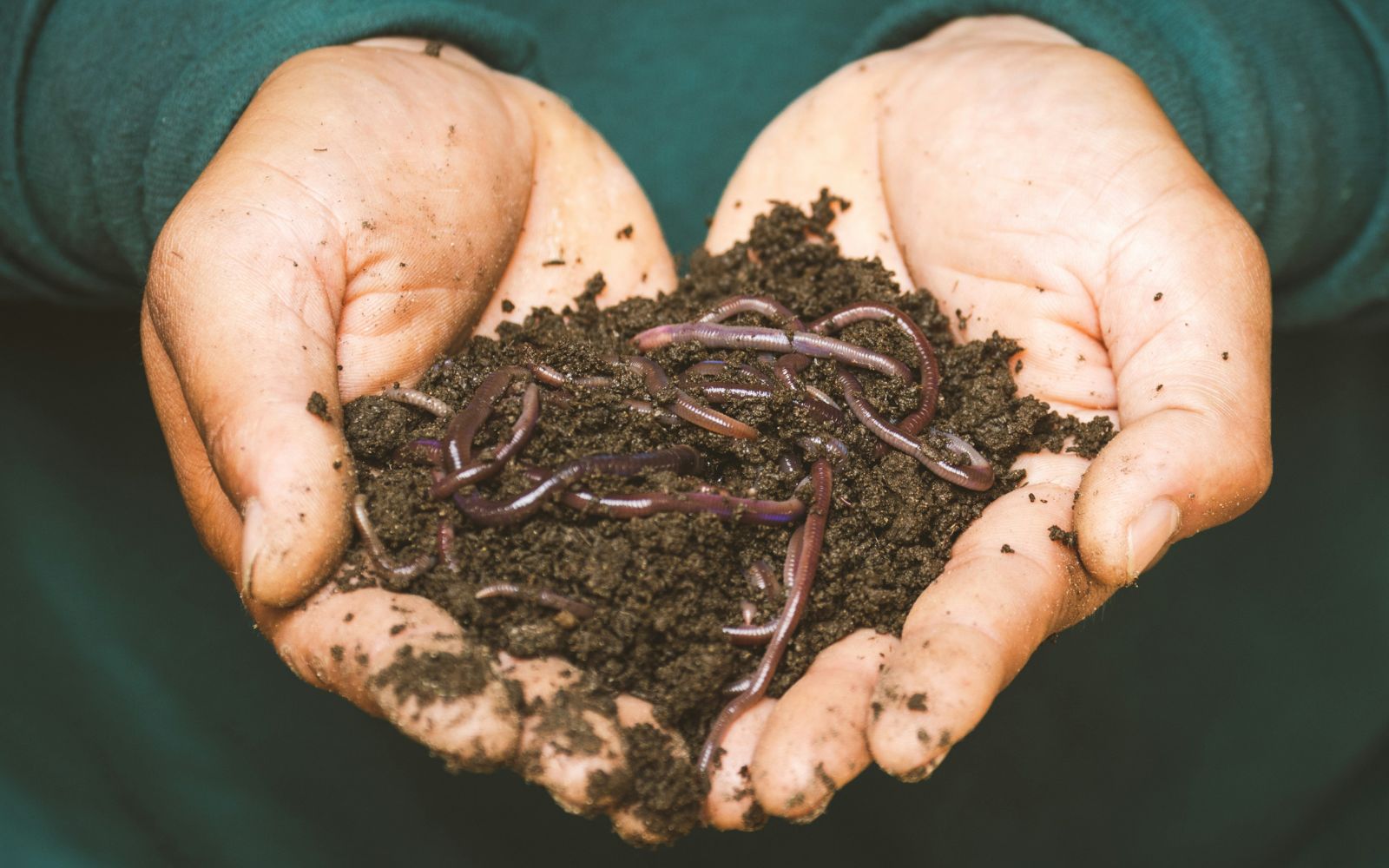
Melbourne has installed three benches with a twist; thousands of red wiggler worms living beneath the seats at Fishermans Bend, quietly transforming food scraps into compost and fertiliser.
Designed by Zoe Wang and Michael Mobbs, winners of the 2024 Fishermans Bend Digital Innovation Challenge, the Worms at Work benches aim to tackle food waste while building greener communities.
Two benches are managed by local businesses in Fishermans Bend, while the third is run by community volunteers. These caretakers add food scraps like vegetable peels and coffee grounds, along with carbon-rich materials such as shredded paper, to kick off the composting process. Red wiggler worms, a species favoured by gardeners for rapidly breaking down organic matter, do the heavy lifting by converting waste into nutrient-rich compost and worm juice; a natural liquid fertiliser.
Worms at Work in Fishermans Bend
- What: Composting benches powered by worms
- Where: Fishermans Bend and Yarra’s Edge
- When: Now operational, first compost ready in three to six months
Stay up to date with what’s happening in and around Melbourne here.
Visualizza questo post su Instagram
So, what’s the plan?
In three to six months, the first batch of compost and worm juice will be ready to use in the Fishermans Bend neighbourhood, providing local green spaces with a healthy boost. For Wang and Mobbs, this project is about more than just managing food waste, it’s about changing perceptions of composting itself.
Composting is often seen as messy and smelly, something to hide away in backyards. Wang wants to flip that narrative by making composting easy, beautiful and social, so people feel proud of it. Both bench designs reflect this vision with clean, stylish appearances that are completely odour-free. You won’t know you’re sitting on decomposing food waste unless you lift the seat and peer inside.
Technology plays a key role in keeping the operation running smoothly. Each bench is fitted with sensors tracking temperature, moisture, pH and carbon dioxide levels to ensure the worms stay happy and healthy. Since worms breathe through their skin and need 70 to 80 per cent moisture levels, the sensors act as a quiet guardian, alerting managers before small issues become big problems.
Data collected from the benches is also shaping the future of Worms at Work. By learning what works and identifying areas for improvement, the concept can be refined and potentially expanded across the City of Melbourne. A live dashboard lets anyone check when the benches are busiest and how much food waste has been diverted from landfill in real time.
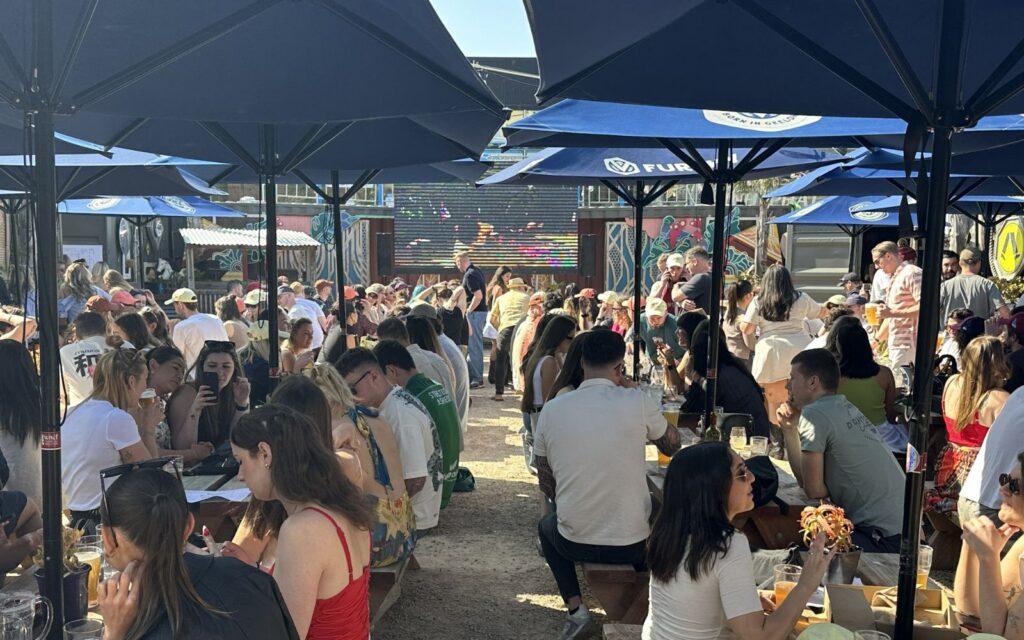
Beyond composting, these Fishermans Bend benches are designed to bring people together. Mobbs envisions a future where dropping off food waste becomes a social activity; a chance to sit down, chat with a neighbour and build community connections.
For more information, head here.