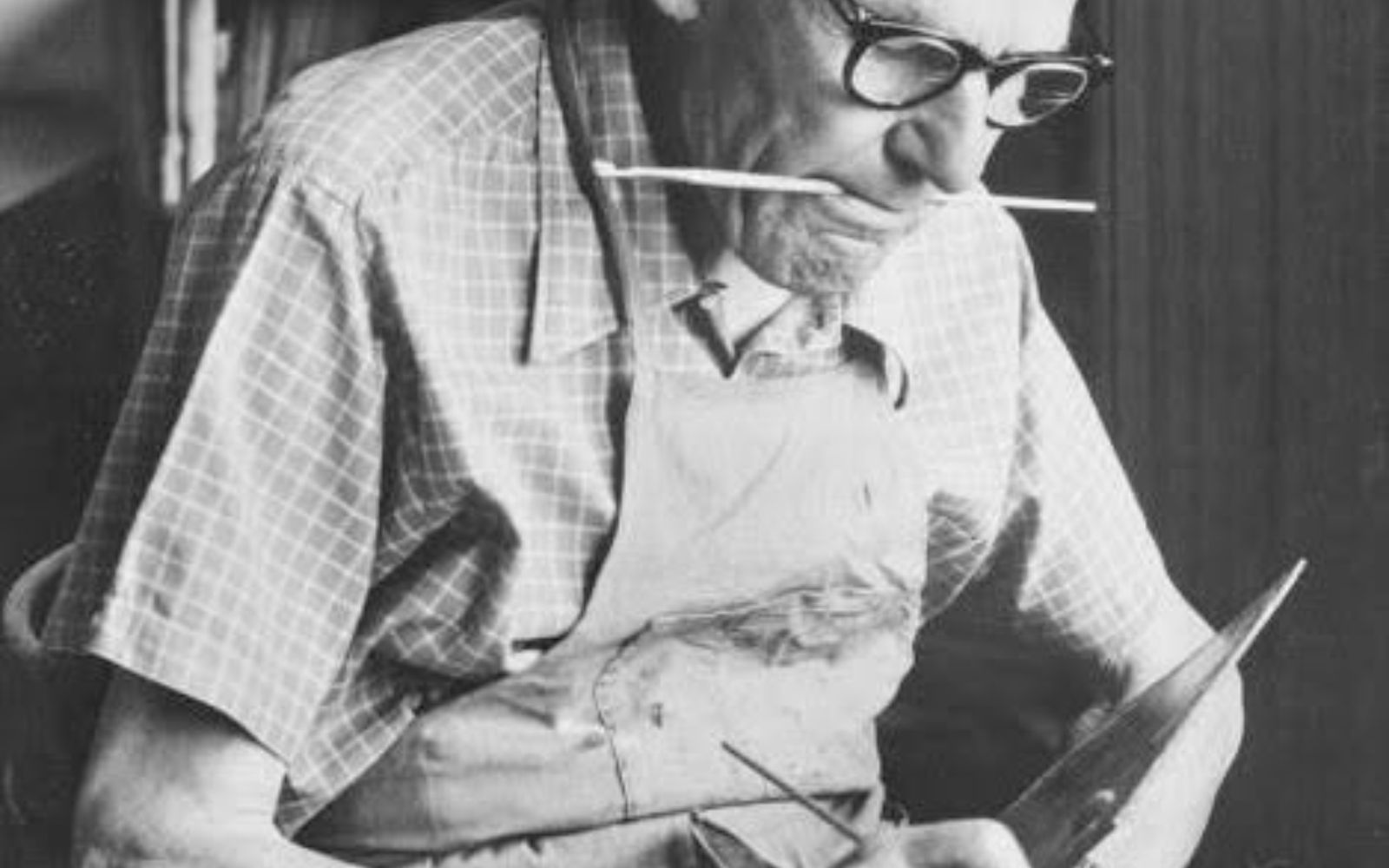
Eric Thake—Do You See What I See? is a Geelong Gallery survey of a surrealist who found the weird in everyday life.
Eric Thake—Do You See What I See? is the first major survey of the artist (1904–1982) in half a century.
It gathers more than 150 prints, drawings, paintings and photographs made between the mid 1920s and 1980, all pulled from everyday scenes that Thake reworked into something sharper and stranger.
The show is a bit of a homecoming for Geelong Gallery, which staged Pubs and Bars, one of the first solo exhibitions of his work, back in 1976.
Curators Alisa Bunbury and Kirsty Grant have spent two decades chasing down his pieces across public and private collections, with backing from Thake’s daughter, Jeni Beaty.
Eric Thake—Do You See What I See?
- Where: Geelong Gallery
- When: 14 November to 8 March
- Tickets here
Stay up to date with what’s happening in and around Melbourne here.
View this post on Instagram
Linocuts, surrealism and a war artist’s tour
From the late 1920s, Thake was right at the front of Melbourne’s contemporary art scene.
He experimented with linocut printing and unsettled the city’s conservative art establishment with surrealist imagery. His 1940 painting Salvation from the Evils of Earthy Existence, held by the National Gallery of Victoria, was one of the two earliest surrealist paintings bought by an Australian gallery.
During the Second World War, Thake worked as an official RAAF war artist.
He made two tours of military bases in New Guinea and Indonesia, in 1944 and 1945, and came home with a body of eerie paintings showing the damage and leftovers of conflict. Three rarely seen works have been lent by the Air Force Heritage Collection at RAAF Base Point Cook, alongside paintings and drawings from the Australian War Memorial.
Those tours were his only trips overseas, and the only stretch before retirement when he made his own art full time.
Christmas cards and commissioned work
Thake started working as a commercial and illustrative artist at 14, and the exhibition includes some of his commissioned designs, such as postage stamps and murals.
There’s also a run of personal Christmas cards he made every year from 1941 to 1980. They’re bold linocuts with cheeky titles, including Nuns on the Geelong Road … Oil Sheiks to Bahrein? and An Opera House in Every Home, which shows dishes drying in a rack while the Sydney Opera House was still being built.
The complete set from Geelong Gallery’s collection will be on display.
Plenty of Geelong history
The gallery also owns a solid collection of Thake’s bookplates, and the Colin Holden Charitable Trust, a major partner of the exhibition, holds more.
In 2024, the gallery picked up Brasilia at Corio, made in 1976, which now sits alongside Looted House, Darwin, a 1945 work that won the gallery’s FE Richardson Prize in 1947.
Thake spent his final years in Newtown and Bellbrae with his daughter’s family, so the Geelong link runs deep.
A 150-page catalogue, billed as the first in-depth study of Thake’s life and practice, will be on sale.
It features essays from the curators and other Thake researchers, an interview with his daughter, archival material and photographic portraits of the artist.
A series of public talks and children’s programs will also run throughout the exhibition.
For more information, head here.