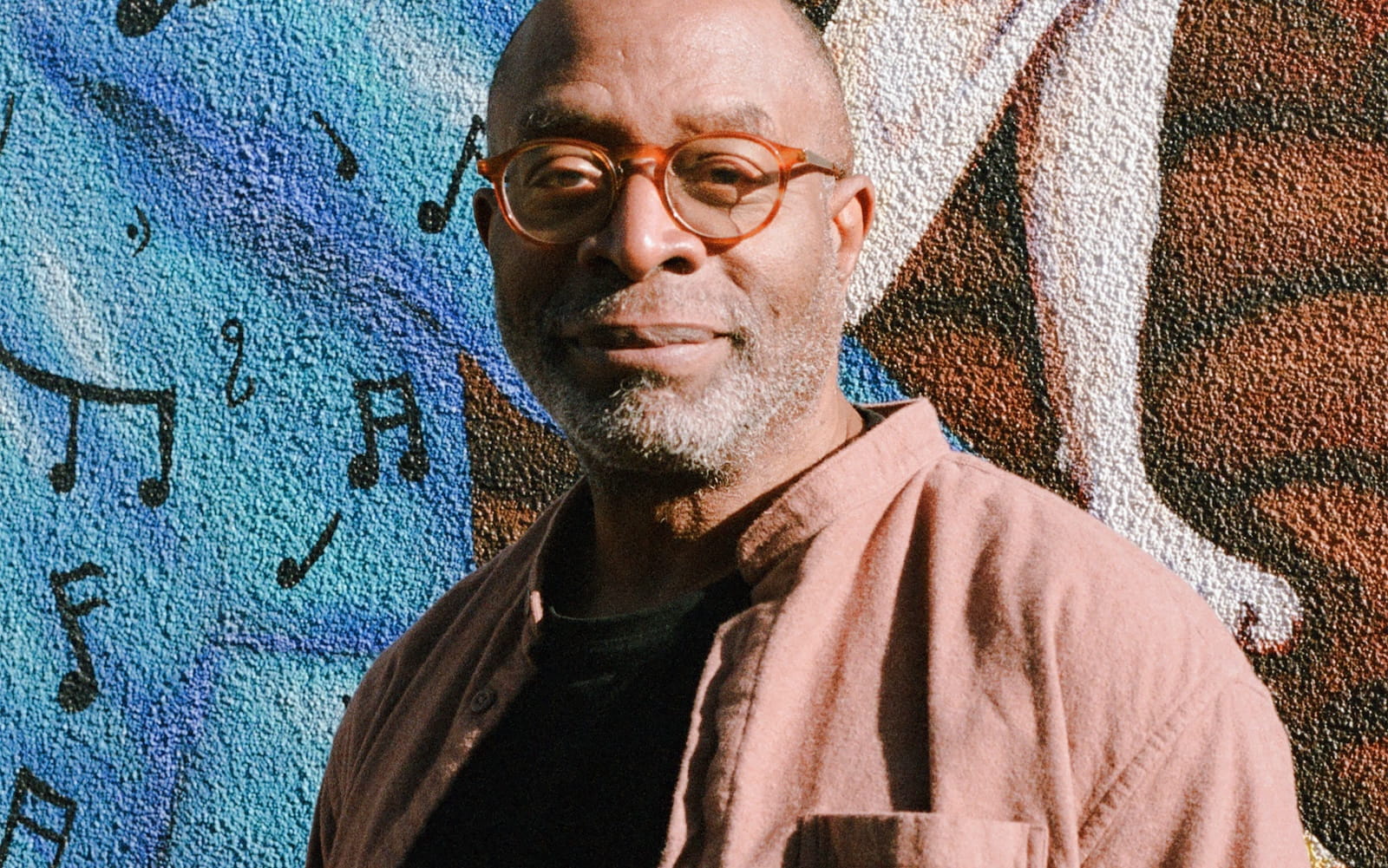
When I get Brian Jackson over Zoom, he's reflective, unhurried, speaking with the quiet authority of someone who has spent half a century watching his music find its way into the hearts of generations.
Jackson is known as the musical architect and backbone behind Gil Scott-Heron, the poet and musician widely credited as a godfather of hip hop. Together, Jackson and Scott-Heron made some of the most quietly revolutionary music of the 20th century.
They met at Lincoln University in 1969, two teenagers who recognised something in each other immediately, and what followed was nine years and nine albums that refused to look away.
Stay up to date with what’s happening in and around Melbourne here.
Now, for the first time, Jackson and Yasiin Bey, the Brooklyn rapper, actor and activist born Mos Def, whose own catalogue sits among the most celebrated in hip hop, are sharing a stage, bringing a world premiere to Melbourne’s RISING festival that draws a direct line through 50-odd years of music that still feels urgently, disturbingly current.
I ask Jackson to take me back to that first meeting with Scott-Heron.
“I think we both felt like outsiders in a way,” Jackson tells me. “It came from how we looked at things. We looked at them in a similar way, so [we] naturally banded together.”
The easy shorthand is that Scott-Heron was the poet and Jackson the musician, but partnerships like theirs are rarely that clean cut.
“I would say what you hear on record is 80 per cent me, 20 per cent lyrically me. Gil was more or less 80 per cent lyrics and 20 per cent music. When you put it together, it’s 200 per cent. It worked.”
The process behind that 200 per cent was deceptively simple, almost spiritual in the way Jackson describes it.
“We would have very short conversations. The music always came first; being on a higher plane as it’s not words and more in the ether, it lends itself to more ideas. We would call those ideas and put them into words. That’s why it worked the way it did. The lyrics had to say what the music said.”
What the music said was something so rooted in truth that it has never needed updating. Songs like The Revolution Will Not Be Televised continue to circulate not as nostalgia but as current affairs, and I find myself wondering aloud to Jackson whether honesty is what’s kept these songs breathing for 50-odd years.
“Honesty, and the fact it hasn’t changed that much,” he says. “The situation hasn’t changed. A lot of young people will approach and ask me how we knew the things happening now would happen 50 years before. The sad truth is we were just commenting on what was happening at the time, and the fact it’s still happening is not only alarming but quite sad.”
With conscious music in the ’70s coming out of a very specific cultural moment – the tail-end of civil rights, the rise of black power, and the Vietnam War – I ask whether playing these songs in 2026 feels like holding up a document of the past, or a mirror to the present. He doesn’t hesitate.
“A mirror, disturbingly so. I think part of its lasting quality is the fact we are also not just talking about politics per se, but about human emotion and connection – human feeling and the need for unity and peaceful dialogue, we were big on that. We were big on protest and speaking out. Those basic qualities haven’t changed, and they’re human needs.”
Jackson traces that sense of purpose back well beyond the 1970s to a tradition he and Scott-Heron understood themselves to be carrying forward.
“I consider myself, and I think Gil would’ve agreed, we were descendants of a tradition. It started with West African Creole, where the artistic person in the community was responsible for addressing the issues of the community as well as preserving the culture and history of that community. This is what we tried to do.”
I ask how he navigated moving between his jazz roots and the funk, soul and spoken word he made with Scott-Heron, two musical identities that might have pulled a lesser artist in opposite directions.
“In terms of my music, I always had eclectic tastes. I could listen to Cream or the Beatles or Miles Davis, Frank Sinatra, Ella Fitzgerald, Digable Planets, Tribe Called Quest, Black Star; every time I heard them, whether or not consciously assimilated, it came out through what I do. It just filtered through me.”
It’s a reminder that the music was never narrow, never dogmatic, always porous and alive to the world around it. It’s something he recognises instinctively in Yasiin Bey, with whom he has spent years sharing one degree of separation without ever actually meeting.
“We had a common affinity to begin with. I’ve always understood that about him. He worked with Gil [on] a show in New York that I was unable to attend, but it looked like a beautiful type of energy, and I expect the same again.”
Towards the end of our conversation, I ask what he hopes people carry out of the room with them after a show like this. He answers simply.
“That people come away with a feeling of unity, of hope, and that they’re not alone. Everybody in that room should feel as though there’s somebody standing next to them who also gets it.”
To keep up with Brian Jackson, head here.
