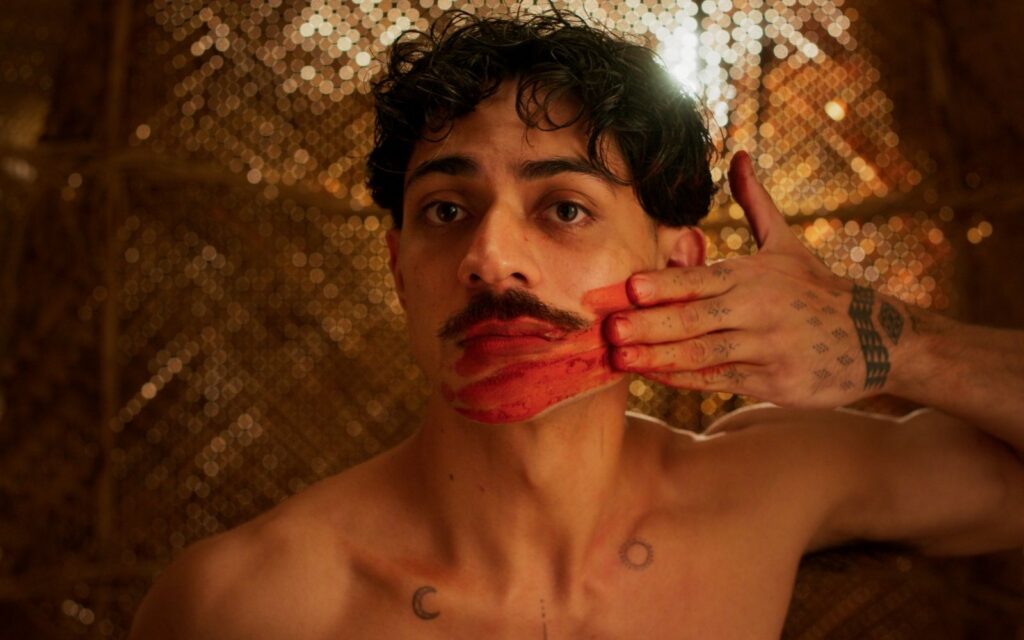
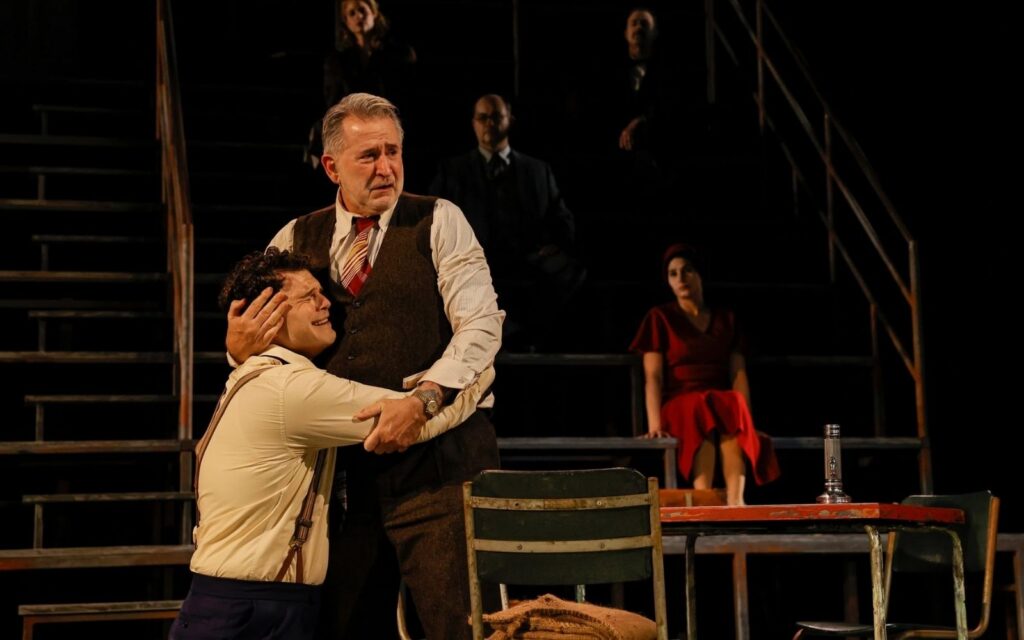
“It’s been an interesting process,” Randall says. “The way in which I create choices comes from drawing on the idea of writing country to the body. It’s one kind of tool to capture one part of the work. Jason is Nurranga and Kauna, and the work is about writing those words to the body. Because of who he is, the work is born with the significance of his tribe or mob; it’s present in the design; we’re kind of using body as landscape: his elbow is one place, the knee is another place – and the performance is a dialogue pointing to the places, without him having to say what’s going on in his head.”
Randall describes the process of creating Blood on the Dance Floor as making a literal work in an abstract way, while always referencing tradition. “If it’s not durational performance, then how do I bring that part of the practice into the dance?” she asks. “These dances have been repeated for years and years. Without saying that I’m creating traditional dance, I’m creating contemporary dance using traditional frameworks. It’s making the work closer to my practice without giving up respect for my traditional culture. I’m not necessarily repurposing traditional dance; I’m using the structures of them. I’ve grown up with dance in contemporary context. How do I inject my practice into what’s already there?”
Much of the choreography for Blood on the Dance Floor, Randall says, depends on simple things inherent in traditional dance forms, and references the cyclical nature of ceremonial dance. What do the elements of ceremonial cycles look like? “You start slow then fast then the footwork changes. The movements, footwork or hands or arms, are the things that change. It can be slow or fast, so two simple things can happen but isn’t start-to-finish. Not everything is a new movement or thought. The context is within cycle of ceremony.”
Randall is Artistic Director of the women’s dance company Dubaikungkamiyalk and she became involved in Blood on the Dance Floor at Boehme’s request. “We knew each other at NAISDA Dance College” she says. “Jacob had a really clear idea of what he wanted to do and he approached me to come on board. He’s been working on this since 2014. I loved the script. I love working with [Director] Isaac Drandic and James Henry [Sound Designer]. Dance and theatre are two different worlds. I’ve been learning about story, working on the script, working on which parts of the story to tell and on what is the best way to tell them. You’re building emotion into movement, creating movement to express change in emotion – thinking about what goes into the next movement, where it fits in, thinking about the arrangement of story, thinking about the motivation behind movement. It’s all part of the collaborative process.”
What has Randall learnt about herself through working on this piece? “The big thing is the work, that’s a lot more important. I am more determined to honour indigenous practice in my work, in terms of ceremony and ritual; it’s part of what I do. Acknowledgement to country can be a tiny thing in a piece of movement but it informs what comes next. I am more determined to have that happen.”
By Liza Dezfouli