“I remember there was an AM radio station that my brother and I listened to, and we used to joke that they’d play Phil Collins every hour – actually, I don’t even think that was a joke. They really did,” McCann laughs.
McCann and her like-minded friends would fill the void by inviting punk bands to travel to Stawell to play: “They were really into it, even though they weren’t going to make any money,” McCann enthuses. “There’d be about 15 people at the show, but we’d have a great time.”
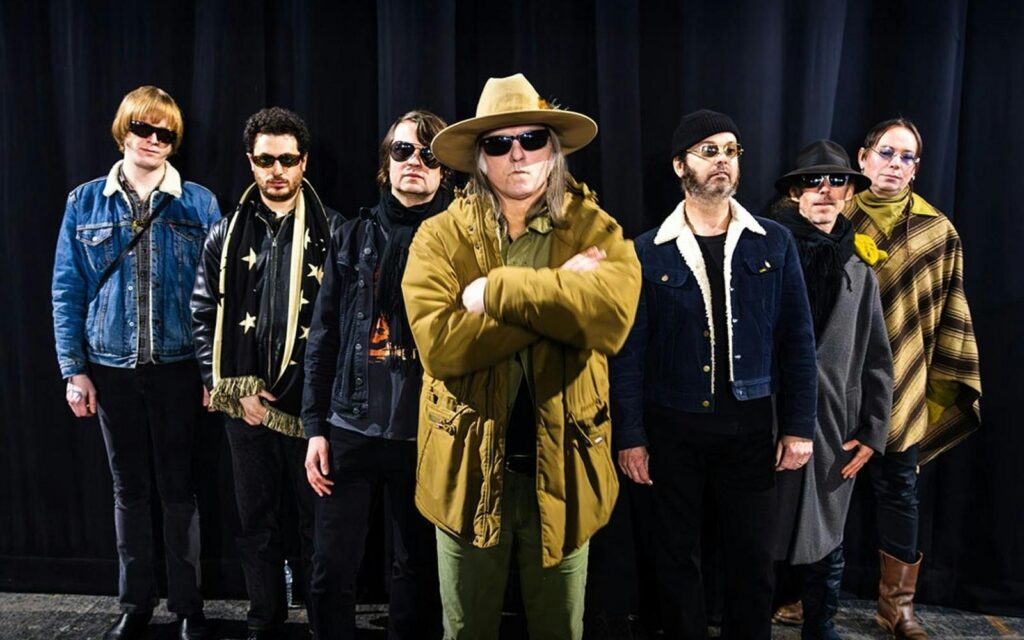
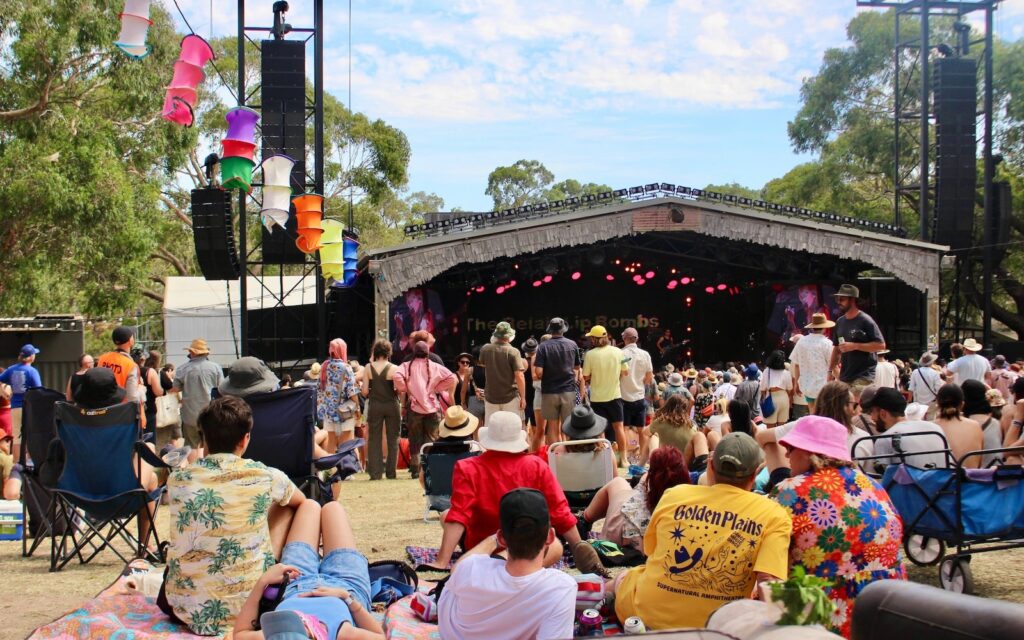
Scroll forward a couple of decades and Victoria’s regional areas appear to be experiencing something of a musical renaissance, with different towns now hosting music and arts festivals featuring an eclectic range of independent artists. This weekend, the historic town of Beechworth, 300km north-west of Melbourne, hosts the second ever Beechworth Music Festival, with the lineup headlined by Beaches and featuring Jen Cloher, Ron Peno and the Superstitions, My Left Boot and The Sugarcanes.
The Beechworth Music Festival will be the first time Beaches have played a regional musical festival (putting aside the band’s appearance at Mt Buller at the All Tomorrow’s Parties festival in early 2009). “I don’t think I’ve ever been to Beechworth before, but I hear that it’s a lovely town to visit – and apparently they have the best pies there, and the best bakery,” McCann laughs.
For Beaches, the headline spot will provide an opportunity to road test some new songs intended for release on the band’s third record, nominally slated for release in the middle of 2015. “It’ll be great to just get out of Melbourne and use that opportunity to jam out some new songs,” McCann says. “We really haven’t played in regional towns which is crazy because we’ve really wanted to get out to the regions.”
McCann concedes Beaches’ irregular recent playing schedule has been a consequence of bunkering down to write material for the new album. “The last show we played was Melbourne music week in November last year. We played a little bit last year, including a show in Williamstown in October, but we haven’t played that much because we’ve been working on the new songs, so we’ve had to turn down a few shows here and there,” she explains.
The release of Beaches’ second record, She Beats, came almost five years after the release of the band’s critically acclaimed first album. “That’s just the way it panned out. We were planning on going to the UK and Europe, to play a festival over there, but that festival was cancelled so that changed things,” McCann says. “It would’ve been great to tour She Beats overseas, but we’ve all been really busy with work, and [guitarist] Alison [Bolger] got twin girls, so it just didn’t pan out, so we just decided to focus on the new album instead which we’d really like get out this year some time. And because we’re funding the record ourselves again, we just have to prioritise band finances, so that comes into as well.”
While McCann says Beaches isn’t fixated with time, she does admit the band is conscious of the extended period between Beaches’ first and second records – a consequence of the band members’ dissatisfaction with the initial recording session for the second album. “We did have a session a few years before She Beats came out, but when we listened to it we weren’t happy with it,” she admits. “Maybe we rushed into it a bit, and because we wanted to make a really good follow up album, we didn’t want to release a new record just so we had a follow-up record. But throughout that period we were still active, playing and touring.”
The original recording session wasn’t completely wasted: most of the songs were re-worked and re-recorded at Jack Farley’s Transient Studios in Northcote to appear on She Beats, while there are still a few others that may yet find their way onto the next album. “We haven’t listened to that first recording session for a while, but I think there’s still a few songs we didn’t re-record for She Beats,” McCann says. Indeed, McCann concedes some of the original recording session may yet see the light of day. “Sometimes you can be a bit harsh in terms of judging recordings, so maybe we can look back on that session with the benefit of time, and there might be some songs we can put out as seven inches.”
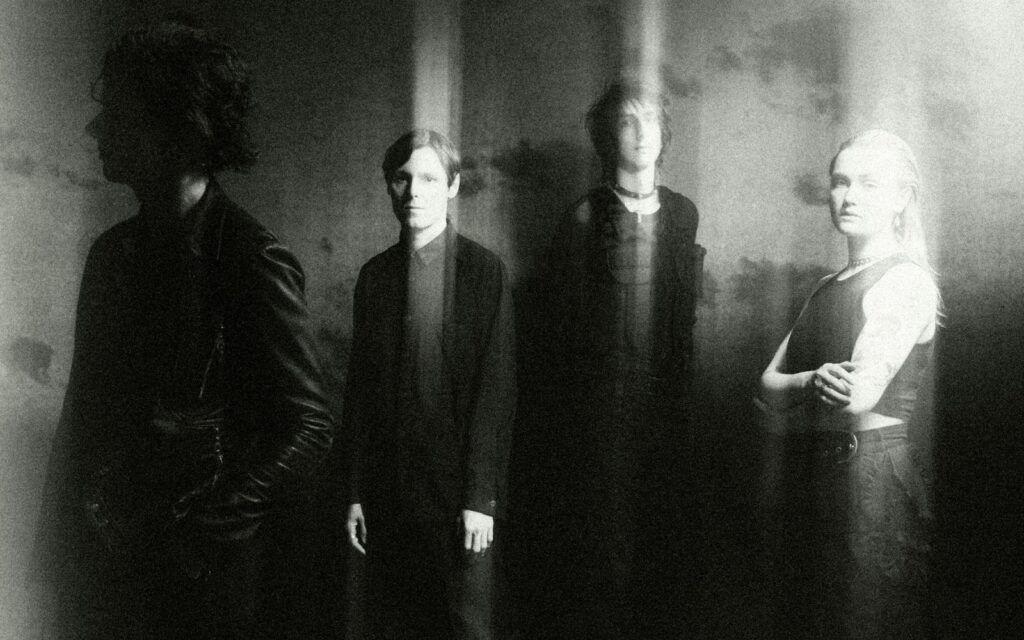
McCann says the songwriting process for Beaches’ new recordings remains largely the same: the band members – guitarists McCann, Bolger and Antonia Sellbach, bassist Gill Tucker and drummer Carla Way – will start with a riff or melody and jam it up into something approach its final song format. With the benefit of a permanent recording space in Reservoir – and the wonders of modern communications technology – new material can be jammed, recorded and shared with relatively minimal logistical fuss. “Some of the songs are just eight to ten minute jams at the moment, and some are a bit more structured,” McCann says. “The next record will be a little more sonically cohesive. But there’ll still be the same densely layered songs, because that’s what we like doing.”
BY PATRICK EMERY