"It's not a happy record," Angus Legg says with a laugh. "It's not supposed to be."
There’s something disarming about the way Angus Legg talks. He’s thoughtful without trying to over-intellectualise, open without oversharing. The same qualities define his music.
His EP, A Long Time Gone, is as honest and authentic as he is.
Angus Legg
- When: 12 July
- Where: Bergy Bandroom
- Tickets here
Check out our gig guide, our festival guide, our live music venue guide and our nightclub guide. Follow us on Instagram here.
View this post on Instagram
“It’s intentionally designed to be listened to from start to finish,” Legg explains. “It’s kind of a story from beginning to end.”
Across seven tracks, the Melbourne/Naarm singer-songwriter traces a path through grief, addiction, friendship, love, identity and home. Woven throughout are echoes of his Celtic heritage, with mandolins, penny whistles and folk melodies giving the record a timeless warmth.
Music has always surrounded Legg. Raised in a family of musicians, he never really had a chance of becoming anything else. But when his father died in 2014, songwriting shifted from passion to necessity.
“Songwriting hasn’t become processing,” he says. “It’s always been a form of processing for me.”
He describes writing songs as accessing emotions that everyday life rarely allows him to reach.
“I don’t often stop to feel things,” he says. “But when I pick up a guitar, it gives me a whole moment to actually experience whatever emotional experience I’m having.”
That emotional honesty sits at the heart of A Long Time Gone, nowhere more powerfully than in “May All Your Friends Be Artists.”
Originally written by his late father as a letter to his son, Legg has transformed it into a duet across time.
Before the song begins, listeners hear a separate recording simply titled “Dad.” The decision to isolate his father’s voice.
“It was quite intuitive,” he says. “I wanted my dad’s voice to be in the song, but it also made sense for it to stand on its own. I’ve never actually put that into words until now.”
The effect is quietly devastating. The recording makes his father feel startlingly present. It’s one of the EP’s defining moments, turning music into memory and memory back into conversation.
Yet revisiting those recordings came with an emotional cost.
“It hit me like a tonne of bricks,” Legg admits. “It’s been ten years, and I’d done a lot of processing, so I didn’t expect releasing it to open up those wounds again.”
For him, grief hasn’t become smaller with time.
“That’s what grief is like,” he reflects. “It’s not fine one moment and then gone the next. It’s always there. It’ll keep evolving for the rest of your life.”
It’s a perspective that gives the record its quiet strength. A Long Time Gone accepts that healing is messy, nonlinear and deeply human.
Legg is careful not to limit grief to bereavement either. It can be the end of friendships, relationships, old versions of ourselves or dreams that never came to be. Those experiences thread through songs like “12th of May” and “Like I Never Left,” written after returning home from London and questioning what kind of life he wanted to build.
“I was asking myself, ‘Do I want to uproot everything and start again? What do I actually want out of my life?'” he says.
.Home, he realised, wasn’t a place- it was the people waiting for him.
“The things that became important were my family, my friends… to love and be loved by other people.”
Leaving Australia ultimately made him appreciate what he’d left behind.
“You don’t really understand people until you leave,” he says. “I love travelling, but I’m kind of happy at home for the time being.”
Despite the emotional weight of the record, there are moments of hope running beneath every song. Legg doesn’t romanticise suffering, nor does he believe artists should endlessly revisit their darkest moments.
“There’s an absolute limitation to sitting in your sadness,” he says. “You can dwell too much.”
Perhaps that’s why A Long Time Gone feels less like a collection of sad songs and more like an act of release.
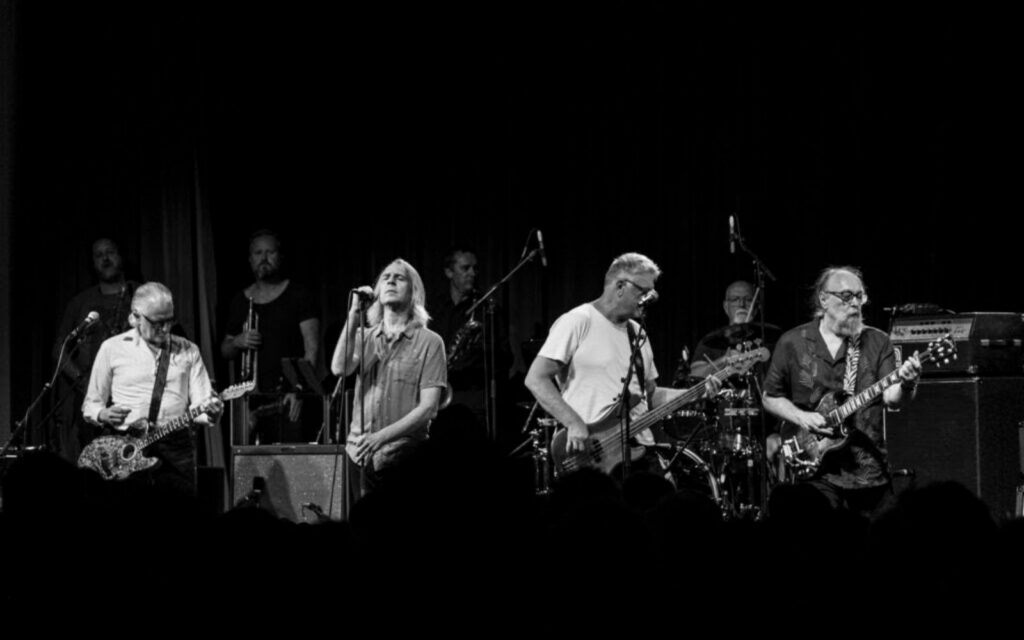
On July 12, Legg will perform the EP in full for the first—and, for now, last—time at The Bergy Bandroom in Brunswick. Joined by a full band featuring violin, cello, saxophone and layered arrangements, it promises to be the most expansive presentation of these songs yet.
It also marks the end of a chapter.
After the show, Legg plans to step away indefinitely from the demands of being a modern-day independent artist. Something is fitting about that decision.
“I think it’s one of those records you put on when you need to process something emotionally,” he says.
In an age of constant distractions and shortened attention spans, Angus Legg has created something refreshingly patient; a record that asks listeners to stay with discomfort.
It reminds us that grief, love and hope can exist in the same breath.
Angus Legg will perform A Long Time Gone at The Bergy Bandroom on 12 July.