Adam Friedman left Melbourne looking for community in London and found 400 kids skating circles in the underground carparks of supermarkets.
Six years ago, Adam Friedman left Melbourne for London expecting to find his people in some obscure music sub-genre. Maybe a garage revival, some afrobeat scene; he was a music producer heading to a mecca, after all.
What he found instead was rollerskating. Not quite the disco variety his Melbourne mates might have expected, but something far more urgent and alive.
“I was living the expat lifestyle for the first couple years,” Friedman says, “Eventually I moved to southeast London where I unknowingly moved right next to a skating hotspot.”
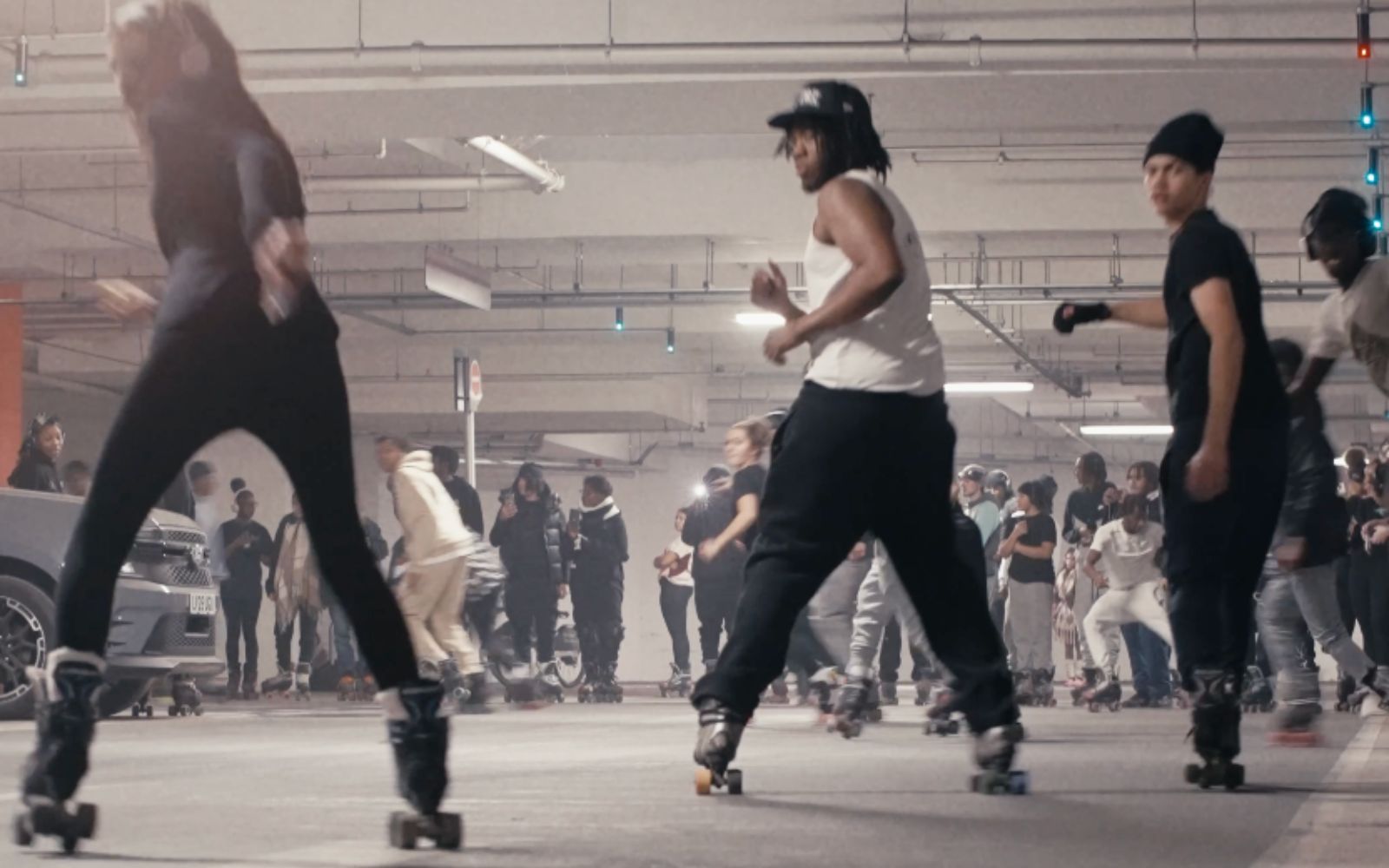
He’d done a bit of rollerblading along the Yarra back home in Melbourne, nothing serious. But this was different. Inner city kids skating backwards between double-decker buses, 50 people deep with a boombox playing jungle and drum and bass. Each skater had their own style, their own flow.
“I was hooked,” he admits. “These were cool kids, full of joy.”
Stay up to date with what’s happening in and around Melbourne here.
View this post on Instagram
A scene shaped by generations
London’s rollerskating community celebrates its history, intertwined with the evolution of music, dance and nightlife, often at the margins of mass consumer culture, shaped by generations of Londoners with roots in the Caribbean.
Chuffed Skates explains rollerskating’s roots in Black culture stretch back to the 1950s and 60s when segregation limited Black skaters to one night per week at rinks. Despite these barriers, Black communities created their own vibrant skating culture, using rinks as spaces of resistance during the Civil Rights Movement.
By the 1970s and 80s, roller disco exploded, with Black skaters in cities like Chicago pioneering new dance moves and skating styles set to house music, disco, soul and hip hop. London’s scene developed in parallel, shaped by generations of Londoners with Caribbean roots who brought their own musical influences; reggae, dub, dancehall, to skating culture. Young skaters would glide through the city with boom boxes, claiming public space as their own.
The COVID pandemic sparked a massive revival. With traditional entertainment venues closed, people rediscovered skating as a way to move, connect and reclaim public space. Street skates, carpark sessions and social media tutorials exploded in popularity. In London specifically, trained dancers who’d lost performance opportunities turned to skates.
When the major label world meets the carpark
Before rollerskating consumed his life, Friedman ran a label at Sony. Numbers-driven, hit-focused, constantly discussing engagement metrics and money. When that label’s contract with Sony ended, it coincided perfectly with him discovering the skate community. The contrast was stark.
“It was the opposite; nothing to do with numbers or clout, just community and fun,” he says. “So originally I was keeping it very separate to my work. But naturally there’s so many people I’m meeting, I’m out six days a week with new friends. Some of these folk are bus drivers, teachers, lawyers. But of course I start meeting DJs, producers and artists in the scene.”
Six days a week skating will change anyone. Friedman found himself pulled out of the pop world and into Dancehall, Jungle; other genres deeply entrenched in the scene. His writing shifted. He started inviting people to his studio to record music.
Young skaters love posting clips, soundtracking thrill rides through the urban sprawl with the energy of fidgety new genres and sound.
“I thought ‘Why not just make music for their videos and their lifestyle, for them?'” he says. “Now the skate community is my muse. It’s providing them with their soundtrack.” He pauses. “You don’t have to be a skater to enjoy skate culture or music, same way surf rock was this global phenomenon last century and people could just enjoy it.”
That’s how Skate Sounds Ldn, his rollerskating record label, was born.
Reclaiming space, building community
It’s hard to describe the atmosphere, Friedman says; think Fast and Furious Tokyo Drift but in an underground carpark. These events start small. Six people find a carpark with a smooth surface. Next week they each invite six mates. Someone brings a big speaker. It grows organically.
But infrastructure is diminishing. Skate rinks are shutting down; not profitable, too expensive. Young skaters lament that public spots are being physically closed off, with security, dogs, gates and locks used as excuses. They’re forced to organise their own thing, forming teams with names like No Brake, getting hoodies printed, claiming their corners of the city.
“The scene is equally growing but infrastructure is diminishing,” Friedman explains. “They’re kind of forced to organise their own thing.”
One iconic supermarket carpark has had ebbs and flows of incredible momentum in the community. But, when too many people gather, security gets flustered. They’ve put down baby oil and sand to stop skaters. It’s a cycle; nowhere to skate, finding somewhere to skate, constantly having to find new places.
Recently, Friedman was involved in what he calls a reclamation event. A one-night-only event organised by SkateSoundsLDN and NoBrak3s. Probably 400 kids showed up after a NoBrak3s street skate. Artists, DJs, speed skating around in circles, some talking, some dancing. Setting up as quickly as possible before the crowd arrived.
“No approval from anyone,” he admits. “It’s really hard for the skate community to get official permission. We try and build a relationship with these supermarkets to use carparks but, understandably, they’re not that fond of having hundreds of kids and adults going around in circles with no helmets. It’s a hazard for them.”
They want to prove they can look after themselves, have a good time, clean up afterwards. But the roads are slow. “Ultimately no one just wants to help out of goodness,” Friedman says. “They want cash or to look good. It’s really hard to make inroads. This part of the culture isn’t particularly recognised in mainstream media. It can get a bad rap and feel mischievous and cheeky. We’re trying our best to make this as legal and safe for everyone.”
A Melbourne boy chasing joy
Friedman is careful to acknowledge something crucial about the scene he’s now part of.
“This part of skate culture is black culture,” he says plainly. “There are white folks involved but a lot of this is inner city, lower income. Not these high tech skates and middle aged men in lycra. Kids who have parents that are part of Jamaican and Caribbean culture.”
The music playing at skate events, the music influencing his label, is dancehall, afrobeats; genres rooted in Nigeria, Jamaica, the Carribbean. Even the way people dance reflects this. You see people whining and daggering on skates.
“I’m a guest in this space,” Friedman says.
A Melbourne boy went to London looking for opportunity and found it, yes, but he’s clear-eyed about whose space he’s occupying and why that matters. The community he found skating six nights a week isn’t just about the music or the movement; it’s about people creating joy in a city that often makes it difficult to do so, carrying forward traditions built by previous generations who did the same.
“The inspiration of this is people should follow joy and excitement and your heart and everything else will work out,” he says.
For Friedman, that meant leaving behind the metrics-obsessed major label world in Melbourne and spending six nights a week in supermarket carparks with 400 kids on fast wheels. Not a bad trade.
For more information, head here.