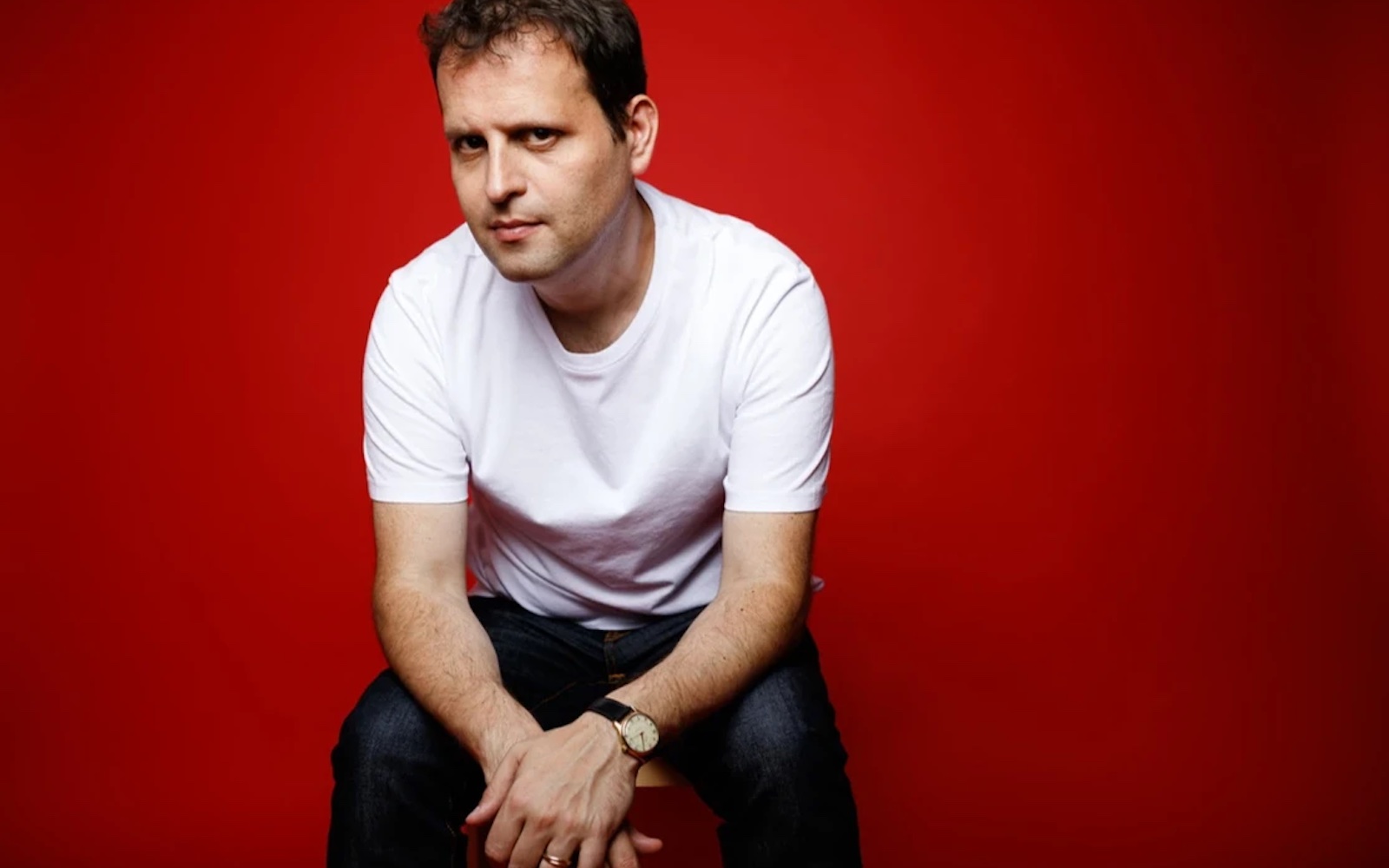
Adam Kay has a story about a hungover medical student fainting face-first into a patient’s open abdomen.
In Britain it draws a sharp intake of breath. In Australia the room whoops. Kay brings ’Twas The Nightshift Before Christmas to Hamer Hall on 15 December, his only Melbourne show and the last of 10 across Australia and New Zealand.
He left medicine in 2010 and still picks which diary entries to read based on the stomachs in front of him. The show pulls from his festive diaries, with new stand-up and a few comedy songs, and lands between a BAFTA-winning TV adaptation and his first thriller, A Particularly Nasty Case, which he rewrote about a dozen times to stop readers guessing the ending.
Adam Kay
- Perth, 30 November, Regal Theatre
- Canberra, 3 December, Canberra Theatre
- Adelaide, 4 December, Norwood Concert Hall
- Brisbane, 6 December, Fortitude Music Hall
- Auckland, 8 December, Bruce Mason Centre
- Wellington, 9 December, Opera House
- Christchurch, 10 December, Isaac Theatre Royal
- Sydney, 13 December, Enmore Theatre
- Newcastle, 14 December, City Hall
- Melbourne, 15 December, Hamer Hall
Stay up to date with what’s happening in and around Melbourne here.
You left medicine in 2010, but the show keeps you revisiting those years every night. Does telling these stories get easier or harder with time?
I vary up the stories I tell, dipping into different parts of my diaries, depending on the sense of humour and strength of stomachs of my audience on any given night. But there are some stories: the less funny things, the difficult days, that are never easy to say out loud. The day they become easy to say, when they stop affecting me and stop affecting the audience, is the day I should stop performing.
The book became a BAFTA-winning TV series. What did you learn about your own story watching it adapted for the screen?
When I adapted the book to be a TV show, I obviously wanted it to be the best version it could be for that medium – a direct adaptation would have ended up being a kind of one-man sketch show. Much as I was tempted to make my character a charming medical superhero and part-time helicopter pilot, the interesting version was for him to be a bit of an arsehole. Dialling up all my worst traits was a sobering exercise in admitting how many of them were there in the first place. The unfortunate net result of that is there are now millions of people around the world who think that’s exactly what I’m like in real life. However, they probably also think that I look like Ben Whishaw, so I’m fine with that.
The stories are hilarious, but there’s real darkness underneath, especially around the toll of the job on junior doctors. How do you balance the laughs with the more serious messaging?
For me, they’ve always gone hand in hand: humour is the best conduit for serious messaging. It’s a case of not being flippant, but using the laugh to help it all sink in, so the audience doesn’t feel like they’re being lectured. The same way I chop up the carrots really small so my kids don’t notice them in their ice cream.
You’ve gone from memoir to children’s books with Kay’s Anatomy and Dexter Procter, and now a novel, A Particularly Nasty Case. Which has been the biggest creative challenge?
I’ve always found it easy writing for kids, which potentially means I have the sense of humour of a nine-year-old. A Particularly Nasty Case was huge fun to write – killing off thinly-veiled versions of my real-life enemies – but it was definitely a major learning curve. The biggest thing about a thriller is making the twists satisfying: nobody wants to guess the ending on page five, or have a killer we’ve never met before rock up in the final chapter. I rewrote the book about a dozen times trying to get it right. (Apologies if you guess it on page five.)
Australian humour is famously dry and irreverent. Are there jokes or stories in the show that land differently here than in the UK?
There are a few stories in my repertoire which are guaranteed to get a sharp intake of breath back home – one in particular about a hungover medical student fainting and faceplanting into a patient’s open abdomen. In Australia, they get met with whoops and cheers. This reflects extremely well on you all.
You’re at the point where Australian audiences know you well. What’s one thing about this country, or its doctors, that has stuck with you since the first tour?
The more time I’ve spent with the food, the wine, the people and the weather in Australia, the more I realise why a thousand British doctors a year are moving over here. Also, fewer crocodiles than I was expecting.
For more information, head here.