From a skate park in Cheltenham to two new parks in Box Hill, the Suburban Rail Loop's above-ground works are taking shape across the south-east
The Suburban Rail Loop is reshaping more than Melbourne’s train map, with new parks, skate parks and play spaces rising across six suburbs well before a single train runs.
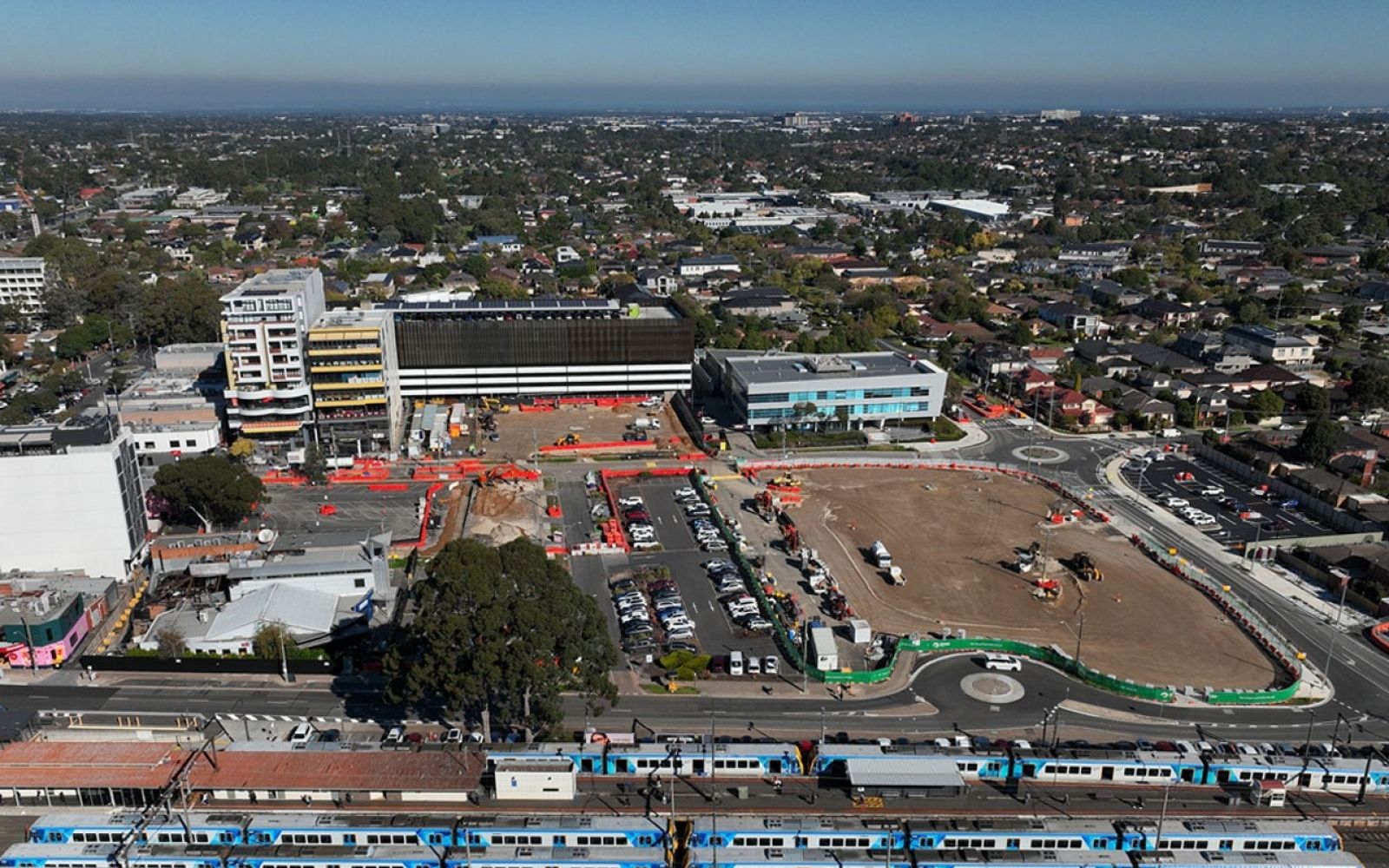
While the tunnel boring machines grab the headlines, the more immediate change for locals from Cheltenham to Box Hill is happening above ground. The Suburban Rail Loop’s latest construction update sets out the new courts, car parks, gardens and public spaces arriving at each station precinct – the stuff residents will actually use long before 2035.
Stay up to date with what’s happening in and around Melbourne here.
What the Suburban Rail Loop is building above ground
The pattern across SRL East is consistent: every station site is being wrapped in new or upgraded public space. At Cheltenham, the southern gateway to the line, crews are delivering a new skate park and basketball court at Sir William Fry Reserve. Designs for the replacement open space have been finalised, with fresh parkland headed for the former Highett Gasworks site in Highett, right next door to the reserve.
Box Hill, at the northern end, is getting two permanent parks – one at Ellingworth Parade, another at Watts and Court streets – complete with a basketball court, play equipment and a nature play space, all a short walk from Box Hill Gardens. Underground services are being shifted ahead of the new station, which will sit in the heart of Box Hill beside the existing one, ringed by new and upgraded parks and plazas. It’s a long way from the eight machines arriving to dig the tunnels.
Glen Waverley: piling rigs and 270 new car spaces
Major construction is well underway at Glen Waverley, where piling rigs are sinking the deep foundations that will eventually carry the station structure. The future station is being pitched as light-filled and ringed by public areas plus walking and cycling links running into the town centre.
There’s an immediate win for locals, too: the Myrtle Street East and West car parks have opened, adding roughly 270 spaces while work continues. It’s part of the same Glen Waverley to Box Hill push now entering its launch phase.
Burwood: a second dig site goes deeper
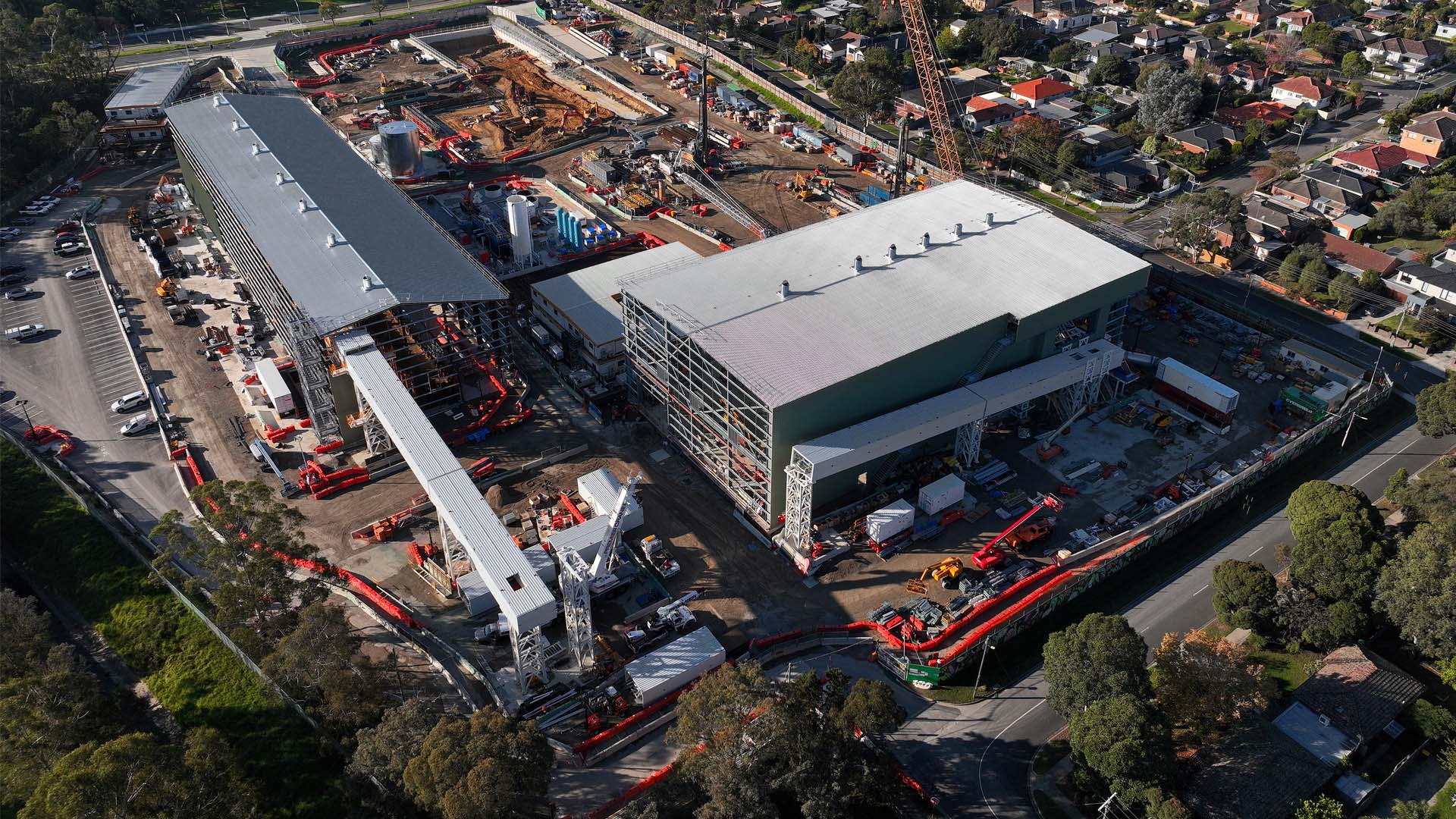
Burwood is where two big jobs overlap. The first boring machines are being assembled on site, ready to start carving towards Glen Waverley and Box Hill in 2026. Right beside them, crews are excavating a second launch site off Burwood Highway.
That second pit is no small thing – once finished it will reach 21 metres deep, 38 metres long and 27 metres wide. Both launch sites eventually become the two ends of the new underground station, which hands Deakin University a direct train connection for the first time and links Burwood to the rest of the city.
Clayton: building a transport super hub
At Clayton, crews have finished the underground support walls and started excavating the station box. Work has also begun on a passenger link tying the new SRL station to the existing Clayton station, so commuters can switch between services without surfacing.
The Authority is selling Clayton as a future transport super hub, feeding the town centre and the Monash Medical Centre while opening faster trips across Melbourne and out to Gippsland – the kind of connection set to reshape travel times across the east.
Monash: clearing the ground for a campus link
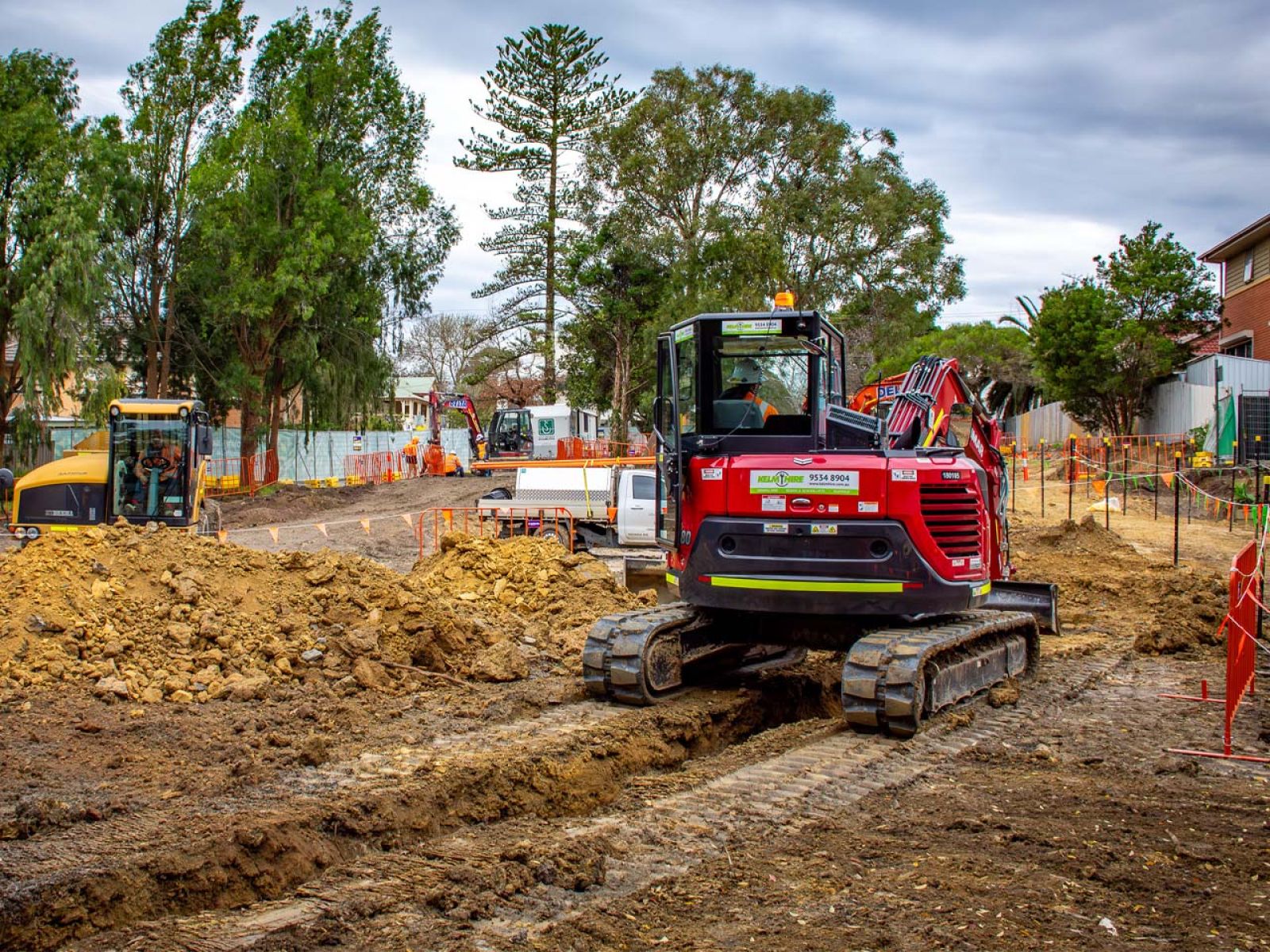
Monash sits a step behind Clayton, with crews installing the concrete support walls underground before excavation of the station site begins. Much of the unglamorous groundwork is already done – relocating services, upgrading traffic intersections and demolishing buildings to clear the expansive site.
The payoff is real for one of the state’s biggest campuses: SRL will give Monash University a direct rail connection for the first time, cutting the run for students, staff and visitors. You can trace how the wider network reshapes Melbourne’s transport here.
Tunnelling, jobs and what comes next
The dig itself is close. Machines assembled at Burwood are set to start boring towards Glen Waverley in 2026, while a second launch site at Clarinda nears completion, ready to send machines towards Cheltenham and Glen Waverley – the same milestone Beat tracked when excavation passed 20 metres below the surface.
SRL East is already a heavyweight employer, with more than 3300 people on site and over 18 million hours worked, plus the train stabling facility and network support sites adding to the footprint. Trains are scheduled to start running in 2035, linking the six new underground stations along the corridor.
It remains a contested build – the state opposition has pledged to pause the project if it wins office – but on the ground, the works keep moving. For now, the most visible signs of the Suburban Rail Loop aren’t tunnels at all. They’re the skate ramps, ball courts and reserves quietly reshaping six suburbs across Melbourne’s south-east.
For more information, head here.