Does McAllister feel extra pressure to live up to the memory of former productions? “Not really. The Sleeping Beauty is one of the greatest classical ballets, with one of the greatest scores, it is the ultimate beauty, and the benchmark is the very first production in 1890. It’s an iconic classic. People always want to see it. When you think about the history of The Sleeping Beauty, it goes on all around the world. We want to add value to the production, not just do it for the sake of it. This is an amazing production, it will be beautiful.”
How much has McAllister modified The Sleeping Beauty for modern audiences? “The original ballet is four hours long,” he answers. “At the time it was made, in the Imperial age, they didn’t get up until noon and they had servants so they had time to watch a four hour show. We’ve trimmed the length of it, tried to bring a sense of clarity to the story telling. Technically dancers dance differently than they did in the 1890s and we have brought The Sleeping Beauty closer to the current aesthetics – legs are higher, there are more jumps, it’s less close to the ground. But we haven’t done a complete renovation, it’s more wall papering and throwing a few scatter cushions.”
Thinking about the differences in historical productions of The Sleeping Beauty compared to today, McAllister notes: “You can see the evolution of modern ballet when you look at the use of ballet mime, which was accepted in the 19th century, something that happens in old ballets, often to progress the story but we don’t do much of that now.” What does he mean exactly by ‘ballet mime’? “A lot of theatrical gestured mime; it’s quite traditional,” McAllister answers. “We didn’t want lengthy periods of gesturing; we want to focus on realistic gestures, on clarity in telling the story. But we have a few ballet mime gestures in there as a nod to tradition; we have one gesture from the original suite of the ballet: crossing the wrist with the fist which means ‘death’, and the identifiable gesture, the hand on heart, meaning love.”
The Sleeping Beauty is actually McAllister’s first full-length choreography for The Australian Ballet. “Our show is about telling the story, about the drama in the dance so it’s about the story as much as it’s about the choreography,” he continues. “The Sleeping Beauty can become one of those dances which are always about the steps; with our 2015 production we’re moving it along a bit, moving it forward for modern audiences. The dramatic elements are now more to the front and the centre of the dance.” What has McAllister discovered, either about himself or about dance in the process of readying The Sleeping Beauty for the stage? “I’ve learnt so much about the history of ballet, about the importance of narrative in ballet. It’s daunting, but also exciting, to be part of that lineage. The challenge has been in not letting myself get overwhelmed. I’ve had to face some scary things; you have to believe in yourself to keep developing as a person, push yourself to moments of greater challenge. When you face difficulties and wonder how you’re going to get through something, you can look at things in big terms but to realise your vision you just have to break it down into bite size chunks and push through; you learn resourcefulness.
“It’s very interesting coming to this after that experience with Maina Gielgud, in being involved in creating her production. I look back and I remember what I felt about Maina then, and I think now ‘what will my dancers think of me?’ She had such high expectations of us: ‘Learn it quickly and do it brilliantly.’ She could see every little detail. Am I as good as that, as good at seeing detail as she was? It’s astonishing how much she had in her head, how she could remember so much, she was over every little part of it, everything that went on.” McAllister admits he might suffer from some of the same perfectionism as the formidable Gielgud. “But you learn that perfection doesn’t just happen. You see something and think ‘oh that’s beautiful’ but you forget the multitude of steps involved in getting there, that they’ve gone through all these steps.”
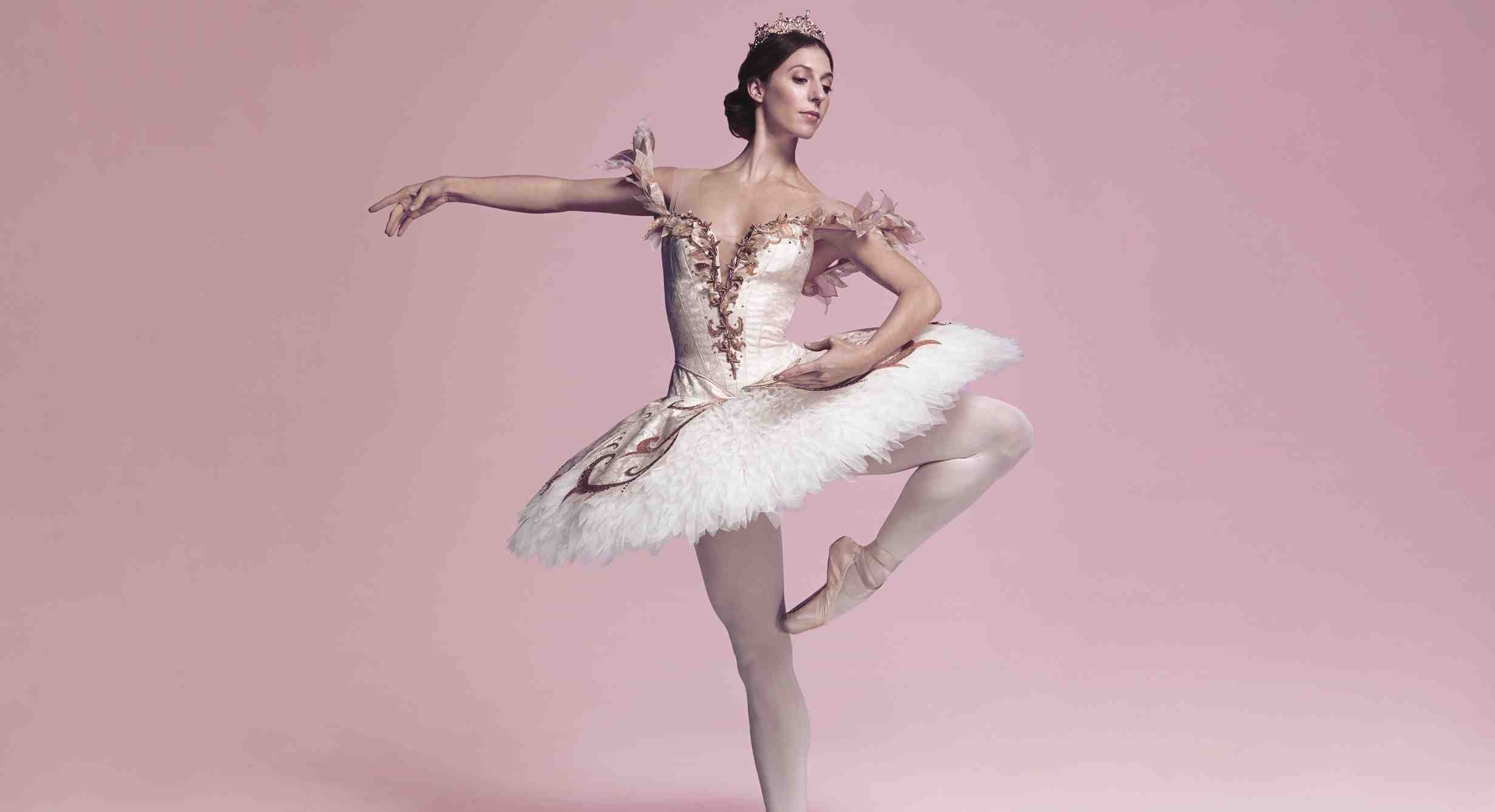
The Sleeping Beauty is famously very demanding on its principal ballerina, in this case Lana Jones will be dancing the part of Aurora. “She’s got everything right,” McAllister assures us. “This is an incredibly difficult dance for ballerinas; it’s physically one of the most demanding of roles. All of the principals are really engaged.”
A lot of attention has been paid to costume and design in this production, being as The Australian Ballet has declared 2015 ‘A Year of Beauty’. “She’s nailed it,” McAllister says, speaking of costume and set designer Gabriela Tylesova. “Seeing those drawings of the costumes and the set become 3-dimensional has really raised the bar. We’re nearly there now. We’re just sanding off the rough edges, making it perfect.”
BY LIZA DEZFOULI