The English band’s landmark record has stood the test of time. Revered for its energetic, innovative, and vulnerable sensibilities, it hasn’t aged one bit.
What an album to call your debut. If you rewind the clock 20 years, sappy post-Britpop acts like Coldplay and Travis were sidelined by a new wave of electrifying British guitar rock.
Thanks to America’s The Strokes making raw guitar music cool again in 2001, they paved the way for the UK to follow suit. Bands like Franz Ferdinand, Interpol, and Arctic Monkeys took up the task and catapulted that scene, post-punk revival, as a mainstay genre.
Among those bands was Bloc Party, who had a sound like no other when they jumped into the scene with their 2005 debut, Silent Alarm. Killer basslines, epic percussion, sharp guitar riffage, and conscious lyricism, the album is as important today as it was then. As they gear up for reuniting with Australian fans, it’s worth revisiting this pivotal indie rock record that’s inspired countless other artists.
Bloc Party
- With Young The Giant
- Sunday, 3 August
- John Cain Arena, Melbourne
- Tickets here
Check out our gig guide, our arts guide, our festival guide, our live music venue guide and our nightclub guide. Follow us on Instagram here.
The band’s origins
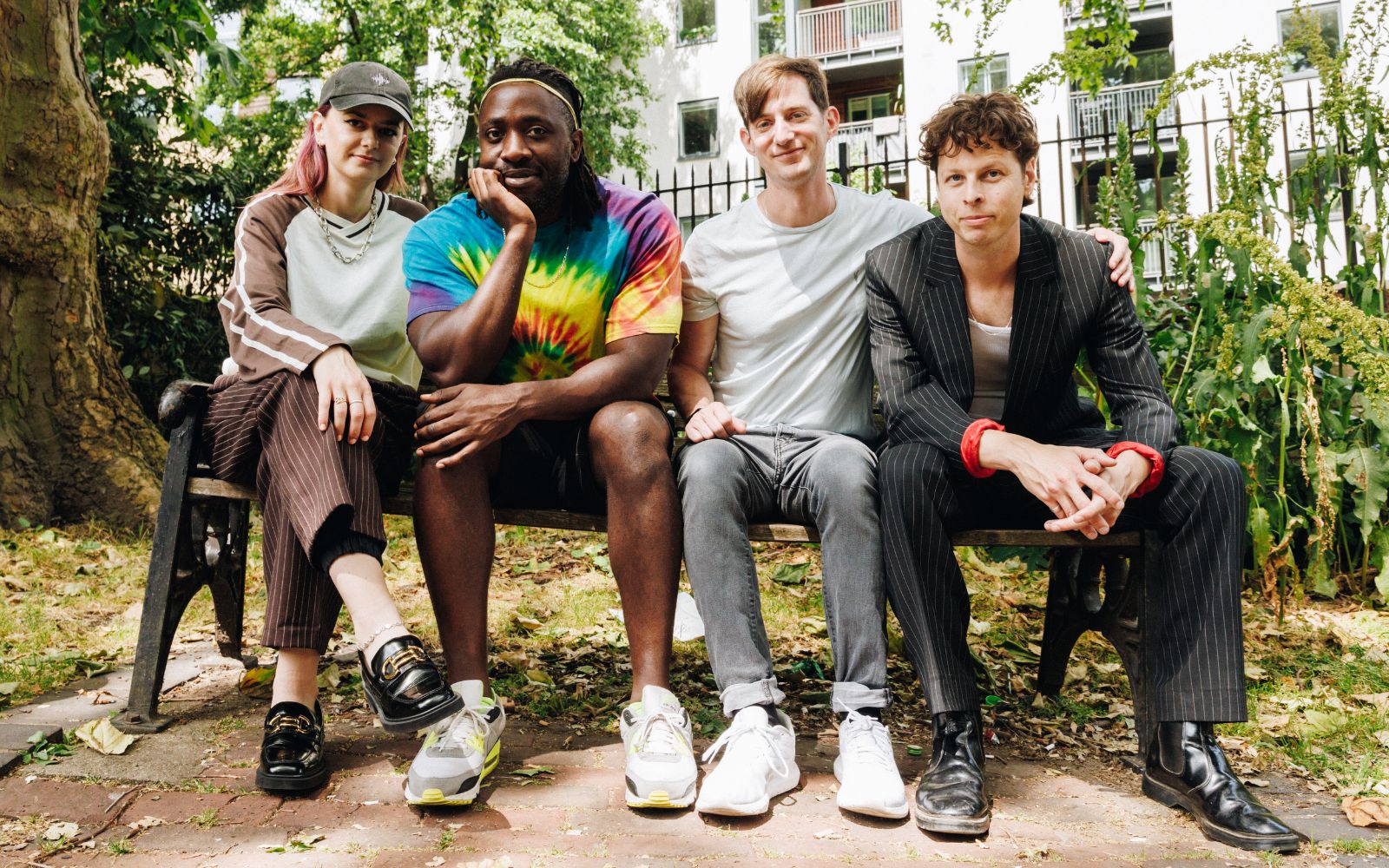
Founding members guitarist Russell Lissack and singer Kele Okereke initially met in 1998 in London, but it wasn’t until spotting each other at Reading Festival in 1999 that they decided to start a band. Later, they enlisted bassist Gordon Moakes who responded to an NME ad, and drummer Matt Tong who passed an audition.
In 2003, they finally broke through at a gig, where Kele handed a demo of She’s Hearing Voices to Franz Ferdinand frontman Alex Kapranos and BBC Radio 1 DJ Steve Lamacq. They both loved it: Alex offered the band a support slot, while Steve invited them to play live on his radio show.
From there, the indie rock four-piece shot into stardom. Fittingly, they signed to indie label Wichita Recordings over a major, and relocated to Copenhagen in 2004 to record Silent Alarm with producer Paul Epworth.
The classic album, which we all know and love, was released a year later in 2005 and was unanimously praised.
On the music of Silent Alarm
Silent Alarm has a sound Bloc Party’s peers don’t have. The group deliberately avoided imitating anyone else, so they’ve always been their own thing. Kele admits this in a 2015 interview: “We never really felt that close to any of these bands we were supposed to be close to … We were a bit cynical about the whole [post-punk revival] thing.”
It proved effective. On opener Like Eating Glass, every musical element of the four-piece perfectly falls into place with guns blazing. Angular guitar whirrs and a brooding bassline complement the propulsive, crashing drumming, while Kele’s signature wail pierces through the energetic soundscape.
Russell, Kele, Gordon, and Matt are nothing short of a musical powerhouse on this record. Helicopter sprints at a breakneck pace, and Banquet has an undeniable swagger, fortified by its dual-guitar riff.
Although these are rock songs, they’re also dance songs. Positive Tension and Price of Gas are alt-rock first and foremost, but they cross into electronic territory with underlying synths – a sound they’d further explore on later releases. These tunes bounce the same way techno’s strong rhythms do.
Bloc Party fall into the rock side of the indie sleaze coin – Banquet alone can tear down a dancefloor – but their dance-punk leanings aren’t everything they’re about. They’ve got another secret weapon: emotional depth.
Kele’s words explore universal feelings of hope, self-discovery, and confusion of entering young adulthood. For that, these quieter songs stand out amid the heavy hitters.
Blue Light is about coming to terms with intimacy. This Modern Love is about tiptoeing around romance – its twinkly guitar chords as passionate as new love. So Here We Are is the most touching – a choral-sounding guitar line tugs at the heartstrings with its punch-drunk words of being elated on ecstasy.
Or, it can be about nurturing our relationships – So Here We Are was given a new music video a couple of years ago, depicting the young people of today hanging out through modern technology. Whatever era the listener is from, a poignant nostalgia will wash over them with a meaning that rings most true.
Forever forward-thinking
After Silent Alarm, Bloc Party continued to look forward. Their next few albums veered into alt-dance, and despite Matt and Gordon’s departure in the mid-2010s, Bloc Party kept on going with a new line-up.
Still, the rapturous acclaim for Silent Alarm could be seen as a detriment, given Bloc Party is a band in flux. Little of their other records resemble it.
However, time has been kind to the band as they’re still touring and recording. That’s owed to Silent Alarm’s inescapable legacy.
This record has inspired next-generation indie bands such as Foals, The 1975, and Paramore – the latter’s frontwoman, Hayley Williams, cited Bloc Party as a lifelong inspiration, even inviting them to support on their 2023 UK tour.
Kele recently told the NME he’s finally embraced that acclaim: “We’ve done something great and it’s been recognised throughout the world, and I’m at peace with that. We did something!”
They last played in Australia with their peers Interpol in 2023 for a co-headline tour, which was almost a broader celebration of 2000s British guitar music. Now, they’re back and putting all the focus on celebrating the album that got them here, with openers Young The Giant joining them for the ride.
Energising yet introspective – Bloc Party’s Silent Alarm will never get old. Here’s to another 20 years.
Bloc Party are playing John Cain Arena with Young The Giant on 3 August. Grab tickets here.
This article was made in partnership with Destroy All Lines.