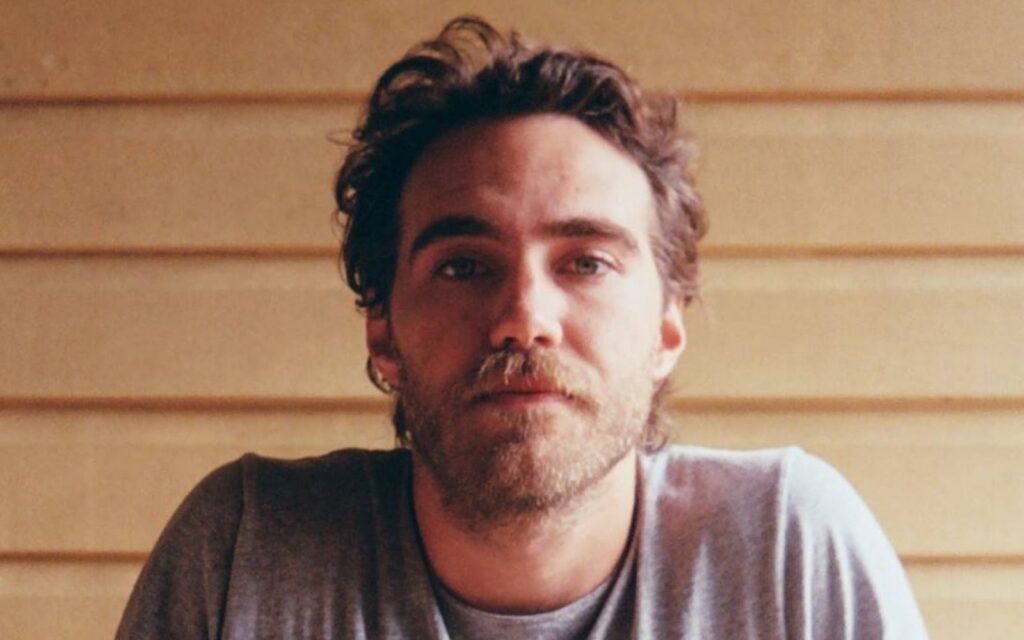
Ironically, he didn’t write his biggest hit – Everbody’s Talkin (1969), and the song he made the most money from, Cuddly Toy (1967) was performed by The Monkees. With such a varying and broad catalogue, the task of summarising Nilsson’s career into a 75-minute cabaret show would ordinarily be a difficult task. But for frontman of The Whitlams, Australian music industry legend and piano-adept Tim Freedman has managed to do it, and is now bringing the performance to Arts Centre Melbourne’s Fairfax Studio on Friday July 18.
“I suspected, and my suspicions have been confirmed, that he has largely been forgotten in the broader consciousness,” explains Freedman, each word delivered with the utmost clarity and precision as though they are on loan from an art gallery. “He was a prolific recording artist,” he continues. “Quite a maverick – taking left turns and risks with his music. So with any career with over 15 studio albums, there’s a gem from each time period resulting in an extremely strong 75 minutes of material. I could probably do two hours if I thought cabaret could sustain such a length.”
The onstage homage to Nilsson is titled Freedman Does Nilsson – A Live Imagining and sees Freedman abiding by the traditions of cabaret and performing each song in character as Harry Nilsson. Harry Nilsson was born June 15, 1941 in a working class neighbourhood of Brooklyn called Bushwick. Nilsson’s father walked out on the family when Harry was three, an abandonment that resulted in an emotionally tumultuous upbringing, with Nilsson moving house frequently and leaving school in Year 9. However, his skill with numbers allowed him at age 18 to bluff his way into a graduate computing position at a bank.
“He was a mathematical genius,” Freedman reveals. “If you told him your birthday – day, month and year – he could tell you what day of the week you were born. And when 21-22, he worked in a bank as a really early computer operator. He was just one of these savants. Because he worked during the day he would stay up all night writing songs.”
During one of his prolific late night songwriting sessions, Nilsson wrote a song called Cuddly Toy that he pitched to buzz band of the time, The Monkees, because he thought it would suit Davey Jones’ voice. Cuddly Toy would be the song that took Nilsson from bedroom composer to international renown, earning fans in John Lennon and Paul McCartney.
“The Monkees sold as many records as The Beatles for some of their songs. So they said, ‘We want this song’ and gave him an advance of $40,000 which is the equivalent to more than $500,000 now,” contends Freedman.
However, with fame and fortune came excess, and Nilsson’s voice began to suffer, yet his output remained as prolific. Freedman now explains how Freedman Does Nilsson incorporates this chequered narrative.
“It’s vaguely chronological. Around the start are early songs that were pretty highly wrought, almost overwritten in the lyric department with lots of rhymes and intricate patterns. He was a maths genius and you can see that when you take his work apart. So I start with 1941 – that is about a father leaving his son. And throughout the night there are abandonment issues and how they are reflected in his work and then I start branching into relationships with other artists like Lennon, McCartney and Randy Newman. And then I need to tackle his decline because he basically committed a 20-year suicide from ‘72 to ‘92 so there has to be a little bit of the self-sabotage. Rich fodder for cabaret.”
As mentioned, Harry Nilsson had lived a life of excess, and was more than happy to let his vices take hold. Similarly, in the early days of The Whitlams, Freedman was renowned for his penchant for red wine – consuming multiple bottles before, during and after a show. However, Freedman is very sure when he points out that his indulgence paled in comparison to Nilsson’s.
“Nilsson was heavily into the uppers – as seemed to be the thing in the early ‘70s. Whereas I would drink a bottle of wine and retire for the evening, he would be going for days and, you see, he never toured so he could get away with it – not resting his voice.”
However, eventually the partying did its damage and Nilsson began losing range during his 20-year suicide’. And what a voice it was.
“In terms of the vocals, his gift was that – where most of us have a break between our chest voice and our head voice, in that way we can cover three or four octaves – but Harry had no breaks. In other words, when he was at the top of his range, around a G, he was able to drop in lower-to-mid range octaves giving his voice that richness and depth that really stands out on songs like Talking At Me,” lays out the informed Freedman.
Finally, Freedman changes topic to the (very) recently announced Whitlams’ shows at the Corner Hotel.
“We’re coming back to the Corner,” he says. “We have played there probably 14 times over the years and have always had a great experience there – and I mean, we only do one Whitlams tour a year, so if it’s not broke, don’t fix it.”
BY DANIEL CHRISTOPHER WATT